Last updated November 17, 2026





Free written scope consultation - allowances, timeline, and change-order rules on paper before a single trade is scheduled
Windows & Doors Warning Signs Every Homeowner Should Know
Paint bubbling on the interior trim next to a window frame isn’t a paint problem. It’s water. And by the time the paint moves, the sheathing behind it has often already been soft for a season or two. That’s the frustrating truth about windows and doors: they fail quietly. There’s no alarm, no puddle on the floor most of the time. Just small clues that sit there for years until a homeowner finally notices a draft, a sticky door, or a soft spot under the sill. In this guide, we’ll walk through the quiet signals we look for on Long Beach homes – the ones that separate a cheap fix from a five-figure repair – and show you how to read each one before it turns into a problem you can’t ignore.
Quick Answer
The most important window and door warning signs are water staining or bubbling paint near frames, condensation trapped between panes, doors that stick or won’t latch, cracking at door corners, drafts you can feel by hand, and locks or hardware that no longer line up. Any one of these deserves attention; two or more together usually means the unit is failing, not just the paint or the hinges. In Long Beach’s marine climate, these signs often show up on the shaded, windward side of the house first – which is exactly where most homeowners never look.
Styles & brands we work with
- Kitchen remodeling
- Bathroom remodeling
- Home additions & ADU
- Roofing
- Windows & doors
- Driveway & pavers
- Fence
Table of Contents
- Water Intrusion vs. Condensation: How to Tell the Difference
- What Sticking, Sagging, and Corner Cracks Reveal About Your Foundation
- Frame Deterioration Specific to Long Beach’s Marine Environment
- Security Warning Signs: When Hardware Stops Doing Its Job
- Drafts, Fogged Glass, and the Energy Signals You Can Feel
- Repair, Product Fix, or Full Replacement: How to Decide
- A Seasonal Walkthrough Checklist for Long Beach Homes
- Common Mistakes to Avoid
Water Intrusion vs. Condensation: How to Tell the Difference
This is the single most misread warning sign on any home, and getting it wrong costs homeowners real money. Water intrusion and condensation can look nearly identical on a window – both show up as moisture, staining, or peeling finishes – but they demand completely different responses. One is a building-envelope failure. The other is often a humidity or ventilation issue that has nothing to do with the window itself.
Here’s how we teach homeowners to separate them:
- Condensation appears as droplets or fog on the inside face of the glass, wipes away easily, and tends to show up on cold mornings and clear up by afternoon. It’s a sign of indoor humidity meeting a cold surface – common in Long Beach kitchens and bathrooms where exhaust fans run short or not at all.
- Water intrusion leaves staining on the frame, sill, or trim, not just the glass. It shows up as bubbling paint, soft wood under the sill, dark streaks running down the interior wall below the opening, or a chalky white bloom on exterior trim. It doesn’t wipe away because the moisture is coming from behind the surface.
- Fog between panes (in a double- or triple-glazed unit) is a failed seal. The moisture is trapped inside the insulated glass unit. That’s a product failure, not a leak – the fix is glass replacement, not caulk.
The distinction matters because caulking over a water-intrusion problem is like painting over rust. It looks fixed for a season and fails again. In our experience across Long Beach, the trim-side bubbling is almost always the intrusion case – and it’s usually been growing behind the paint for at least a year before anyone calls.
What Sticking, Sagging, and Corner Cracks Reveal About Your Foundation
A door that suddenly sticks in summer and frees up in winter is telling you something about wood movement and humidity. A door that sticks year-round, rubs the frame at the top corner, or won’t latch without a hip-check is telling you something else entirely – and in Long Beach, that “something else” is often movement in the structure itself.
Long Beach sits on a mix of soil types, from the sandy fill near the coast to the more expansive clays inland toward the 405. Expansive soils swell when wet and shrink when dry, and that cycle puts slow, uneven pressure on foundations. We’ve seen plenty of Long Beach homes – especially mid-century builds in neighborhoods like Bixby Knolls, Los Altos, and the older streets off Pacific Coast Highway – where a door has slowly gone out of square as the framing moved with the soil.
Look for these specific signals:
- Diagonal cracks at door corners. A hairline at the top corner of a door casing that runs at roughly 45 degrees is a classic sign the opening has racked. If it’s on an interior door, check whether the drywall above shows cracks too.
- A consistent rub pattern. If a door scuffs the jamb in the same spot month after month, the hinge side or the strike side has moved. This is a frame issue, not a hinge-tightening issue.
- Doors that no longer latch without force. When the striker plate and the latch bolt stop lining up, the door has dropped or twisted. A fresh alignment with a screwdriver won’t hold if the opening itself has moved.
- Cracks radiating from window corners. Same logic on the window side. Plaster or drywall cracking that radiates from a window corner, especially on an exterior wall, deserves a closer look at the framing.
None of this means every sticky door is a foundation problem. It means door misalignment is a diagnostic clue, and it’s worth ruling out the structural explanation before you spend money on hardware. If you’re already planning a larger structural change like an addition, our team covers that scope in the Home Additions & ADU in Long Beach work we do, and door and window alignment is one of the first things we check on an existing structure.
Frame Deterioration Specific to Long Beach’s Marine Environment
Long Beach sits close enough to the ocean that salt air reaches nearly every neighborhood, and it does quiet work on wood and metal frames that you can’t see from the street. The prevailing onshore breeze carries moisture and salt inland; frames on the west- and south-facing sides of a home take the brunt, and the shaded, north-facing sides stay damp longest because they never get sun to dry out.
What we look for when we inspect a Long Beach home:
- Soft wood at the bottom rail and sill. Press a screwdriver handle (not the tip) into the sill on a dry day. If it dents more than a fresh pine board should, the wood is holding moisture.
- Chalking, pitting, or whitish bloom on aluminum or vinyl frames. Salt air breaks down finishes faster near the coast. On older aluminum slider windows near Belmont Shore or the Peninsula, oxidation at the track is common.
- Joint separation at frame corners. The mitered corners of the frame pulling apart by even a sixteenth of an inch is a sign the frame is moving or the sealant has given up.
- Black or green staining on exterior trim. That’s biological growth feeding on retained moisture. On a Long Beach home, it’s a strong hint the drainage plane around the opening is compromised.
This is the category of warning sign most homeowners never see, because it lives on the exterior – the side of the house nobody stands in front of. The classic failure pattern in Long Beach is a west-facing window that gets the ocean breeze, looks fine from the sidewalk, and is quietly rotting at the sill where the water sits.
Security Warning Signs: When Hardware Stops Doing Its Job
Window and door hardware wear is a security warning long before it becomes a break-in risk. Locks that don’t fully engage, handles that wobble, and glazing beads that lift away from the glass reduce the effective strength of the opening to almost nothing – and you often won’t notice until you actually test them.
Here’s what we check, and what you can check on your own:
- Lock engagement. Close the door or window and turn the lock. It should engage firmly with a light, consistent motion. A lock that requires jiggling, or that spins loosely, is out of alignment or worn.
- Strike-plate screws. Open the door and look at the strike plate on the jamb. If the screws are short (most factory screws are around 3/4 inch) or loose, the lock is only as strong as the trim it’s screwed into.
- Glazing bead looseness. On the outside of the window, run a finger along the trim that holds the glass. If it lifts, cracks, or moves, the glass can be pried out from outside – regardless of what the interior lock is doing.
- Frame separation. A gap between the sash and the jamb, or between the frame and the wall, gives a burglar a point to pry. Any visible daylight or felt draft when the window is closed is a problem.
- Worn hinges and handle sets. Hinges that show rust at the pin, handles that wobble at the base, and deadbolts that no longer throw fully all point to hardware that’s near the end of its service life.
On Long Beach homes near busy corridors or ground-floor units, we treat security hardware wear as a priority check. The fix is often small – a fresh set of longer strike screws, a new deadbolt, or a glazing bead reglaze – but the diagnostic step matters, because hardware wear often signals a frame that’s also moving.
Drafts, Fogged Glass, and the Energy Signals You Can Feel
You don’t need a thermal camera to spot the energy warning signs on most Long Beach windows and doors. Your hand and a stick of incense will do it. When the seal between the sash and the frame fails, air moves freely, and your heating and cooling bill starts to climb without any obvious cause.
The signs to check:
- Drafts at the perimeter. On a breezy afternoon, hold the back of your hand near the frame or run an incense stick along the seam. If the smoke wavers when the window is closed, air is moving.
- Fogged or hazy glass. Any fog between panes means the insulated glass seal has failed. On a modern unit this is a replacement, not a repair, because the argon or krypton fill is gone and the low-E coating is no longer working as intended.
- Condensation pooling on the interior sill. Persistent water on the inside sill each morning means the window is no longer holding a thermal break, or the interior air is too humid. Both paths need attention.
- Hot or cold glass surface. In a home with modern low-E glass, the interior surface should feel close to room temperature. If it feels noticeably cold to the touch on a mild day, the coating or the seal has likely failed.
- Fading furniture or flooring near the window. In older Long Beach homes with single-pane glass, UV degradation of nearby finishes is a strong sign the glazing package needs updating – and that’s a durability issue as much as an energy one.
Windows and doors account for a meaningful share of heat gain and loss in a typical Southern California home. A single failing sliding door can undo most of the benefit of an insulated envelope. When we spec replacements, we lean on brand partners like Andersen for the balance of performance and longevity – and we’ll always tell you which problems are glazing failures versus frame failures, because the solutions aren’t the same.
Repair, Product Fix, or Full Replacement: How to Decide
Not every warning sign means the whole unit has to go. Sorting a problem into “repair,” “product fix,” or “replace the unit” is the step most homeowners skip – and it’s the step that saves the most money. Here’s how we think it through on a Long Beach home.
Choose a repair when the frame is sound and the issue is local. A worn hinge, a misaligned strike plate, a torn weatherstrip, a re-caulked perimeter, or a single stripped screw hole are all repair-scope. So is a scratched or unpainted sill that just needs refinishing before moisture gets in.
Choose a product fix when the window unit is failing but the frame is fine. This covers failed insulated glass units (fog between panes), broken lock hardware, failed balances on double-hungs, and single failed components. These get replaced without touching the frame or the wall.
Choose a full replacement when the evidence points to the frame or the wall opening. That includes:
- Soft or rotted wood at the sill, jamb, or trim, confirmed with a probe.
- Frame corners that have separated and can’t be made watertight with sealant.
- Racking or out-of-square openings that no longer accept a standard unit.
- Multiple failed panes in the same opening, suggesting the whole assembly is past its service life.
- Water intrusion that has stained interior drywall or trim below the opening, meaning the drainage plane has already failed.
We treat replacement as a decision to be supported by evidence, not a default. When replacement is the right call, we’re working with brand partners like Andersen and Marvin so the new units stand up to the marine climate – and every install is backed by our 730-Day Done Right Promise, which covers workmanship for two full years. From foundation to finish line, the goal is that you don’t have to think about the opening again for a very long time.
A Seasonal Walkthrough Checklist for Long Beach Homes
A 20-minute walkthrough twice a year catches most of these problems before they compound. Here’s the exact check we recommend to Long Beach homeowners, in order. Do it once in early spring (before summer sun and dry soil) and again in late fall (before winter rain).
- Walk the exterior first. Look at every window and door frame for staining, soft wood, cracked sealant, or separated corners. Pay particular attention to west- and south-facing sides, which take the marine wind and sun.
- Press the sill with a screwdriver handle. Anything softer than a fresh pine board needs a closer look. Do this on every ground-floor window.
- Open and close every window and door. Note anything that sticks, rubs, or won’t latch cleanly. Compare the pattern across the house; one sticky door is different from five.
- Test every lock. Windows and doors should engage with light, consistent force. Wobbling handles and loose strike plates get fixed now, not later.
- Check interior trim for bubbling paint or staining. This is your earliest intrusion signal, and it’s the one homeowners most often dismiss as “just paint.”
- Hold a hand (or incense stick) near every frame seam. Any draft means the seal has failed. Note which openings and on which side of the house.
- Look at the glass. Any fog between panes is a failed seal. Any single-pane glass in a room you actually use is a candidate for upgrade.
Document what you find with photos, dated. If you’re going to call a contractor, that record helps – and it tells the contractor you’re serious about maintenance, which usually gets you a more useful site visit. For Long Beach homes, the resulting repair list often spans not just windows but doors, thresholds, and related exterior items – and we include related exterior scopes like Fence Installation in Long Beach on many of those walkthroughs because they’re adjacent to the same moisture issues.
Common Mistakes to Avoid
- Caulking over intrusion instead of fixing it. Sealant over active water intrusion traps moisture behind the wall. It looks fixed for one season and fails worse next year.
- Treating condensation and intrusion as the same problem. Condensation is often a humidity fix (bath fan, kitchen exhaust, dehumidifier). Intrusion is a building-envelope fix. Wrong diagnosis, wrong money spent.
- Ignoring a single sticky door because “it’s always been like that.” One sticky door in a Long Beach home with expansive soils is a clue, not a quirk. Get the opening checked before you fix the trim around it.
- Replacing units when the frame is still solid. A failed pane on a well-built frame doesn’t justify a full window replacement. Have the frame assessed before you commit to replacement pricing.
- Buying the cheapest hardware to “just get it fixed.” A three-dollar hinge on an exterior door in Long Beach salt air will fail inside a year. Hardware quality matters as much as window quality on the coast.
- Skipping the exterior check because the interior looks fine. The classic Long Beach failure is exterior rot with an interior that shows nothing until the sill is soft all the way through.
- Not documenting what you find. Photos with dates turn a vague memory into a real service history – and make warranty conversations much simpler.
See the difference
 Before
 After
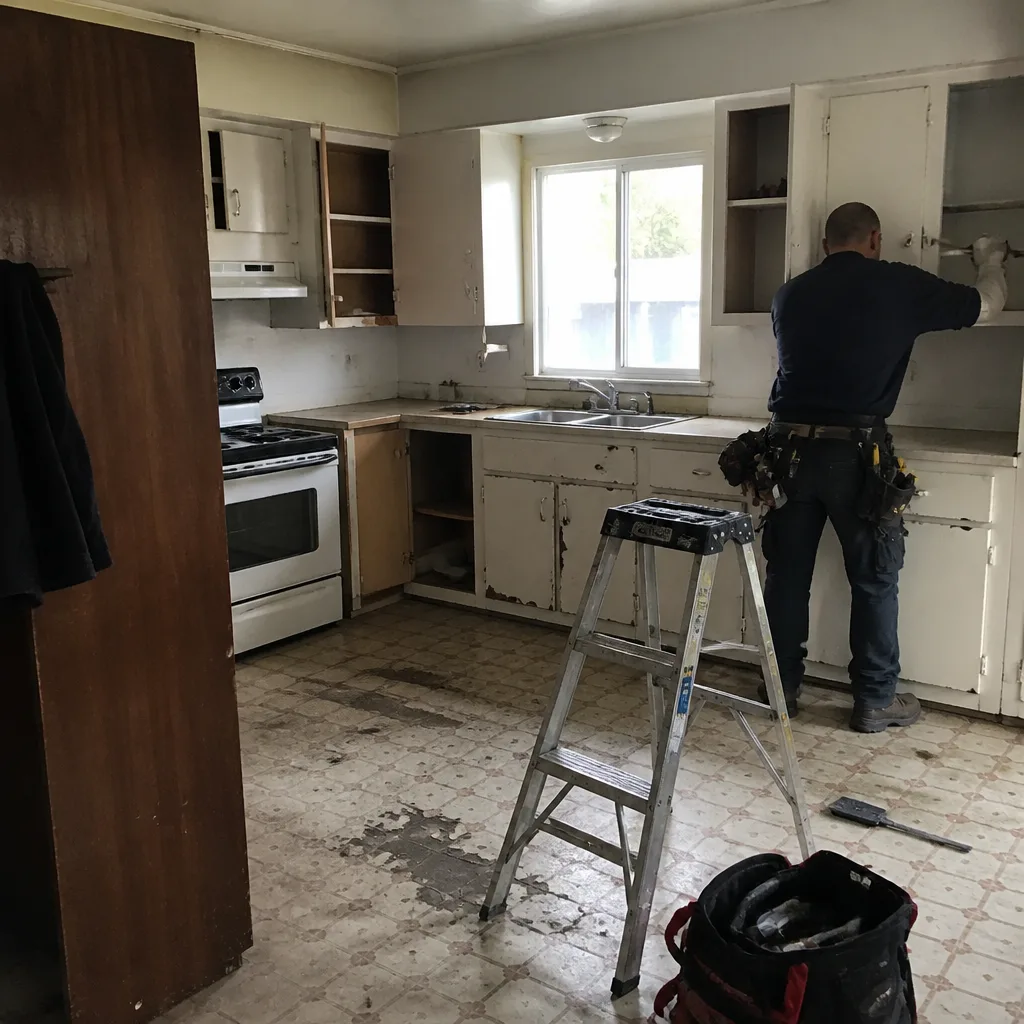 Before
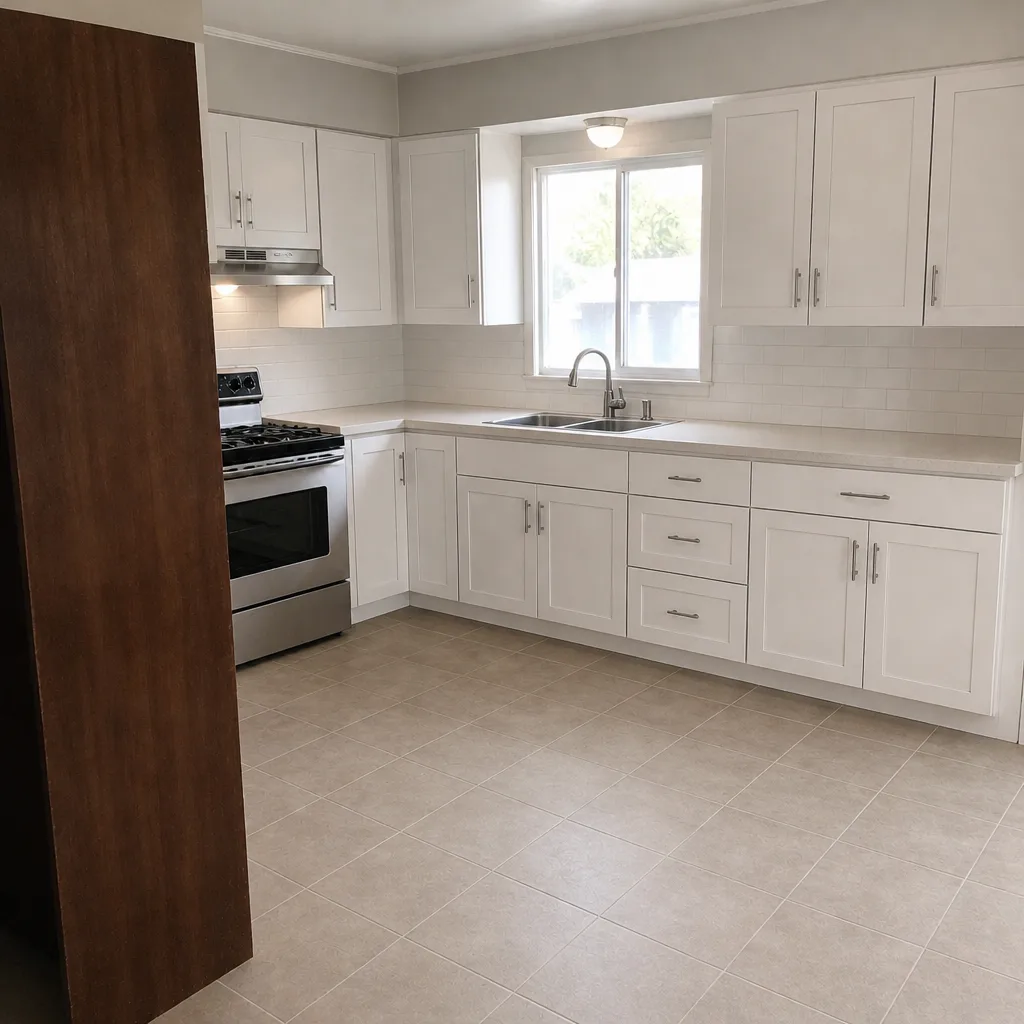 After
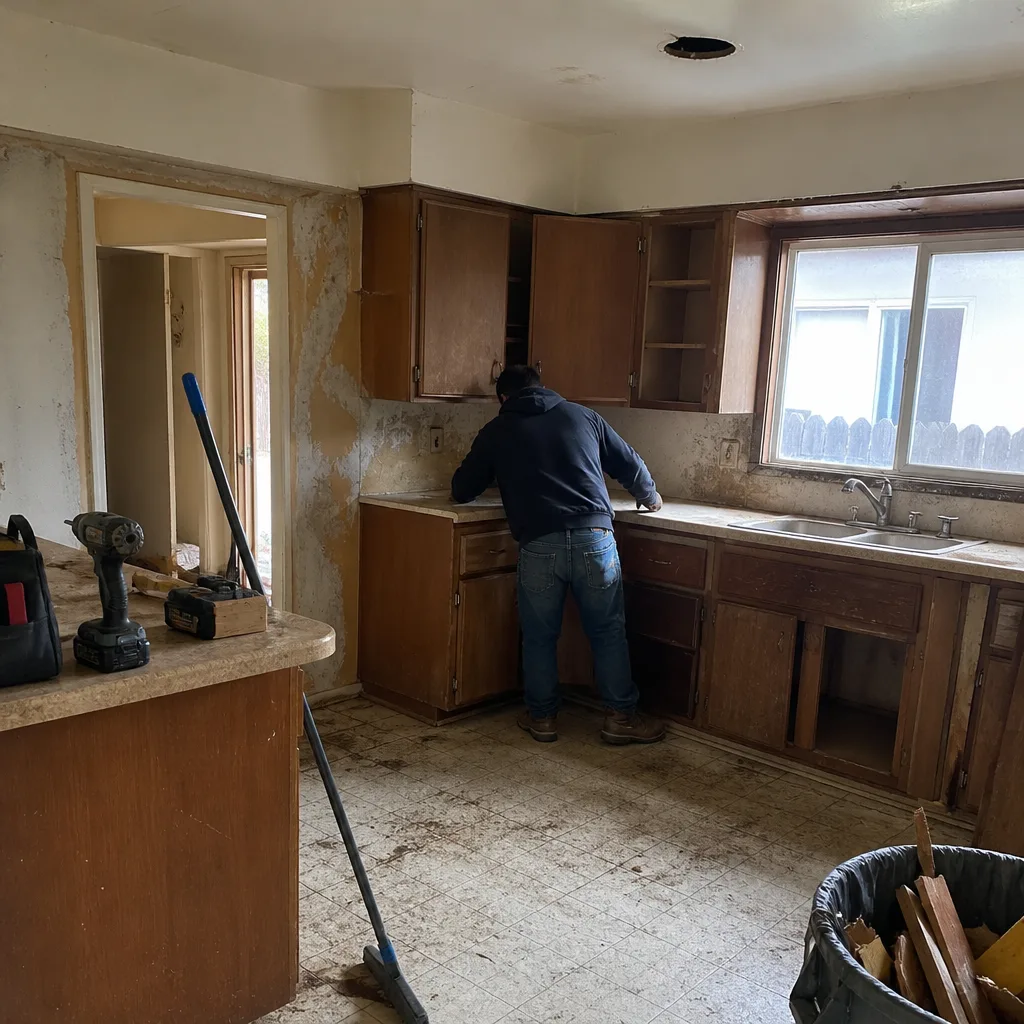 Before
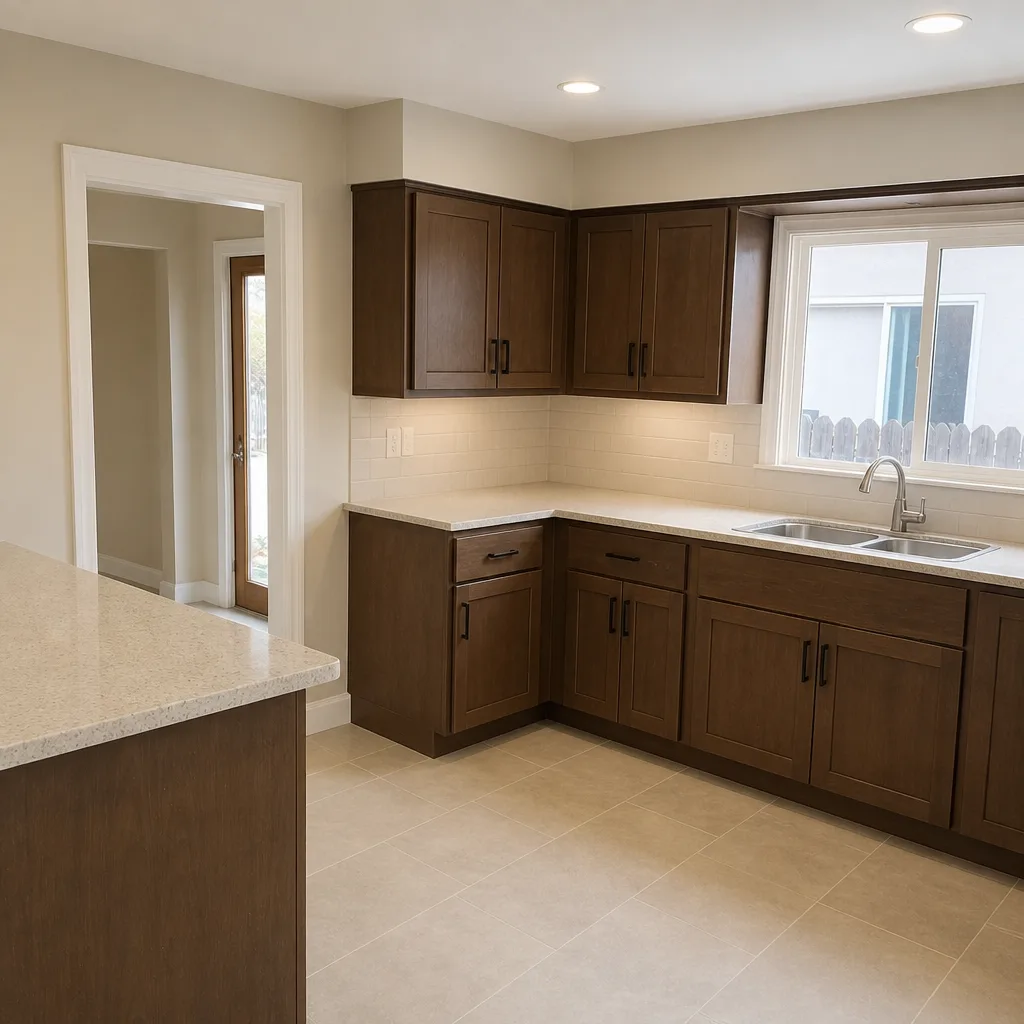 After
When to Call a Professional
Call a professional when you’re seeing any of the following: water staining or bubbling paint near an opening, fogged glass in a unit you’re still using, a door that no longer latches without force, or any window or door frame where you can press into the wood with a screwdriver handle. Also call if you’ve tested a lock and it no longer engages firmly, if glazing bead is lifting, or if you’ve found multiple warning signs on the same side of the house. These issues are diagnosable and most are fixable, but only after a proper look at the frame, the drainage plane, and – in some cases – the structure around the opening. As part of a broader exterior review, our team also handles related scopes like Driveway & Pavers in Long Beach and other envelope work, so the same visit can cover more than one problem. Groundwork Construction Co. of Long Beach offers free estimates in Long Beach – call (888) 345-8164.
Frequently Asked Questions

Condensation appears as droplets on the inside surface of the glass, wipes away easily, and typically shows up on cold mornings. A leak leaves staining or bubbling paint on the frame, sill, or trim, and doesn’t wipe away because the moisture is coming from behind the surface. If fog appears between the panes, that’s a failed insulated glass seal – a product failure, not a leak. Call (888) 345-8164 for an exact diagnosis – estimates are free.
Sudden sticking in a Long Beach home is usually one of three things: seasonal humidity swelling the wood (common in spring), an opening that’s racked due to foundation movement, or a worn hinge or strike plate. If the door sticks year-round or won’t latch without force, it’s more likely structural than seasonal. It’s worth having a contractor check the opening before you spend money on hardware.
Not always. If the frame is sound and only the insulated glass unit has failed, the glass can be replaced on its own, which is significantly less expensive than a full window replacement. Fogging alone doesn’t justify a new window. It’s when the frame is also soft, separated, or out of square that replacement becomes the right answer.
Press a screwdriver handle (not the tip) into the sill and lower rail on a dry day. If it dents more than a fresh pine board should, the wood is holding moisture. Look also for staining, black biological growth on the trim, or mitered corners that have separated. On Long Beach homes, the west- and south-facing sills almost always show it first.
It could be, and it’s worth ruling out. Long Beach sits on a mix of sandy coastal soils and more expansive clays inland, and both move with the seasons. The signs to look for are diagonal cracks at door corners, a consistent rub pattern on the jamb, and doors that no longer latch cleanly. A fresh alignment won’t hold if the opening itself has moved – call a professional for an accurate read.
Yes – free estimates in Long Beach, and a live person answers our phone 24/7. We walk the openings, document what we find, and give you a line-item quote so there are no surprises later. Our technicians are background-checked, arrive in uniform, and every install we do is covered by the 730-Day Done Right Promise. Call (888) 345-8164 to schedule yours.
The Bottom Line
The warning signs on windows and doors are quiet, but they aren’t subtle once you know where to look. Watch for bubbling paint and staining near the frame (intrusion, not condensation), doors that stick or stop latching (potentially a structural signal in Long Beach’s expansive soils), soft wood at the sill (marine-climate rot that almost always starts on the west- and south-facing sides), and hardware that no longer engages firmly (a security issue long before it’s an emergency). A 20-minute walkthrough twice a year catches most of these before they cost real money. When in doubt, get the frame and the opening looked at by someone who inspects these every week. Groundwork Construction Co. of Long Beach offers upfront pricing, no surprises, and a live person on the phone 24/7 – call (888) 345-8164 to schedule your free estimate and get a written line-item quote you can act on.
To see how windows and doors fit into the broader exterior scope we handle for homeowners, start with the Groundwork Construction Co. of Long Beach home page.
Written by the team at Groundwork Construction Co. of Long Beach.