Last updated November 17, 2026








Free written scope consultation - allowances, timeline, and change-order rules on paper before a single trade is scheduled
Bathroom Remodeling Warning Signs Every Homeowner Should Know
That soft, spongy spot beside the toilet base? Most homeowners file it under “deal with it later.” In our experience, it’s usually the visible edge of subfloor rot that runs $6,000 to $15,000 to fix once it’s properly opened up and rebuilt. Water doesn’t announce itself. It creeps through grout, wicks up drywall, and feeds mold in the dark cavity behind your tile for months before you smell anything. We’re writing this from Long Beach, where marine air and older housing stock make these problems show up faster than in dry inland markets. By the end of this guide you’ll know how to read the early signals – the ones contractors and inspectors catch while the damage is still small.
Quick Answer
The main bathroom remodeling warning signs are cracked or hollow-sounding tile, a soft or bouncy floor near the toilet or tub, musty smells that return after cleaning, caulk that keeps failing, and water stains on the ceiling below. Any one of these usually means moisture has already moved behind the surface, and the real question isn’t whether to remodel but how much hidden damage a proper assessment will find.
Styles & brands we work with
- Kitchen remodeling
- Bathroom remodeling
- Home additions & ADU
- Roofing
- Windows & doors
- Driveway & pavers
- Fence
Table of Contents
- What Grout Cracking Patterns Reveal About What’s Under Your Tile
- Surface Mildew vs. Real Mold Intrusion: Telling Them Apart
- The Smell, Sound, and Visual Tests That Catch Hidden Moisture
- Signs a Previous Remodel Used the Wrong Materials or Skipped Waterproofing
- Soft Spots, Bounce, and the Subfloor Problem Homeowners Miss
- Red Flags in Contractor Behavior During an Assessment
- Why Long Beach Homes Show These Signs Earlier
- When to Call a Professional
What Grout Cracking Patterns Reveal About What’s Under Your Tile
Not every crack in your grout is a crisis. Hairline cracks that follow a single straight line across a floor can be normal settling, especially in older Long Beach bungalows built on raised foundations. The pattern is what tells you which is which.
Here’s how to read it:
- Cracks that map the tile edges. If the grout is failing along the perimeter of the tile joints in a grid pattern, the tile is moving independently of the substrate. That usually means the thinstall bed has debonded – the tile is no longer glued down.
- Stair-step or diagonal cracks. These tend to track movement in the subfloor or a shifting joist. They’re worth tracing to see if the floor above or below shows the same line.
- Cracks that come back after re-grouting. This is the clearest signal. Grout doesn’t crack twice in the same place unless something underneath is still moving or swelling.
- Grout that crumbles to powder when you touch it. That’s often a moisture problem, not a settling problem – water is dissolving the cement.
Tap the tile with the handle of a screwdriver. A sharp, solid click means it’s bonded. A dull, hollow thud means there’s a void underneath, and voids collect water. In Long Beach homes that sit a few blocks from the water, we see hollow tile around tub surrounds far more often than inland, because the salt air and constant humidity keep everything slightly damp year-round. If you find more than a couple of hollow tiles, assume the waterproofing layer behind them has already been compromised and plan for it in the budget.
Surface Mildew vs. Real Mold Intrusion: Telling Them Apart
Every bathroom grows some mildew. It’s a fact of warm, wet rooms. The distinction that matters is whether what you’re seeing lives on the surface or is growing from inside the wall.
Surface mildew is the black or pinkish spotting that builds up on grout lines, shower curtains, and caulk. You can scrub it away with a bathroom cleaner, and it stays gone for weeks. It smells faintly musty when it’s heavy, but the smell clears once you clean.
Mold intrusion behind the tile or drywall behaves differently:
- It comes back within days of cleaning, in the same spot, no matter what you use.
- It spreads outward from a seam, a corner, or the base of the shower rather than forming an even film.
- The drywall crumbles or bulges near the growth – paper-faced drywall turns soft and dark when it’s wet from behind.
- The smell persists even when the room is dry and clean, and it gets stronger when the bathroom has been closed up.
- Paint or caulk bubbles along the same line repeatedly.
If you’re seeing any of the second list, stop treating it as a cleaning problem. The moisture source is behind the surface, and cleaning only hides the symptom. This is where a proper assessment saves money – a contractor can probe the wall cavity and see whether the growth is on the back of the drywall (a ventilation problem) or at the bottom plate (a leak problem). They’re different fixes with very different price tags.
The Smell, Sound, and Visual Tests That Catch Hidden Moisture
You don’t need a moisture meter to notice a bathroom that’s quietly failing. Three simple tests – one for each sense – catch most of what we find during a first walkthrough.
The smell test
Close the bathroom door and windows for an hour on a dry day, then walk in and breathe through your nose. A clean bathroom smells like nothing much. A faint wet-earth or locker-room smell that wasn’t there before points to moisture in the floor assembly or behind the walls. If the smell only appears after a shower, suspect the shower pan or the drain seal. If it’s there all the time, look at the toilet base and the supply lines.
The sound test
Walk across the bathroom floor in socks and listen. Squeaks, creaks, and a hollow drum sound underfoot suggest the subfloor has lost its grip on the joists or has swelled and delaminated. Pay attention near the toilet and around the tub apron – those are the two spots where water escapes first.
The visual test
Look for water stains in four places most homeowners never check:
- The ceiling of the room below the bathroom. A brown ring or a fresh paint patch that doesn’t match the rest is a classic tell – someone painted over a stain before selling.
- The base of the toilet on the side facing away from the door. That’s the side nobody wipes down.
- The caulk line where the tub meets the floor and the wall. If it’s peeling, dark, or pulls away when you press it, water is getting behind it.
- The top of the baseboard on the wall behind the shower. Swelling or bubbling paint here means water is wicking up from the floor.
Any one of these is worth investigating. Two or more together almost always mean a remodel is the cheaper path than a patch repair. If you’re unsure, a free estimate gives you a straight answer instead of a guess – we’d rather tell you “you’ve got time” than sell you a project you don’t need yet.
Signs a Previous Remodel Used the Wrong Materials or Skipped Waterproofing
This is the section Long Beach buyers should read twice. A large share of the housing stock here was built between the 1920s and the 1970s, and many of those homes have had at least one bathroom remodel done by a previous owner, a flipper, or a budget contractor who cut the wrong corners. The damage doesn’t show up on a home inspection report unless the inspector probes. It shows up on your first renovation or your first leak.
These are the signals we look for when we walk into a house that’s been “recently updated”:
- Tile set directly on drywall in a shower. Standard drywall – even the moisture-resistant kind – is not a waterproof substrate. If there’s no cement board or a bonded waterproofing membrane behind the tile, water reaches the paper face within a few years.
- No waterproofing at the shower pan. A properly built pan has a sloped mortar bed and a liner or a liquid membrane. If the tile sits on a flat surface, water pools until it finds a way down.
- Greenboard behind the tub surround, no membrane. Greenboard slows moisture; it doesn’t stop it. On a tub surround it’s a bet, not a barrier.
- Mismatched floor heights at the door threshold. Sometimes a sign of a quick tile-over-tile job – a shortcut that traps moisture between two layers.
- New fixtures with old supply lines. Fresh faucets bolted to corroded shutoff valves and flexible lines from the 90s are a hidden leak waiting for the next person who turns the water off.
- Vinyl or laminate flooring in the bathroom of an older home. It hides the subfloor. We’ve pulled it up in Long Beach homes and found original wood flooring that’s been quietly rotting underneath for years.
- Caulk used as a substitute for grout, everywhere. If the entire shower is caulked seams instead of grouted tile joints, the person who did it didn’t want to deal with substrate movement – because there was some.
None of these require tearing the bathroom apart to detect. They require a contractor who knows what a properly built wet area looks like and is willing to open a small inspection hole if something doesn’t add up. When a previous remodel used the wrong materials, doing it right the second time costs more than doing it right the first time – but it’s the only way to stop the cycle. In our experience, quality brand partners like KraftMaid and James Hardie exist for exactly this reason: the material underneath the surface is what determines whether a bathroom lasts twenty years or eight. That’s also why our work is backed by a 730-Day Done Right Promise – if it’s not right, we make it right, for two full years.
Soft Spots, Bounce, and the Subfloor Problem Homeowners Miss
A soft spot near the toilet is the most expensive “small fix” in the house. The floor feels spongy because the particleboard or plywood under the tile has soaked up water and started to break down. Once that happens, no amount of re-caulking stops it. The wood keeps failing until it’s removed and replaced.
The repair path usually goes like this:
- Open up the floor around the soft area to see how far the rot reaches – usually farther than the soft spot suggests.
- Find the water source. A failed wax ring at the toilet base is the most common cause. The next most common is a leaking supply line at the shutoff valve behind the tank.
- Replace the rotted subfloor section, sister any damaged joists, and re-level before the new tile goes down.
- Verify the repair with a moisture check before closing up, so the same hidden problem doesn’t come back.
For a small spot, this is a day or two of work. For a full subfloor rebuild in a bathroom where the rot has spread, budget in the thousands. That’s why the soft spot belongs on your “call now” list, not your “call when I’m ready” list. The good news: catching it early is nearly always the difference between a small repair and a full remodel.
Red Flags in Contractor Behavior During an Assessment
The signs of a struggling remodel don’t all hide under the tile. Some of the clearest warnings show up before anyone picks up a tool – in how a contractor handles the assessment itself. In our experience, how a contractor behaves at the estimate is a preview of how they’ll behave when there’s a problem at month two.
Watch for these:
- A bid with no line items. A lump sum with “labor and materials” and nothing else is a bid built to change. Ask for line items and see whether you get real numbers or pushback.
- No written scope of what’s included. If “demo and disposal” or “permit” isn’t in the scope, it isn’t in the price.
- Pressure to sign today. A legitimate contractor doesn’t need to rush you. A “today only” price is a sign the real number would look different tomorrow.
- Reluctance to open an inspection hole. A real assessment looks behind the drywall at seams and corners. If they’ll only look at the surface, they can’t price the job accurately.
- No warranty in writing. Ask what happens if something fails in a year. If the answer is vague, the warranty doesn’t exist.
- Cheapest bid by a wide margin. Something in that bid is being left out – usually waterproofing, permits, or a real crew.
- Unease about permits. In Long Beach, bathroom remodels that move plumbing or electrical require permits and inspections. A contractor who suggests skipping them is passing the risk to you, because unpermitted work can complicate a future sale.
At Groundwork Construction Co. of Long Beach, we answer the phone with a live person, 24/7, and we put every quote in writing with line items before anyone picks up a hammer. That’s not a marketing promise – it’s how we do business, and it’s built into the 730-Day Done Right Promise that covers every job we finish. From foundation to finish line, you should know what you’re paying for and who’s doing the work. Our technicians are background-checked, arrive in uniform, and bring up to 12 years of experience to the assessment, so the signs on this list get checked by someone who knows what a properly built bathroom looks like.
Why Long Beach Homes Show These Signs Earlier
Long Beach isn’t Los Angeles. The marine layer that rolls in most nights keeps relative humidity high in a way that dries out by noon inland. That constant dampness slows the drying of any small leak, which means the same slow drip that dries up in a Rancho Cucamonga bathroom keeps feeding mold and rot in a Long Beach one. That’s the environment a bathroom lives in here – and it’s why we take moisture problems seriously from the first visit.
Combine the climate with the housing stock and you get a pattern. Neighborhoods like Belmont Shore, Bluff Heights, and Rose Park have a lot of homes from the 1920s through the 1950s with original plumbing and decades of layered remodels. We regularly see spring failures and slow leaks in these areas because the supply lines are near the end of their service life and the exterior walls sit close to the ground, which is where fog-driven moisture collects. Older homes near the water – Alamitos Beach, Naples, the peninsula – tend to show faster corrosion on fixtures and supply lines from the salt air. And in the newer developments east of the traffic circle and around Cal State Long Beach, we see builder-grade materials from the 1990s and 2000s hitting the end of their useful life at the same time, which is when the shortcut waterproofing starts to show.
That’s the context a local contractor brings and a search-and-buy bid won’t. Whether you’re renovating a 1930s bungalow or updating a 2005 townhome, the warning signs come from the same place – but the timeline in Long Beach is shorter. When the bathroom finally needs a full rebuild, we coordinate it alongside other scope so you’re not juggling multiple contractors. If you’re planning outdoor work at the same time, our teams handle Driveway & Pavers in Long Beach and Fence Installation in Long Beach through the same project, and when a bathroom addition is part of a larger plan, we cover Home Additions & ADU in Long Beach as well. It’s one team, one schedule, one point of accountability. You can see the full range of what we build on our Groundwork Construction Co. of Long Beach home page.
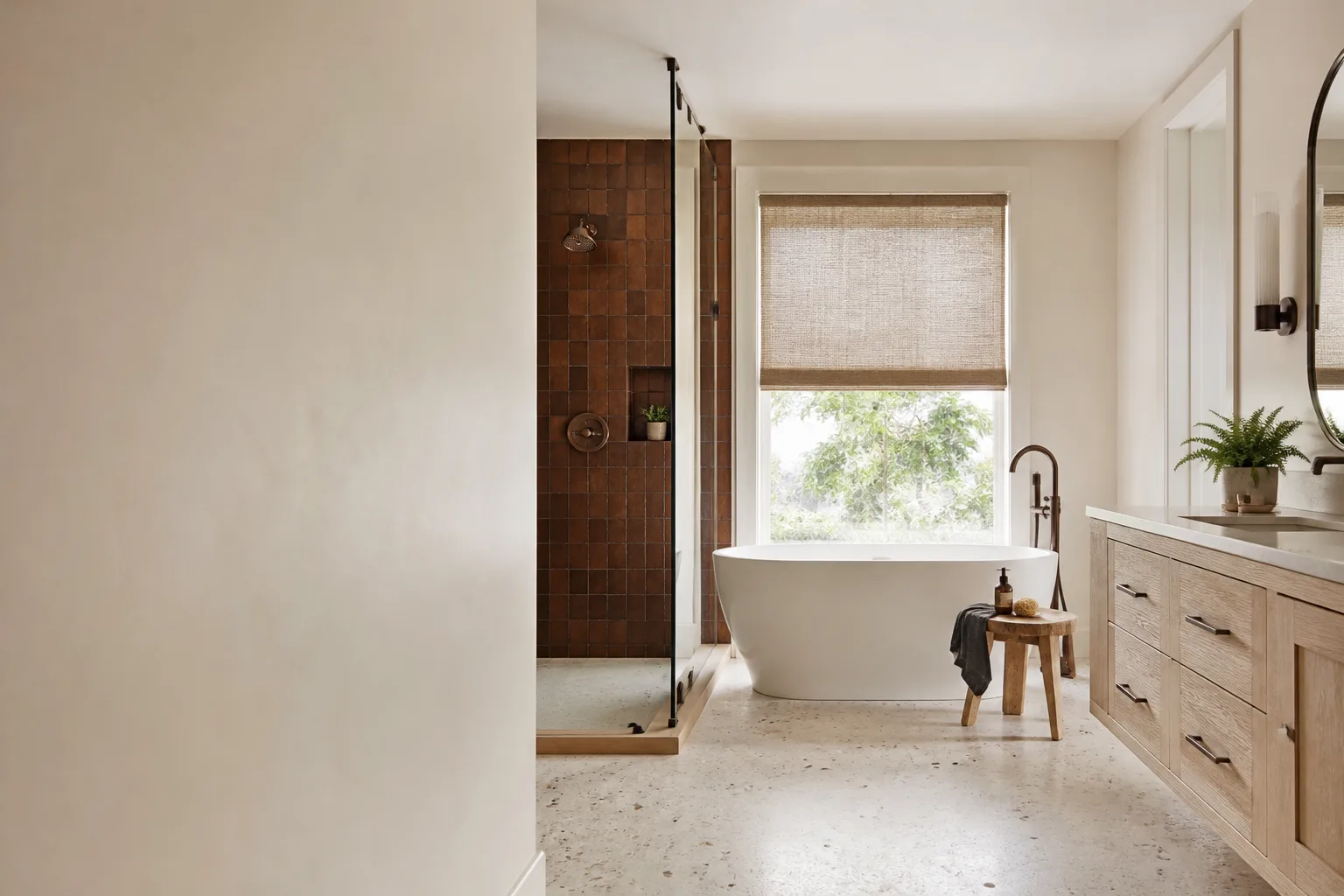
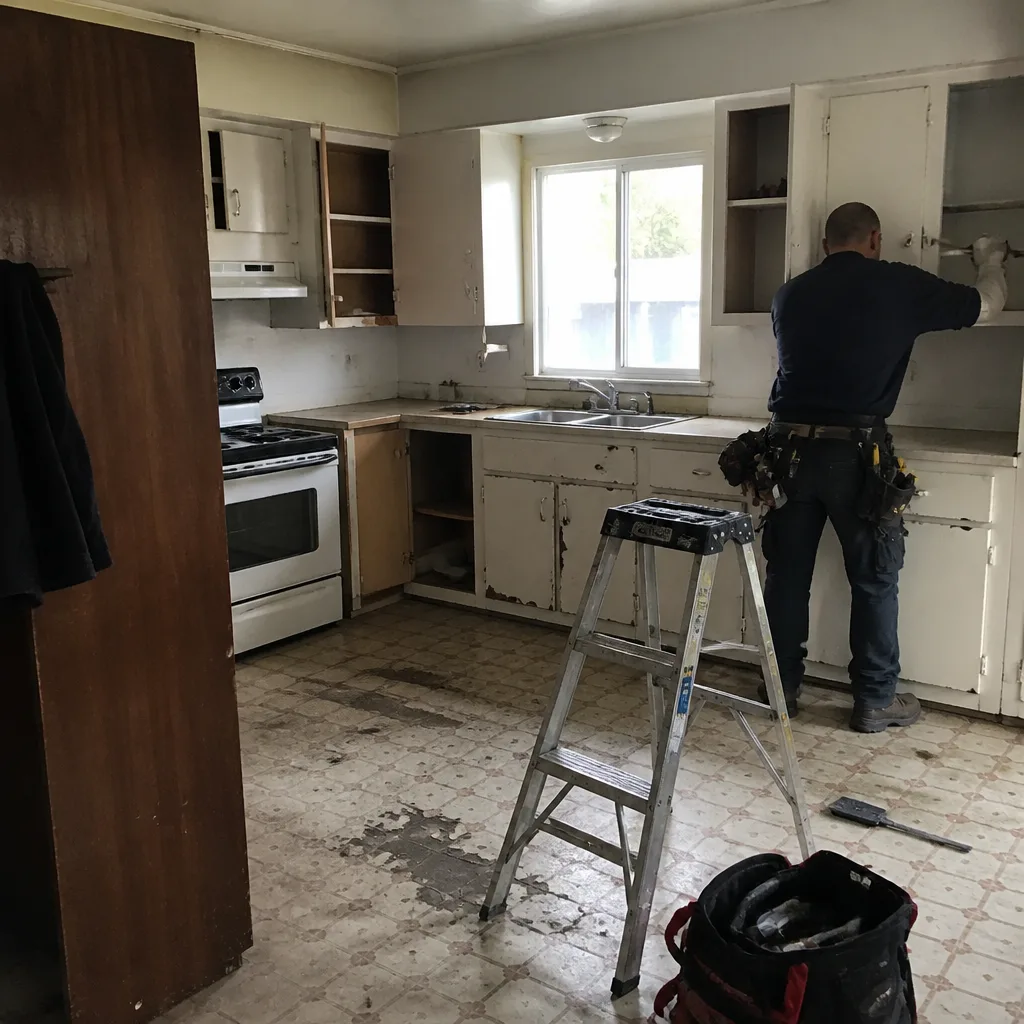
See the difference
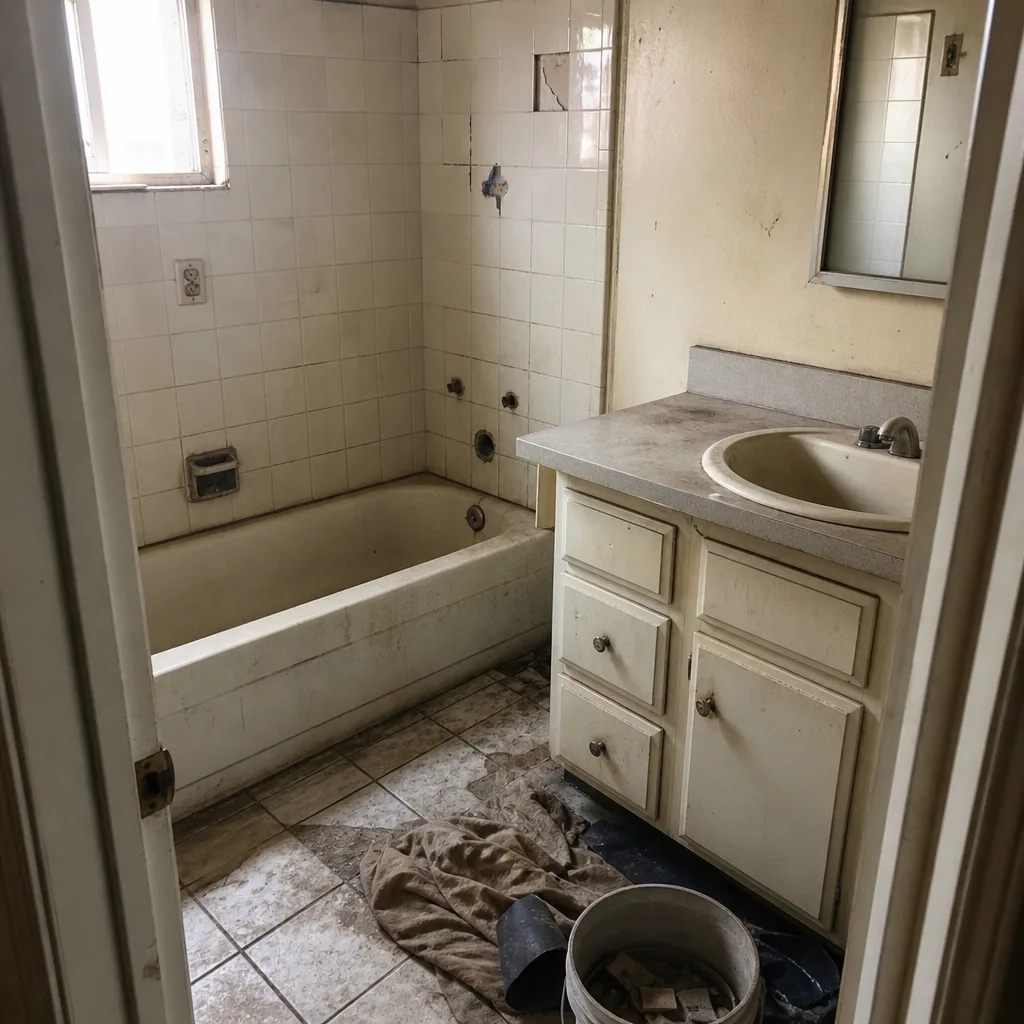 Before
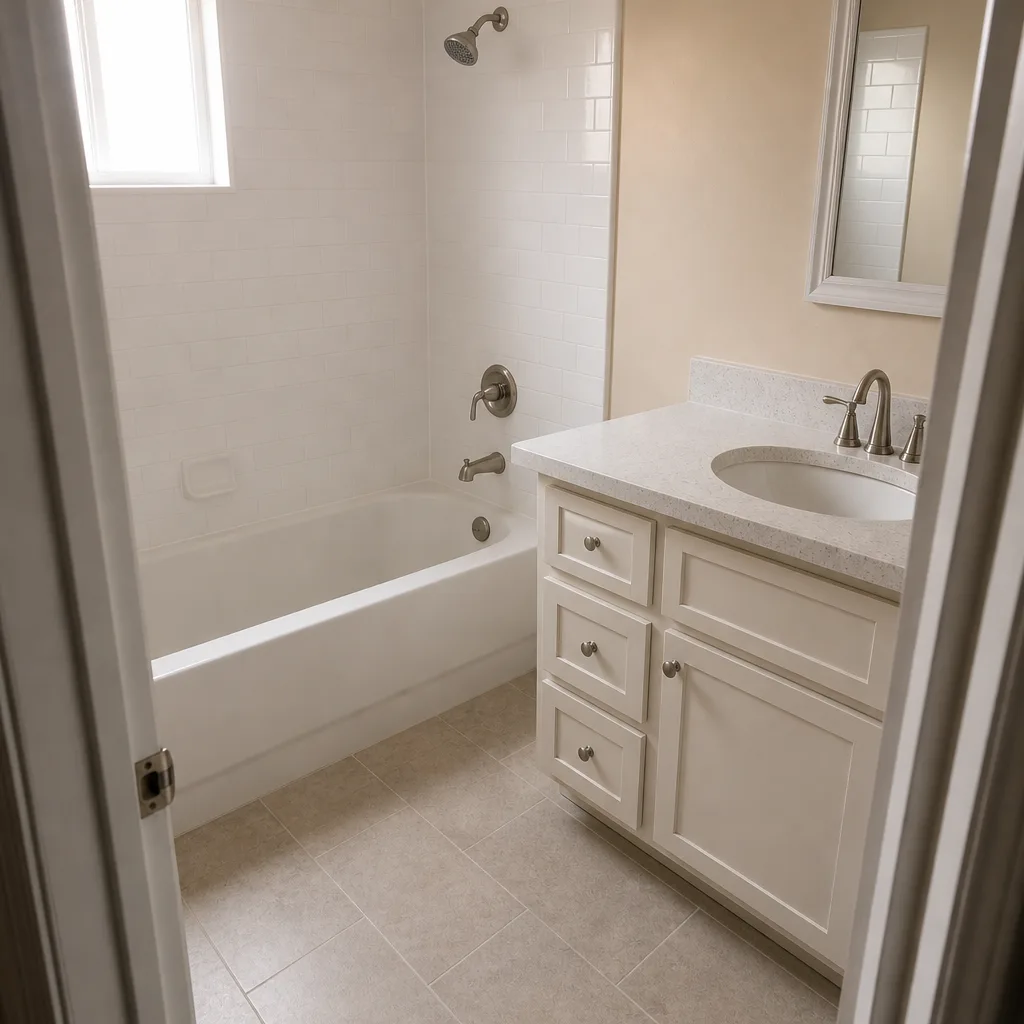 After
 Before
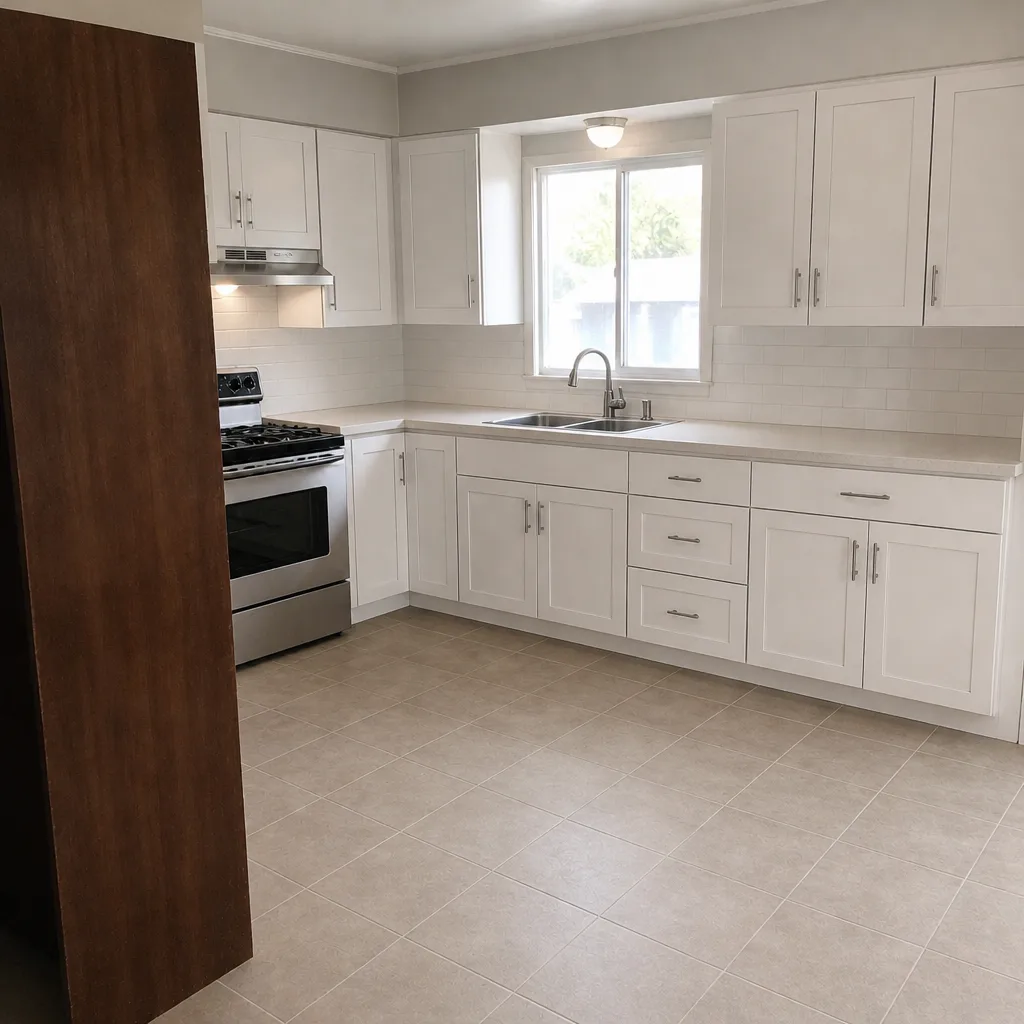 After
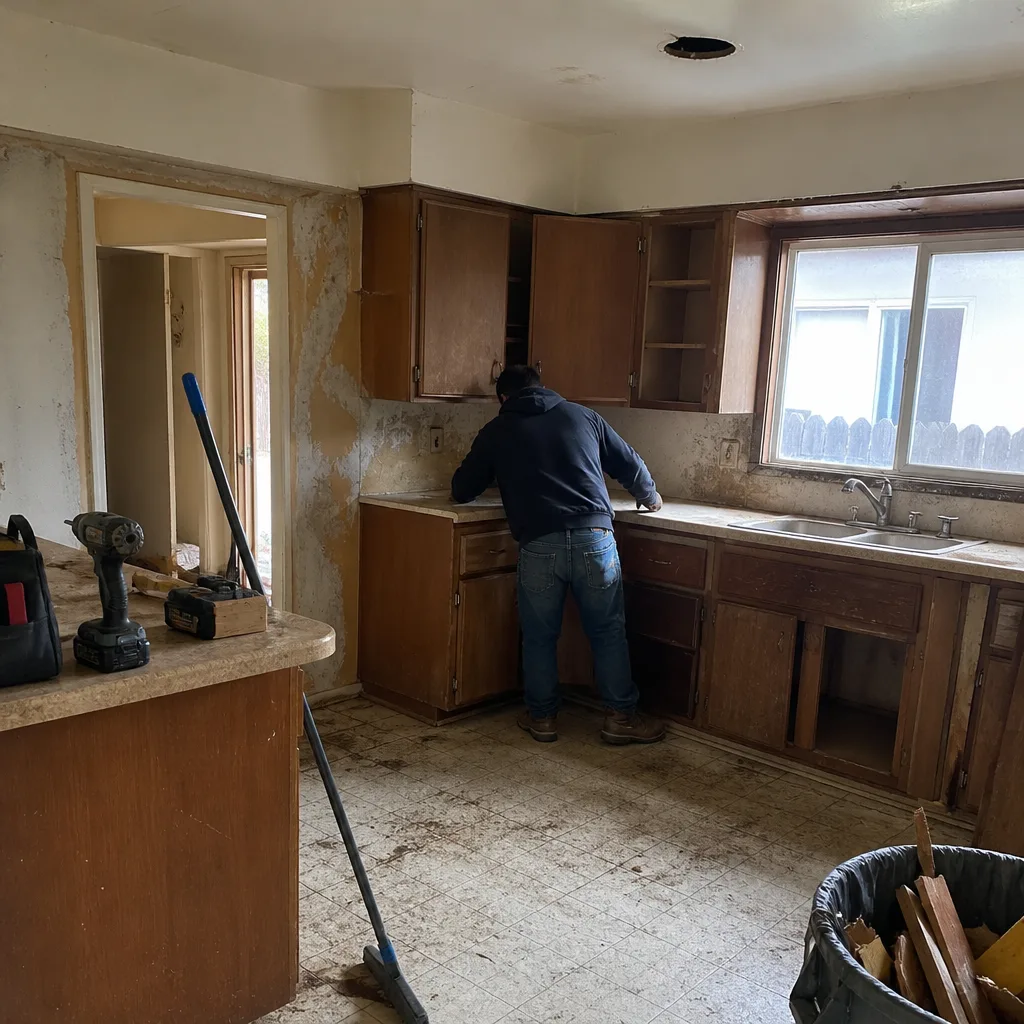 Before
 After
Common Mistakes to Avoid
- Painting over a ceiling stain instead of finding the leak. A stain is a symptom. Painting it doesn’t stop the drip above it, and by the next rainy season it comes back bigger. In Long Beach, where the marine layer keeps everything damp, the ceiling below the bathroom is often where the first real clue shows up.
- Re-caulking the shower every few months as a fix. If the caulk keeps failing in the same corner, the substrate behind it is moving or holding water. The caulk isn’t the problem; it’s the messenger.
- Assuming the home inspection caught everything. Standard inspections are visual and surface-level. They rarely probe behind tile or under flooring, so “recently remodeled” in a listing doesn’t confirm the waterproofing was done correctly.
- Skipping the permits to save time. Long Beach requires permits for plumbing and electrical changes. Unpermitted work can be flagged at resale and usually costs more to correct than the permit ever would have.
- Hiring the lowest bid to save 10%. The lowest bid is almost always missing something – a waterproofing membrane, disposal, or a real crew. The savings vanish the moment the drywall comes down.
- Waiting to open up a soft floor. That soft spot near the toilet base is a message. The longer you wait, the more the subfloor and joists underneath it decay, and what could have been a repair becomes a full rebuild.
- Ignoring a persistent bathroom smell as “just a bathroom smell.” A musty smell that comes back after cleaning is not normal. It’s a moisture signal, and it usually shows up before the visible damage does.
When to Call a Professional
Call a professional the moment you notice any of these: a floor that feels soft or bouncy near the toilet or tub, moisture or a stain on the ceiling below the bathroom, caulk that keeps failing in the same spot, a smell that returns within days of cleaning, mold that spreads rather than cleaning up, or grout cracks that come back after re-grouting. These signs share one thing – the visible surface is fine but the assembly behind it is failing, and only someone who knows what’s under the tile can tell you how far the damage goes. A failed wax ring, a slow supply-line leak, or a shower pan that was never waterproofed will keep feeding the problem until the subfloor or the framing is opened up and repaired.
Groundwork Construction Co. of Long Beach offers free estimates in Long Beach – call (888) 345-8164. We’ll assess the whole bathroom, not just the symptom, and give you upfront pricing with no surprises and a written line-item quote. If it turns out you don’t need a remodel yet, we’ll tell you that too.
Frequently Asked Questions
Recurring moisture problems in the same area are the clearest sign a full remodel is the smarter path. If you’ve re-caulked, re-grouted, or re-painted the same spot twice and the problem returns, the moisture source is behind the wall or under the floor, and patching the surface only delays the real repair. Call (888) 345-8164 to schedule a free estimate.
Surface mildew wipes away and stays gone for weeks; mold behind the tile returns within days and usually spreads outward from a seam or corner. If the drywall nearby is soft, dark, or bubbling, or the smell persists when the room is dry, the growth is coming from inside the wall. That requires opening the cavity to assess, not more cleaning.
Yes, once the rot spreads. A small soft spot is usually a day or two of repair, but when the subfloor and joists underneath are compromised across the bathroom, the cost of proper remediation – demo, subfloor replacement, joist repair, new flooring, and waterproofing – falls in the $6,000 to $15,000 range in the Long Beach market. Catching it early is the difference between a small repair and a full rebuild.
Yes, if the project involves plumbing or electrical changes, which most bathroom remodels do. Long Beach requires permits for that work and inspections to verify it. Permits protect you at resale and confirm the work meets code – any contractor who suggests skipping them is passing the risk to you.
Look for these tells: tile set directly on drywall in the shower, no visible sloped pan at the shower floor, a floor threshold that seems too high (tile-over-tile), and caulk used in place of grout on major seams. A contractor can confirm by opening a small inspection hole behind the tile. If waterproofing was skipped, plan for a rebuild rather than a patch.
Not with a written line-item quote. Hidden damage is the one thing that can change scope, and a professional assessment probes behind the surface before the bid is final so that risk is priced accurately upfront. At Groundwork Construction Co. of Long Beach, our quotes are backed by the 730-Day Done Right Promise, and the number you see is the number you pay on the agreed scope. Call (888) 345-8164 for a free estimate.
The Bottom Line

The bathroom problems that cost the most are the ones that stayed quiet the longest. A soft spot, a smell that returns, caulk that keeps failing, a ceiling stain below the bathroom – none of these are cosmetic. They’re the early signals of moisture that’s already moved behind the surface, and the cheapest time to deal with them is now. Pay attention to the pattern of the crack, the source of the smell, and the behavior of the contractor who walks through your door. In Long Beach, where the marine climate keeps everything damp, these signs show up earlier and matter more. When you’re ready for a straight answer rather than a sales pitch, call Groundwork Construction Co. of Long Beach at (888) 345-8164 for a free estimate – we’ll tell you what we see, what it costs, and what your options are. Upfront pricing, no surprises.
Written by the team at Groundwork Construction Co. of Long Beach.