Last updated November 17, 2026

Free written scope consultation - allowances, timeline, and change-order rules on paper before a single trade is scheduled
The Complete Bathroom Remodeling Guide for Long Beach Homeowners
Most bathroom remodeling advice you’ll read online was written for a house in Ohio. Long Beach is a different job. The marine layer off the port pushes humidity into walls all year. The Metropolitan Water District delivers some of the hardest water in the country, which etches glass and stains grout. And a huge share of Long Beach housing went up between the 1940s and 1970s, which means galvanized supply lines, knob-and-tube wiring, and subfloor rot hiding an inch under the tile. This guide walks you from first measurement to final grout line with real Southern California numbers, the permit rules that actually apply in Long Beach, and the sequence a competent crew follows. We’ll also show you how to spot the shortcuts that look fine at final walkthrough and fail two winters later.
Quick Answer
A bathroom remodel in Long Beach costs roughly $12,000 to $18,000 for a cosmetic refresh, $28,000 to $52,000 for a full gut-and-remodel on a standard hall bath, and $55,000 to $95,000 or more when you move plumbing and change the layout. Final cost depends far less on tile choice than on what your walls and subfloor reveal once demo starts, so the number that matters is the one written into a fixed line-item quote after an inspection, not the one quoted over the phone.
Styles & brands we work with
- Kitchen remodeling
- Bathroom remodeling
- Home additions & ADU
- Roofing
- Windows & doors
- Driveway & pavers
- Fence
Table of Contents
- What does a bathroom remodel cost in Long Beach?
- Hidden conditions in Long Beach’s older housing stock
- Which bathroom work requires a permit in Long Beach?
- Materials that survive a coastal environment
- The correct order of trades (and how to spot a crew cutting corners)
- How scope shifts by Long Beach neighborhood
- How long a Long Beach bathroom remodel takes
- Budgeting and financing the project
What does a bathroom remodel cost in Long Beach?
Bathroom costs in Long Beach run 15% to 30% above inland California metro averages, and the gap isn’t arbitrary. Permitting through the Long Beach Development Services department, coastal-zone moisture remediation, and a competitive but busy local labor pool all push the number up. The three scope tiers below are what we actually see from bids and walkthroughs across the city.
Cosmetic refresh: $12,000 to $18,000
Cosmetic work means no plumbing relocation, no electrical work beyond swapping a fixture, and no layout change. You’re replacing tile, tub or shower surround, vanity, toilet, light fixture, and paint. A hall bath in Bixby Knolls with solid bones fits this tier comfortably. The 0% financing for 18 months many contractors offer exists precisely because a project like this one is easier to plan when the total is spread across paychecks rather than written in a single lump.
Full gut-and-remodel: $28,000 to $52,000
A gut removes everything to the studs. New cement board, waterproofing membrane, plumbing rough-in inspected and signed off, electrical brought up to current code, new exhaust fan ducted outside, and all-new finishes. Standard hall bath, roughly 35 to 50 square feet, lands at the low-to-mid end. A larger primary bath with a curbless shower and freestanding tub runs toward the top. This is the tier where Long Beach’s older housing stock matters most because a 1950s ranch in Lakewood or a 1930s bungalow near Bluff Park will almost certainly reveal something unexpected during demo.
Layout change: $55,000 to $95,000 or more
Moving a toilet, sink, or shower changes the drain geometry under the floor, which means cutting into the slab in slab-on-grade homes. New drain lines, new vents, and a fresh round of inspection. In a second-floor bathroom, moving a toilet means opening the ceiling below in a first-floor room. We’ve priced layout changes on Catalina Island properties that double the standard metro number purely on logistics. If you can keep the toilet and shower where they are, you’ll save a meaningful portion of the budget.
Line-item price ranges you should expect to see
- Demo and haul-away: $1,800 to $3,500
- Plumbing rough-in (no relocation): $2,500 to $5,000
- Plumbing relocation (per fixture): $2,000 to $4,500
- Electrical rough-in and exhaust fan: $2,200 to $4,200
- Waterproofing and cement board: $1,500 to $3,000
- Tile (material plus setting): $6,000 to $18,000 depending on square footage and tile choice
- Vanity, toilet, and fixtures: $2,500 to $9,000
- Long Beach permits and inspection fees: $450 to $1,200 depending on scope
Be wary of any bid that arrives as a single lump sum. Fixed line-item pricing is what lets you check whether the number is real. The team at Groundwork Construction Co. of Long Beach writes every bathroom estimate with each line itemized so you can compare apples to apples across bids.
Hidden conditions in Long Beach’s older housing stock
The most expensive part of a Long Beach bathroom remodel is the part you can’t see until demo. In newer construction, a bathroom is mostly finish work. In a Long Beach house built between 1940 and 1975, it’s investigative surgery. Here’s what we find most often.
Galvanized plumbing that fails when touched
Galvanized steel supply lines were standard through the 1960s. They work by corrosion forming a mineral shell inside that keeps water contained. The moment a tile guy tugs a valve during demo, that shell cracks and the line starts leaking into the wall cavity. It’s not the plumber’s fault, and it isn’t negotiable, either. The line has to be replaced, which adds $3,000 to $8,000 to the budget depending on how far it runs and whether the wall has to be opened below the bathroom. This is one reason we open walls during the initial inspection on any Long Beach home built before 1965 – the sooner the surprise is priced, the sooner the project can move.
Knob-and-tube wiring behind bathroom walls
Knob-and-tube wiring is common in Long Beach homes built before about 1950, and it’s very common in Bixby Knolls, Bluff Park, and the older parts of Belmont Heights. Bathroom walls are particularly likely to hide it because so few people have done electrical work there over the years. The city won’t close a bathroom permit that permits new wiring if any portion of the circuit still runs on knob-and-tube that isn’t properly abandoned. Expect $1,500 to $4,500 for remediation depending on circuit count and wall access.
Subfloor rot near the coast
Homes within a few blocks of the beach – Belmont Shore, Naples, parts of the Peninsula – sit in a humidity regime that traps moisture in the subfloor. A slow-dripping toilet supply line or a poorly sealed shower pan costs nothing until it has decayed the plywood under the floor. In our experience, a bathroom built on an original subfloor in a coastal Long Beach home has a 30% to 50% chance of needing partial subfloor replacement once the old tile comes up. Plan a contingency of 8% to 12% of the total project for this category of problem.
Greenboard, not backer board, in older remodels
If a previous owner remodeled the bathroom in the 1990s or early 2000s, they probably installed green drywall behind the tile rather than a cement backer board and waterproofing membrane. Green drywall is moisture-resistant, not waterproof. It fails at the bottom of the shower wall and around the tub surround. When we open a wall in Long Beach and see greenboard, the whole surround comes out and gets rebuilt to current standards.
Which bathroom work requires a permit in Long Beach?
Long Beach is stricter than many Southern California cities about bathroom permits, and that’s usually good for you – it means work is inspected and a contractor’s work is verified. But it also means the permit process is part of your project timeline, not something to leave to the end. Here’s what triggers a permit.
Work that requires a Long Beach permit
- Any plumbing fixture relocation (moving the toilet, sink, or shower)
- Any new electrical circuit, and any wiring replacement that opens the wall
- Exhaust fan installation where none existed before, or where the existing fan is not ducted outside the building envelope
- Wall removal or layout change that affects framing
- Any tankless water heater installation or relocation
- Shower pan replacement where the pan is being rebuilt rather than re-tiled
Work that usually doesn’t require a permit
- Tile replacement over a sound existing surface
- Vanity replacement with no plumbing relocation
- Toilet replacement in the same location
- Paint, fixtures, and mirror replacement
What the inspection process actually looks like
- Plan submission: Contractor submits scope, drawings, and material specs to Long Beach Development Services. Expect two to four weeks for plan review on a layout change, faster for a straight gut-and-remodel.
- Rough-in inspection: Plumber and electrician complete their rough work, the walls are still open, and a city inspector verifies both. This is the most important inspection. Do not let anyone close up walls before it’s signed off.
- Waterproofing inspection (if required): Some Long Beach plan reviewers require verification of shower pan and membrane installation before tile.
- Final inspection: All fixtures installed, exhaust fan operating and ducted properly, GFCI outlets tested, smoke and carbon monoxide detectors in place. Signed final means the permit closes and the work is legal.
If a contractor wants to skip the rough-in inspection to “get going faster,” they are cutting sequence and creating a permit problem that will hit you when you sell. That’s not a negotiation. Call us at (888) 345-8164 if you’d like to talk through what your specific project needs.
Materials that survive a coastal environment
Tile, grout, and ventilation are where budget-conscious homeowners most commonly make choices they regret in a coastal climate. The right materials aren’t always the most expensive – they’re the ones matched to Long Beach’s specific humidity and hard water profile.
Tile: porcelain over natural stone in wet areas
Porcelain is denser, less porous, and more dimensionally stable than most natural stone. In a bathroom with the humidity we have here, marble and travertine slab in the shower – which we see a great deal of in high-end Long Beach remodels – will etch, discolor, and require yearly sealing. Porcelain tile in a marble-look finish gets you 90% of the visual result for a fraction of the maintenance. Where natural stone is specified, plan on sealing every six to twelve months.
Grout: epoxy over cement-based
Cement-based grout is porous and absorbs the mineral content in Long Beach water. Within a year or two, white grout near the shower turns yellow-brown. Epoxy grout is non-porous, resists staining, and doesn’t need sealing. It costs roughly $1,200 to $2,800 more across a full bathroom, which pays back fast in this water. Grout joint width matters, too – 1/16 inch joints accumulate hard-water deposits much more visibly than 1/8 inch.
Ventilation: ducted to the exterior, sized to the room
The building code exhaust requirement is straightforward: a bathroom needs a fan that clears the room’s air volume at a steady rate, and the fan must vent to the outside – not into the attic, not into the soffit, not recirculated through a charcoal filter. In coastal Long Beach, where exterior humidity is high year-round, under-ventilation is the single fastest way to grow mold behind tile. We install fans rated for continuous operation, ducted in smooth rigid pipe rather than flex wherever possible. Coverage matters more than a bigger number on the box.
Fixtures built to last
Fixture brands matter less than whether the brand stocks replacement parts in Southern California. Kohler is standard for a reason. So are the kitchen and bath fixtures from KraftMaid and similar partners that hold their finish in coastal air. Cheap imports often don’t survive two summers of salt air near the beach.
The correct order of trades (and how to spot a crew cutting corners)
Bathroom remodeling follows a set order for a reason: each trade leaves the job ready for the next one, and jumping ahead means the next trade either does poor work or has to undo what came before. Here’s the sequence a competent crew runs, and the ways you can tell if a crew is skipping steps.
- Demo and dumpster: Everything out to the studs and subfloor. Old materials carted before new arrives.
- Framing corrections (if needed): Rot, water damage, and structural fixes get addressed at this point, not later.
- Plumbing rough-in: Supply and drain lines relocated and capped. Rough-in inspection scheduled.
- Electrical rough-in: Wiring, boxes, GFCI placement, and exhaust fan wiring installed. Rough-in inspection scheduled for the same visit as plumbing.
- Rough-in inspection: The city verifies both trades with the walls open. Any corrections are made before walls close.
- Insulation and exterior venting: Exhaust fan ducted to the outside through the wall or roof, and insulation replaced.
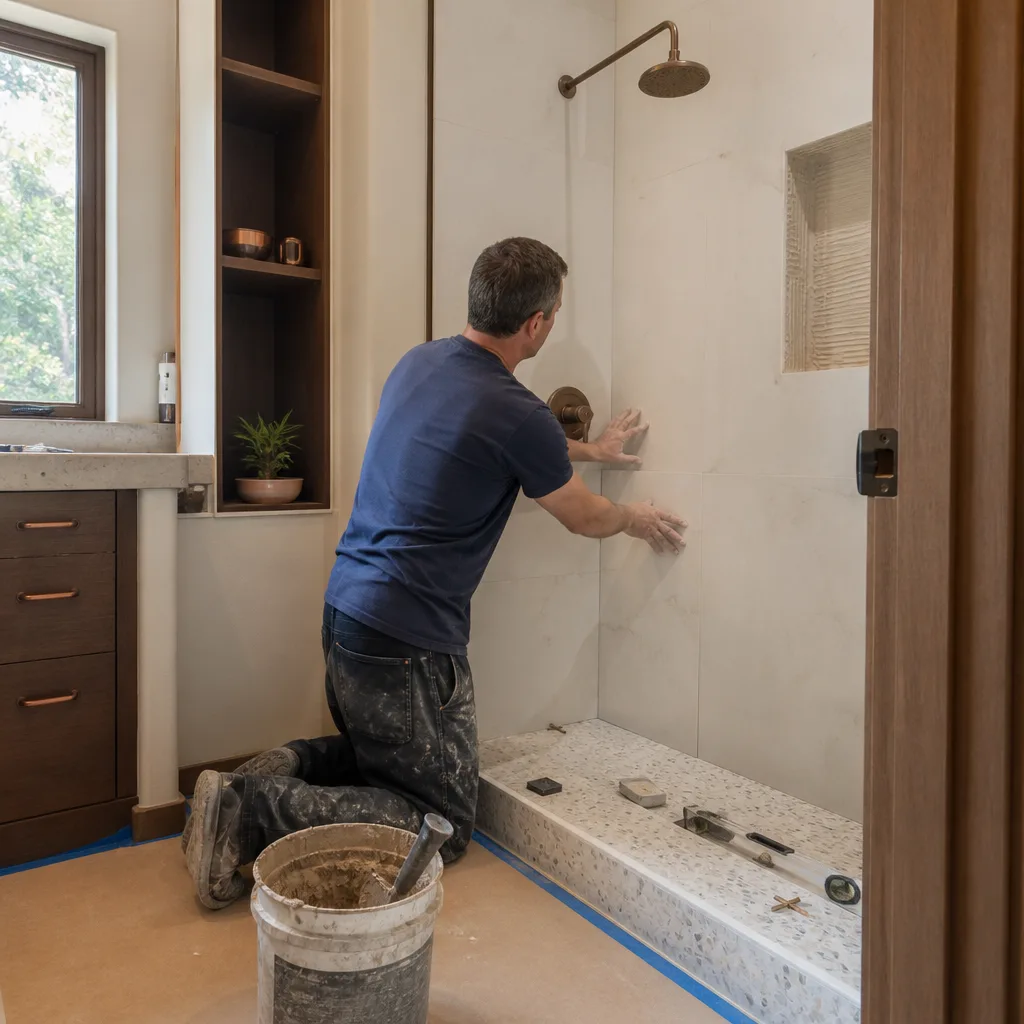
- Cement board and waterproofing: Cement backer board installed, then the waterproofing membrane – usually a liquid-applied or sheet membrane – applied to all wet-area walls and floor.
- Tile setting: Walls first, then floor, then grout. Epoxy grout cures longer than cement grout, so this step takes a day or two longer.
- Fixtures and trim: Vanity, toilet, faucets, shower trim, towel bars, mirror, and paint.
- Final inspection: City inspector signs off. Permit closes. You get the signed final for your records.
How to spot a crew cutting sequence
- Walls closed up before the rough-in inspection. This is the single most damaging shortcut. It means you’re paying for a permit that will never close cleanly.
- Tile set directly on drywall or greenboard without a waterproofing membrane. Looks fine at walkthrough. Fails in 18 months.
- Exhaust fan vented to the attic or the soffit instead of through the roof or exterior wall. Ask to see the duct run.
- Grout applied the same day as tile setting. Grout needs time to set, and rushed grout cracks at the edges.
- A “final” walkthrough with no inspection final paperwork. If they don’t hand you a signed-off permit, the work isn’t done.
Groundwork Construction Co. of Long Beach runs every bathroom through this sequence and holds the trades to it, and we hand the homeowner the closed permit at the end. The 730-Day Done Right Promise backs that work in writing. If something fails in the first two years, we come back and make it right.
How scope shifts by Long Beach neighborhood
Not every Long Beach bathroom is the same job. Housing age, lot size, and construction type vary enough block to block to genuinely change the budget.
Belmont Shore and Naples
Older homes closer to the water combine tight bathroom footprints with significant subfloor risk. These neighborhoods are also where the highest percentage of remodels land in the gut-and-remodel tier because homeowners are upgrading a 1960s-era bathroom to a modern standard. Expect the ceiling of the mid-tier range, especially where subfloor and supply-line work stack up.
Bixby Knolls and California Heights
Two of the most remodeled neighborhoods in Long Beach, and for good reason. The housing stock is largely 1930s to 1950s, built solid, with the knob-and-tube wiring issue appearing in roughly half the bathrooms we open. Plan for remediation even before demo.
Downtown and Alamitos Beach
Condo and townhome bathrooms introduce HOA access rules, limited dumpster placement, and building-wide water shutoff scheduling. That adds a project-management layer that shows up in cost as schedule effort rather than material. We plan these carefully because a water shutoff that isn’t coordinated with the building manager is an HOA problem, not a plumbing problem.
Lakewood and East Long Beach
Post-war tract homes from the 1950s have predictable bathroom layouts and generally cooperative permit review. These are often the most straightforward remodels in the city – a standard hall bath in this stock lands close to the middle of the mid-tier range with fewer surprises.
Peninsula and Catalina-area properties
Logistics drive cost here. Materials cross water, trades have to travel, and dumpster placement and permit review can take longer. We quote these thoughtfully and don’t pretend a Peninsula bathroom costs the same as a Lakewood one.
If your home is part of a larger project – a bathroom plus a kitchen, or a bathroom plus an addition or ADU in Long Beach – sequencing the trades together saves on mobilization.
How long a Long Beach bathroom remodel takes
Timelines are the number one question homeowners ask, and they’re also where contractors tend to overpromise. Here’s what we see across Long Beach projects.
- Cosmetic refresh: 2 to 3 weeks of on-site work, plus 2 to 3 weeks of material lead time before that.
- Full gut-and-remodel (no layout change): 5 to 7 weeks of on-site work. Schedule permits and long-lead tile, vanity, and fixture deliveries during the 3 to 5 weeks before demo starts.
- Layout change: 8 to 10 weeks of on-site work, plus 4 to 6 weeks of plan review and permitting before demolition.
The biggest falsehood in this industry is “we’ll have it done in two weeks.” A full gut on a Long Beach bathroom, done with permits and inspections, cannot be completed in two weeks. If a contractor promises that, they’re either skipping inspection or planning to run trades in parallel when they shouldn’t. Neither outcome is good for you.
Lead times on tile, vanity, and fixtures have eased over the last couple of years but are still worth planning around. Ordering at the start of the project and storing materials on-site is the practical answer. We schedule deliveries around the demo date so they don’t sit in your driveway in the rain.
Budgeting and financing the project
Bathroom remodels are expensive enough that a cash-only plan delays projects unnecessarily. The right approach is to build a real budget as a range, not a single number, and then price the financing so you understand the true monthly cost.
How to build a budget that holds up
- Pick a scope tier first, not a finish. Decide between cosmetic, gut-and-remodel, or layout change before you shop. Picking tile first is the fastest route to a blown budget.
- Add an 8% to 12% contingency. Long Beach older housing almost always needs it, and you’ll sleep better knowing it’s there.
- Get a fixed line-item quote. Upfront pricing that matches the number you pay at final walkthrough is the standard to hold every contractor to. If the bid includes vague language like “allowances” without dollar figures, ask for the figures.
- Ask about financing terms in writing. 0% financing for 18 months is a standard offer across many contractors. Understand the exact repayment schedule and what happens if you don’t pay in full within the promotional period.
- Factor in the standing promotions. A $1,000 off project over $10,000 discount and a free design consult materially change the effective budget and should be applied before you sign.
Where to spend, where to save
- Spend on: waterproofing, subfloor replacement, plumber and electrician quality, exhaust fan quality. These are invisible when done right and expensive when done cheap.
- Save on: light fixtures, mirror, hardware, paint color, and vanity pulls. These can be upgraded later with minimal disruption.
- Don’t save on: permit fees, inspection, and final walkthrough documentation. Cutting these costs money down the line when you sell.
Common Mistakes to Avoid
- Signing a lump-sum bid with no line items. Without itemization you have no way to compare bids or catch scope gaps, and you have no basis for the change-order arguments that inevitably follow.
- Skipping the rough-in inspection to keep the schedule. Long Beach will catch closed-up walls eventually – usually during a sale or refinance – and the correction cost dwarfs the schedule saving.
- Assuming your 1950s Long Beach bathroom is plumbed in copper. Galvanized supply is common in pre-1965 homes and fails when touched during demo. Get the walls opened for a proper inspection before contract signing.
- Choosing cement grout to save a few hundred dollars. In this water, cement grout stains within a year. Epoxy grout is the right call for a Long Beach bathroom.
- Letting the exhaust fan vent into the attic. It’s one of the most common shortcuts we see, and it turns a bathroom remodel into a mold remediation project within a couple of years.
- Designing around a big move. Relocating the toilet by three feet doubles the plumbing scope. If the current layout works functionally, spend the savings on materials instead.
- Trusting a verbal timeline. Get the on-site schedule in writing with inspection dates highlighted, and plan around the fact that inspections can slip a few days in Long Beach depending on the department’s queue.
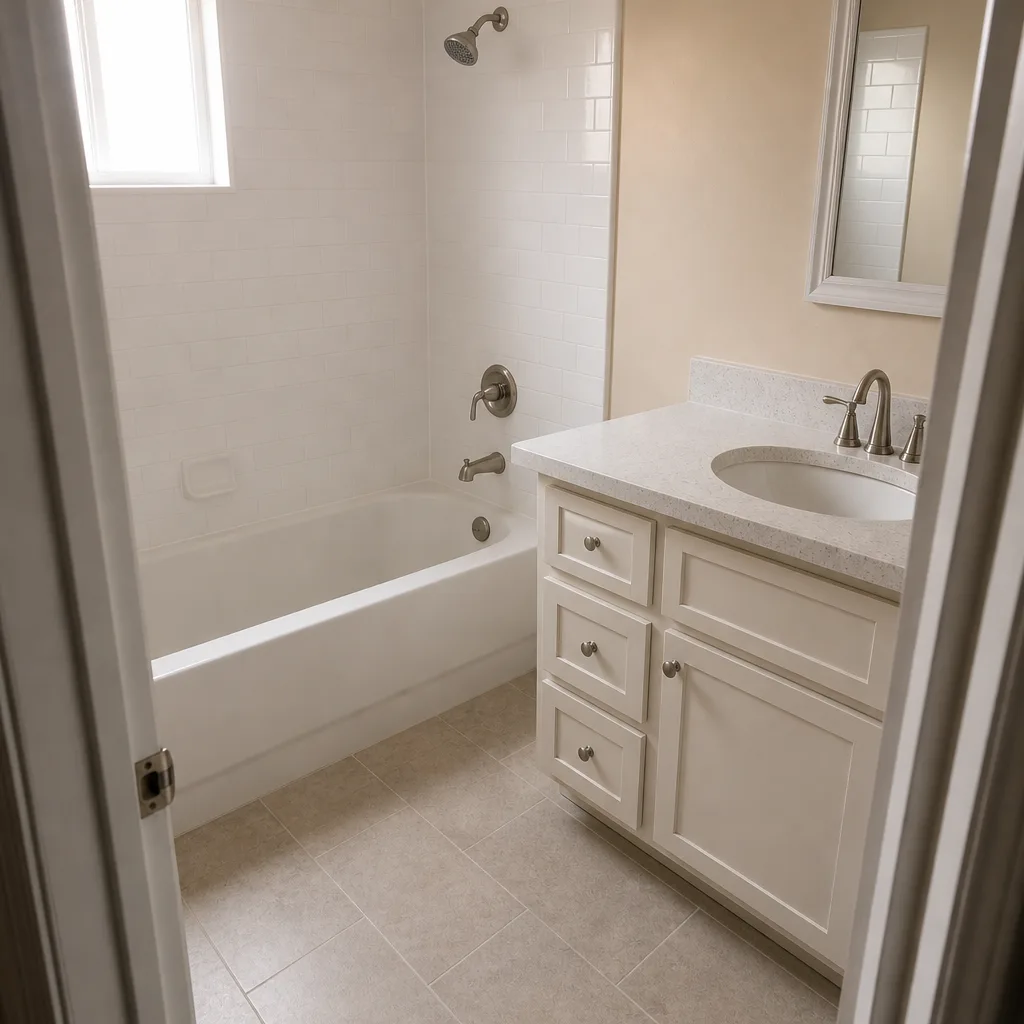
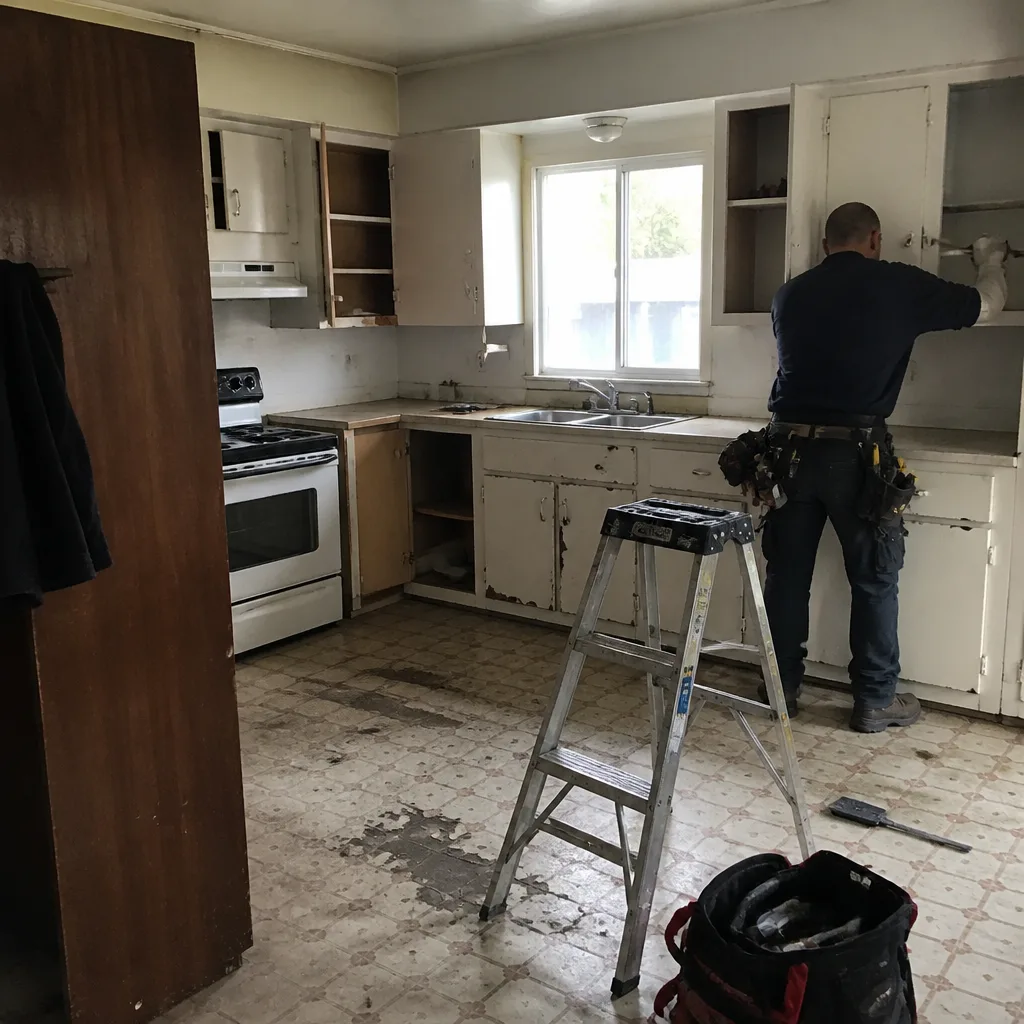
See the difference
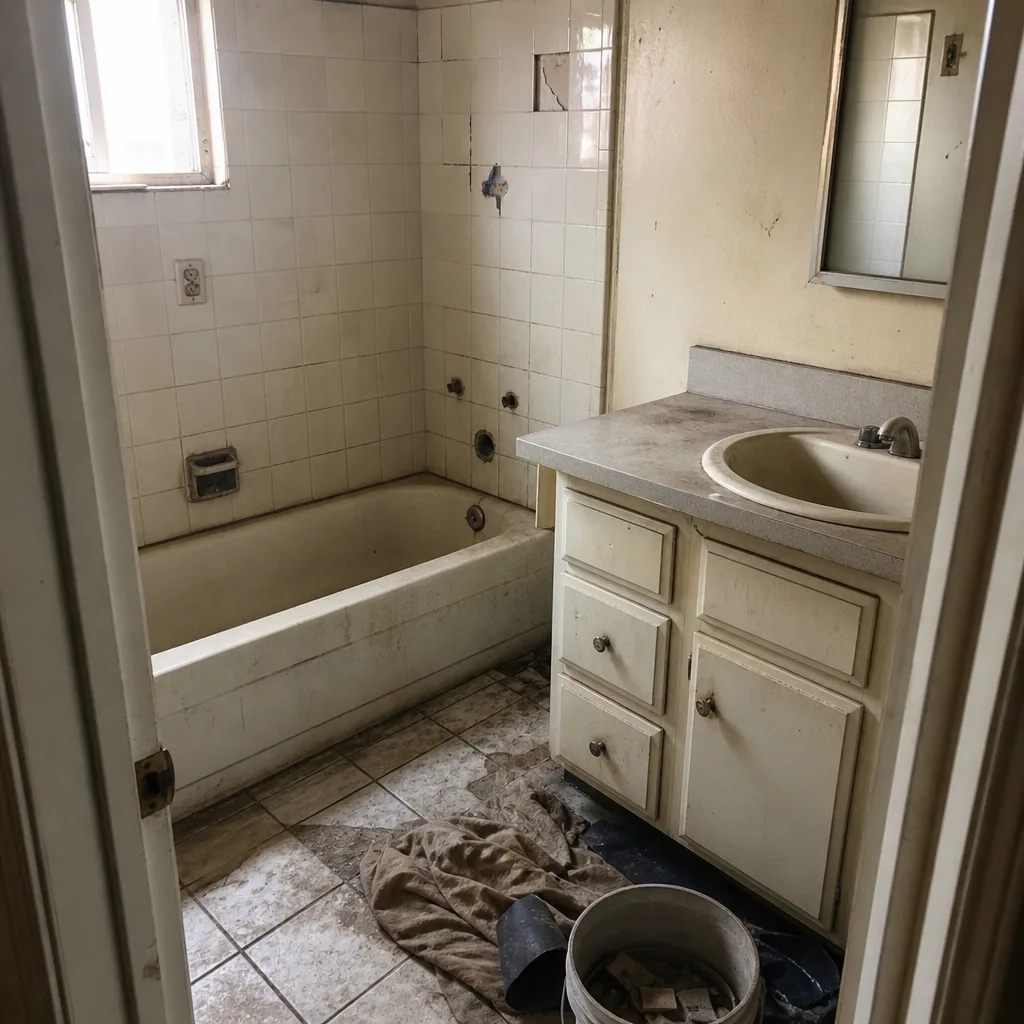 Before
 After
 Before
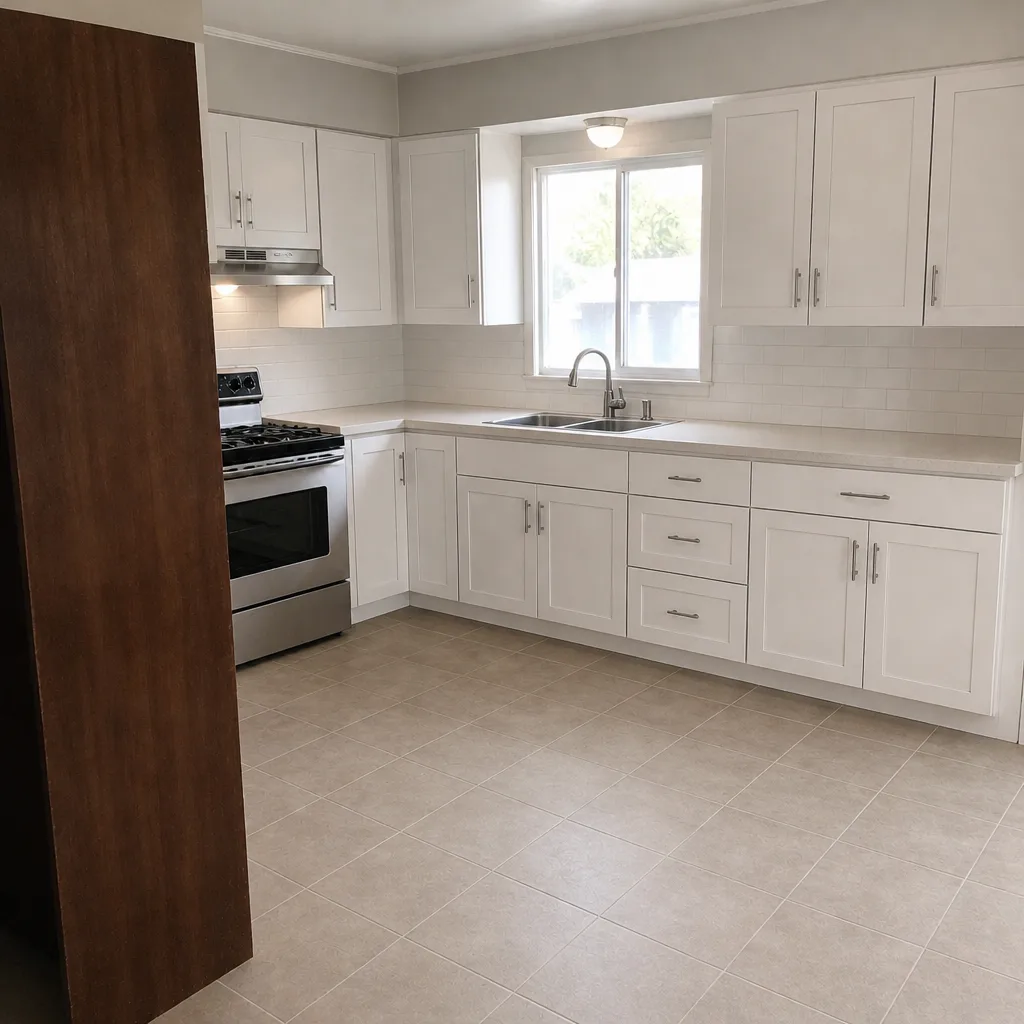 After
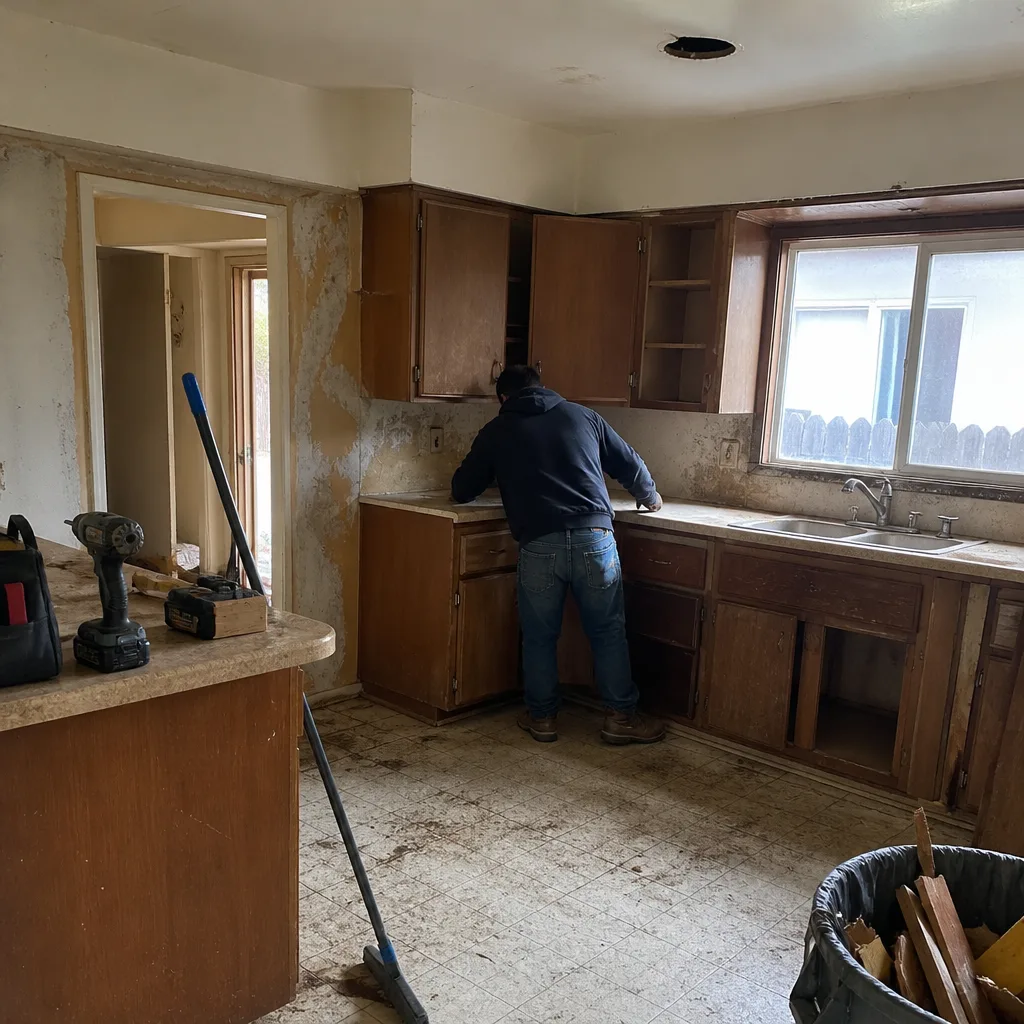 Before
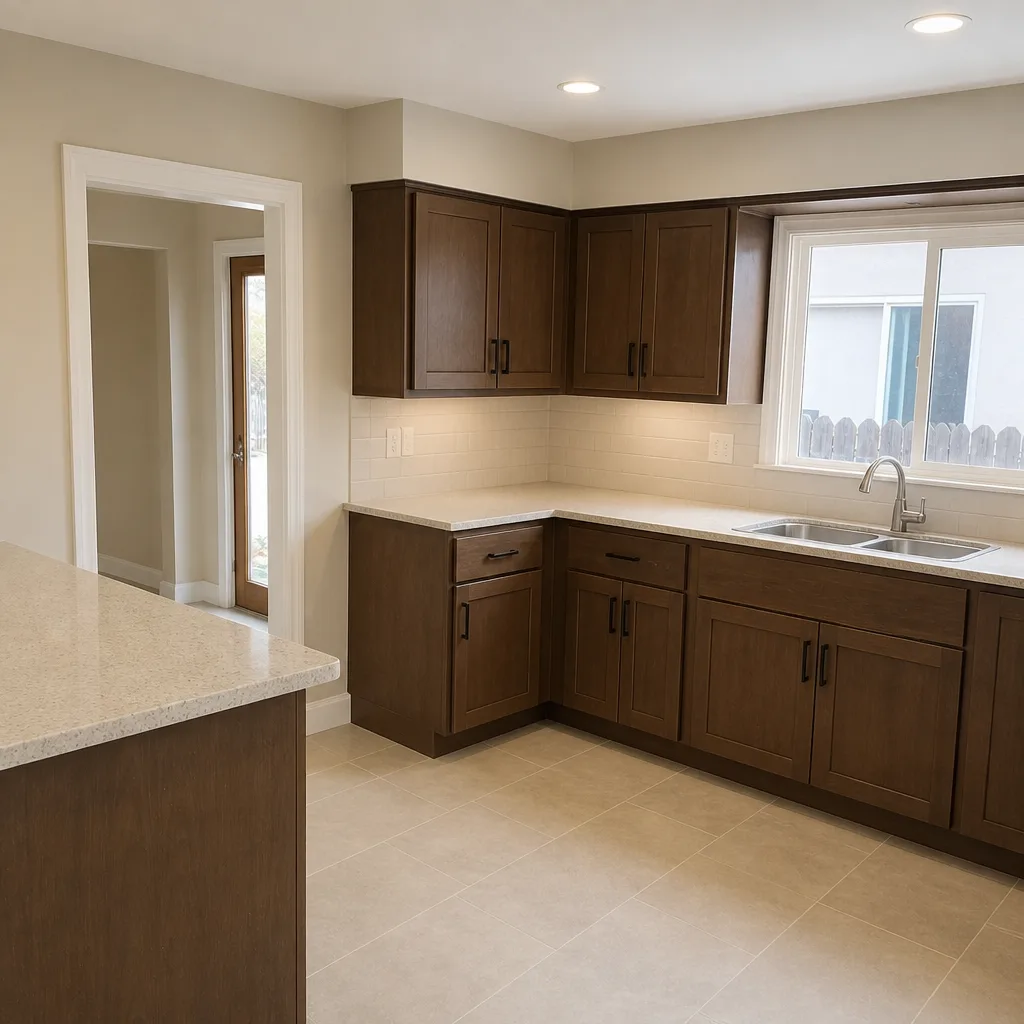 After
When to Call a Professional
Some bathroom issues are cosmetic and you can tackle them over a weekend. Others are risky enough that doing them yourself either violates permit rules or creates downstream damage. Call a professional for anything involving plumbing rough-in, electrical work behind walls, exhaust fan installation and venting, shower pan or waterproofing membrane work, and any wall opening on a home built before 1975 where you don’t already know what’s inside. Permitted work isn’t optional in Long Beach – it’s tracked at inspection and on sale, and unpermitted electrical or plumbing is a selling problem later. If your home is also getting exterior work done at the same time, similar judgment applies to fence installation in Long Beach and driveway and pavers – licensed trade work is worth the cost every time.
Groundwork Construction Co. of Long Beach offers free estimates in Long Beach – call (888) 345-8164 to schedule yours. We’ll walk the bathroom with you, open the walls where the age of the house warrants, and hand you a written line-item quote. A design consult is included. The 730-Day Done Right Promise covers the workmanship. Calls reach a live person at any hour.
Frequently Asked Questions
A bathroom remodel in Long Beach costs roughly $12,000 to $18,000 for a cosmetic refresh, $28,000 to $52,000 for a full gut-and-remodel on a standard hall bath, and $55,000 to $95,000 or more for a layout change. Coastal humidity, older housing stock, and Long Beach permit and inspection costs push the total 15% to 30% above inland averages. Call (888) 345-8164 for an exact quote – estimates are free.
You need a Long Beach permit for plumbing fixture relocation, new electrical circuits or wiring replacements that open walls, exhaust fan installation or re-venting, wall removals, tankless water heaters, and shower pan rebuilds. Simple tile replacement, vanity swaps in the same location, and fixture swaps generally don’t require a permit. The rough-in inspection with the walls open is the step that matters most.
A cosmetic refresh takes two to three weeks on-site. A full gut-and-remodel takes five to seven weeks on-site plus permitting and material lead time. A layout change takes eight to ten weeks on-site plus four to six weeks of plan review before demo. Anyone promising a permitted full gut in two weeks is cutting inspections.
On homes built before 1965, galvanized supply lines are common, and knob-and-tube wiring shows up frequently in bathrooms of homes built before 1950. Bixby Knolls, Bluff Park, and older Belmont Heights properties are the most likely to have both. Plan a contingency of 8% to 12% of the project budget for remediation, and ask for an inspection with walls opened before signing a contract.
Porcelain tile is the right choice for wet areas in Long Beach because it’s denser, less porous, and more stable than natural stone, and it holds up to coastal humidity without annual sealing. Pair it with epoxy grout to resist hard-water staining from the Metropolitan Water District supply. Natural stone – especially marble – looks beautiful on day one but etches and discolors in this climate unless carefully maintained.
The price shouldn’t change if you signed a fixed line-item contract after an inspection that opened the walls. In our experience, the honest approach is to open walls during the estimate phase on older Long Beach homes so hidden conditions are priced into the original quote rather than discovered mid-project. If new findings do appear, they come as a written change order with a fixed price before any work proceeds. Upfront pricing with no surprises is the standard we hold every job to. Call (888) 345-8164 to schedule your free estimate.
The Bottom Line
Long Beach bathrooms cost more than most of the country – not because of premium finishes but because of coastal humidity, hard water, and older housing stock that hides galvanized plumbing, knob-and-tube wiring, and rotted subfloors. Realistic budget ranges are $12,000 to $18,000 for cosmetic, $28,000 to $52,000 for a standard gut, and $55,000 to $95,000-plus for layout changes. Permits through Long Beach Development Services are non-negotiable for plumbing and electrical work, and the rough-in inspection with walls open is the moment that determines whether the finished project is legal. The right contractor writes a fixed line-item quote, opens walls before signing, matches materials to the coastal climate, and hands you a closed permit at the end. If that’s the standard you want, we’ll meet it. Call us at (888) 345-8164 to schedule a free in-home estimate and design consult in Long Beach.
Written by the team at Groundwork Construction Co. of Long Beach.