Last updated November 17, 2026

Free written scope consultation - allowances, timeline, and change-order rules on paper before a single trade is scheduled
The Complete Fence Installation Guide for Long Beach Homeowners
In Long Beach, a fence installed six inches on the wrong side of a property line can be classified as an encroachment – and the neighbor who says nothing for three years can still require removal, with no legal obligation to split the cost. Most fencing guides skip the legal and logistical work that decides whether a fence survives its first decade. This one doesn’t. We’ll walk through Long Beach’s fence height limits by zone, the HOA overlays that override them, California’s shared-boundary rules, coastal wind loading on footing depth, when a survey is worth the money, and what each material actually looks like after five years within two miles of the water.
Quick Answer
Fence installation in Long Beach typically runs $4,200 to $9,800 for a standard residential lot, with permits required for most fences over 42 inches and specific setback and lot-line rules enforced by the city. Coastal wind exposure zones north and south of the pier require deeper footings and tighter panel spacing than inland specs account for, and if the fence touches a shared property line, California law gives your neighbor rights that most contractors never mention. Groundwork Construction Co. of Long Beach provides free estimates with written line-item quotes.
Styles & brands we work with
- Kitchen remodeling
- Bathroom remodeling
- Home additions & ADU
- Roofing
- Windows & doors
- Driveway & pavers
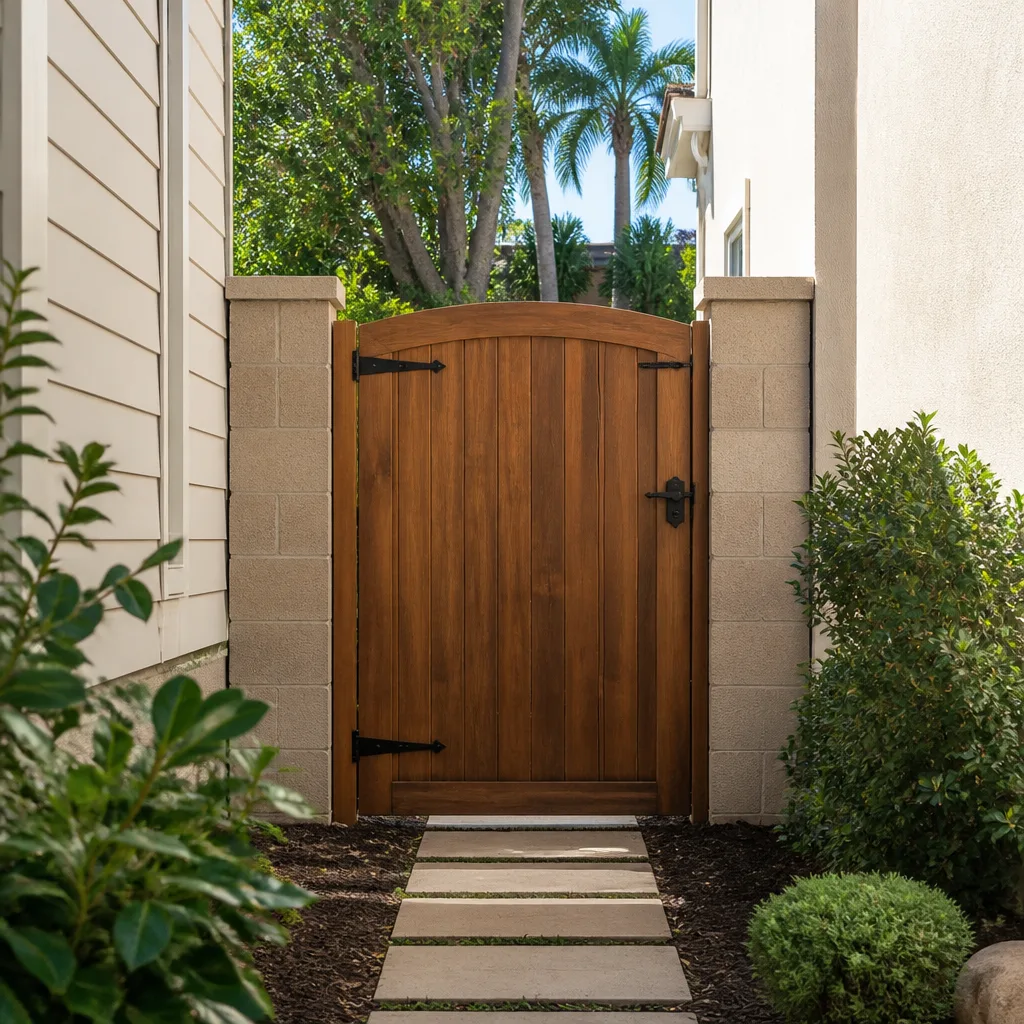
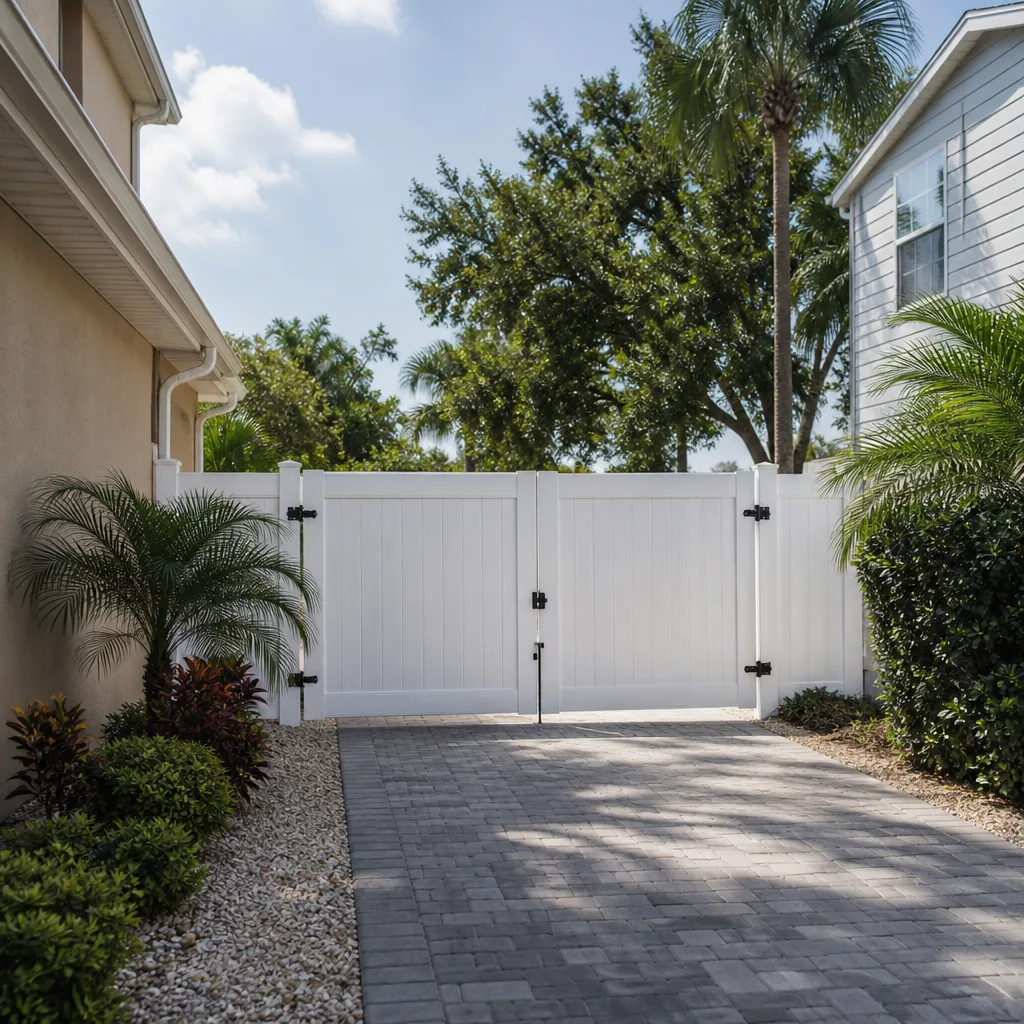
- Fence
Table of Contents
- Long Beach Fence Height Rules by Zone (And What Overrides Them)
- Shared-Boundary Fences in California: Who Pays, Who Decides
- Coastal Wind Exposure and What It Does to Your Footings
- The Survey-or-Don’t Question: When Eyeballing Is Worth the Risk
- Material Performance After Five Years of Salt Air
- Permits, Setbacks, and the Inspection Sequence
- What Fence Installation Costs in Long Beach
- HOA Overlays: The Rules That Supersede the City
Long Beach Fence Height Rules by Zone (And What Overrides Them)
Long Beach enforces different fence height limits depending on where the fence sits on your lot, not just where the property is. The front yard is the strictest zone, side and rear yards get more room, and corner lots get a second layer of visibility rules. This trips up out-of-town contractors who install to a blanket “six-foot everywhere” default and then get red-tagged.
Here’s how the zones break down in practice:
- Front yard (between the house and the street): typically capped around 42 inches for solid fencing, with open materials (wrought iron, aluminum picket, chain link with slats) sometimes permitted taller because they preserve sight lines. A solid six-foot privacy fence in the front yard almost always requires a variance.
- Interior side yard (between you and the neighbor): usually permitted up to six feet, though the setback from the property line matters as much as the height.
- Rear yard (behind the house): generally the most forgiving zone in Long Beach, with taller fences often permitted outright.
- Corner lots: the visibility triangle at the intersection is regulated separately, and a fence that blocks sight lines near the corner is a common code issue in neighborhoods like Belmont Shore and Bluff Park where the grid is tight.
What homeowners miss is that the city limit is a floor, not a ceiling. An HOA overlay in a planned community can cap heights lower than the city allows, and in some cases can require specific materials, colors, and post styles. A fence that passes city inspection can still fail HOA architectural review – and the HOA remedy is often “remove and rebuild,” not “adjust.” Before you buy lumber or vinyl, verify what jurisdiction you’re actually inside.
If your project also touches hardscape or driveway work, our team handles driveway and paver installation in Long Beach on the same scope, which avoids the sequencing headaches of two separate contractors on one lot.
Shared-Boundary Fences in California: Who Pays, Who Decides
California doesn’t have a single statute that says “neighbors split the cost of a boundary fence.” That’s the first thing most homeowners get wrong. What the state actually has is a patchwork: Civil Code provisions on encroachments and adverse possession, local ordinances that vary by municipality, and the practical reality that a shared fence is typically a shared asset with ambiguous ownership.
Here’s the protocol that protects you in Long Beach:
- Determine ownership first. A fence is “shared” only if it sits on the boundary line. A fence set one foot inside your side of the line is entirely yours – you own it, you maintain it, you can replace it without permission. That’s why a survey matters so much here.
- Send written notice before work begins. If the fence is on the boundary and you want the neighbor to contribute, California courts have consistently rewarded homeowners who documented the request in writing before construction. A text message counts. A friendly conversation does not.
- Offer a reasonable cost split. Courts look at whether one party was given a fair chance to contribute. If the neighbor refuses and you build anyway, you generally can’t recover their share later – but you also can’t be forced to remove the fence if it’s on the line and reasonable in height and material.
- Handle material disagreements in writing. If your neighbor wants cedar and you want vinyl, the compromise is usually the less expensive option or a shared upgrade cost. Get the agreement in writing, even if it’s a two-line email.
- Document the fence’s condition and location. Date-stamped photos before and after, plus a copy of the survey, protect you if the neighbor sells and the new owner disputes the fence years later.
In our experience across Long Beach, the disputes we get called into are almost never about the fence itself – they’re about one neighbor feeling steamrolled. A five-minute conversation with a written follow-up avoids almost all of it. The 730-Day Done Right Promise we back every installation with is enforceable on our end, but it doesn’t override a boundary dispute – that’s a legal matter between neighbors, not a workmanship matter.
One more thing: if a fence has been in the same spot for years without objection, that does not automatically make it legal. Encroachment claims in Long Beach have been successfully brought against fences that stood for over a decade. Time is not a defense.
Coastal Wind Exposure and What It Does to Your Footings
Long Beach sits on the coast, and the wind loading on a fence here is genuinely different from what an inland contractor will spec. A fence is essentially a sail – a solid six-foot privacy fence on a windy day at the coast catches hundreds of pounds of lateral force per panel. If the footing is undersized, the first Santa Ana wind event of the season will lean it, and the second one will snap posts at the ground line.
What we adjust for coastal Long Beach lots:
- Post depth: inland specs often call for 24-inch footings. Within roughly two miles of the coastline, we typically go 30 to 36 inches depending on soil and exposure, and deeper on sandy lots in the Peninsula and Alamitos Bay areas where the soil has less lateral resistance.
- Footing diameter: 10 to 12-inch diameter concrete footings are common on coastal jobs, versus 8-inch on inland. The extra concrete is cheap insurance against lean.
- Panel spacing: tightening board gaps reduces wind load on solid fences. On the most exposed lots, we spec a small gap at the top rail or a lattice top section to let wind bleed through.
- Post material: galvanized steel posts set in concrete are standard on coastal installs – wood posts rot faster in salt air and lose structural capacity before they visually fail. Steel posts are typically hidden inside the wood or composite post sleeve for a clean look.
- Hardware: stainless or hot-dipped galvanized fasteners only. Standard zinc-plated screws show rust within 18 months in coastal Long Beach.
Building departments in Long Beach have gotten more attentive to wind loading documentation over the last several years, particularly on lots with open exposure to the water. If your contractor can’t explain how they’re sizing footings for your specific lot, that’s a red flag worth acting on before you sign anything.
For projects where fencing connects to structural additions or a home addition or ADU in Long Beach, wind and structural loads get reviewed together – which is where a single contractor handling both scopes saves real headaches.
The Survey-or-Don’t Question: When Eyeballing Is Worth the Risk
Eyeballing a property line is fine when the fence will sit clearly inside your side by several feet, with no neighbor objection and no history of dispute. It’s not fine when the fence is on or near the line, when the lot has any unusual shape, or when you don’t know the lot history. In Long Beach, three lot types have consistently produced survey surprises in our experience:
- Older subdivisions in Belmont Shore, Bluff Park, and Rose Park: lot lines here often don’t match what the assessor’s map shows because of historic re-plats and informal lot consolidations. The eyeball line and the legal line can be off by 12 to 18 inches.
- Corner lots and hillside lots in Signal Hill and Bixby Knolls: the geometry is irregular, and existing fences were sometimes installed decades ago by a previous owner to a wrong line that has now become the neighborhood’s assumed boundary.
- Lots backing up to alleys or open space in North Long Beach: public right-of-way boundaries and utility easements can cut into what looks like private yard, and a fence installed across an easement can be removed at your expense even if the neighbor says nothing.
Here’s the honest math: a boundary survey in Long Beach typically runs $600 to $1,400 depending on lot size and complexity. A fence installed on the wrong line gets torn out and rebuilt, and you don’t recover the cost. If the fence is anywhere near the line, get the survey. If it’s clearly inside your yard, skip it and save the money.
Ask your contractor what they’re basing the layout on. If the answer is “we’ll find the pins” and the pins don’t exist or are buried, that’s a sign to call a surveyor before anyone digs.
Material Performance After Five Years of Salt Air
What a material looks like in the showroom and what it looks like after five years within two miles of the water are different questions. Here’s what we actually see in Long Beach:
Wood (Cedar, Redwood, Pressure-Treated Pine)
Cedar and redwood weather to a silver-grey within 18 to 24 months if unstained, and the color shift is uneven on the coast because salt fog hits one side of the fence far harder. Pressure-treated pine holds up reasonably well but will show checking and split ends by year three if not sealed annually. Wood fences in Long Beach need re-staining every two to three years to stay looking intentional rather than abandoned.
Vinyl
Modern vinyl (not the brittle 1990s product) holds color well in salt air and needs little more than a hose-down. The failure mode on the coast is UV yellowing on cheaper grades, and post brittleness in cold snaps. Spec a UV-stabilized vinyl from a reputable manufacturer and the five-year look is essentially new. Cheap vinyl panels from a big-box stack will look chalky by year four.
Aluminum
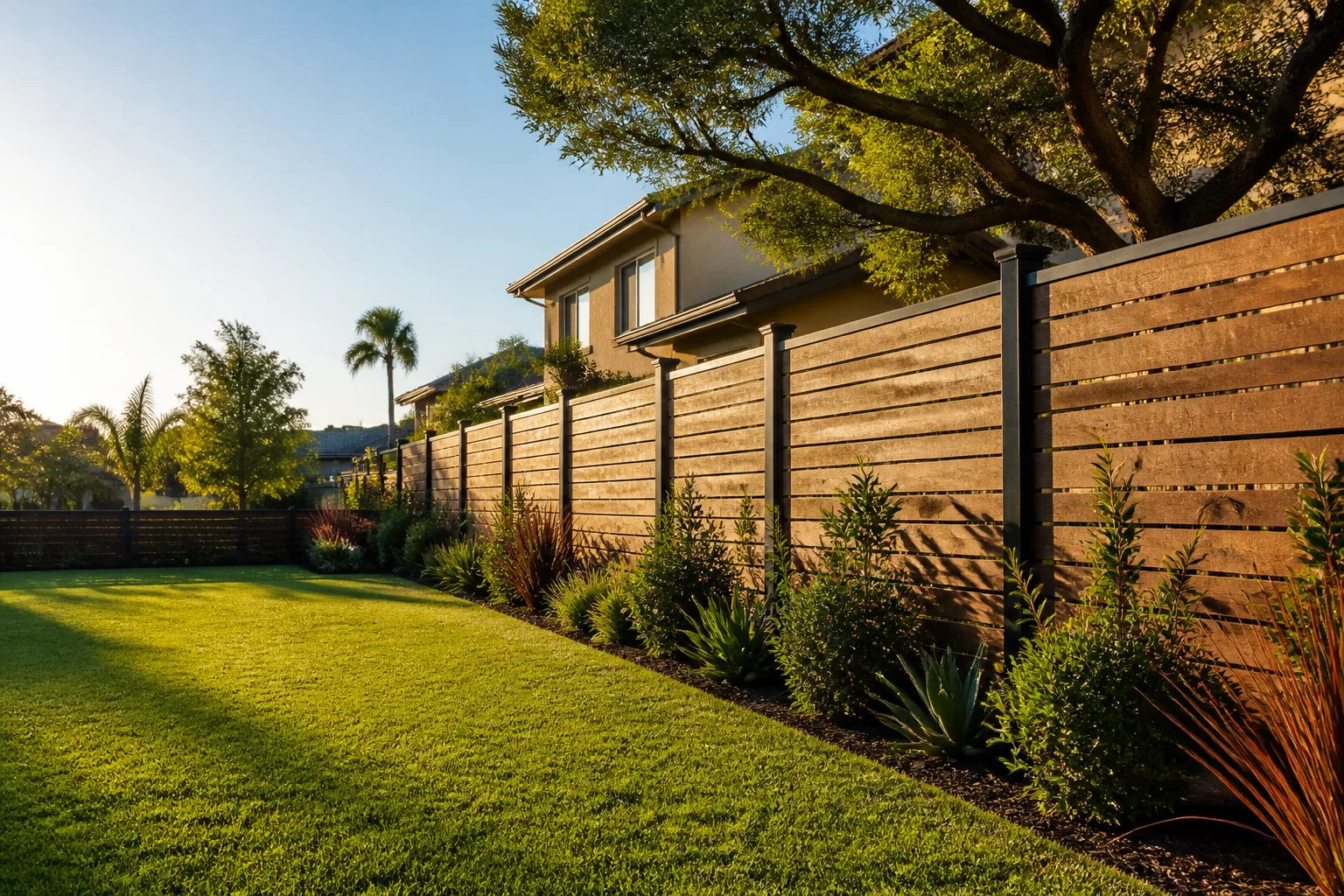
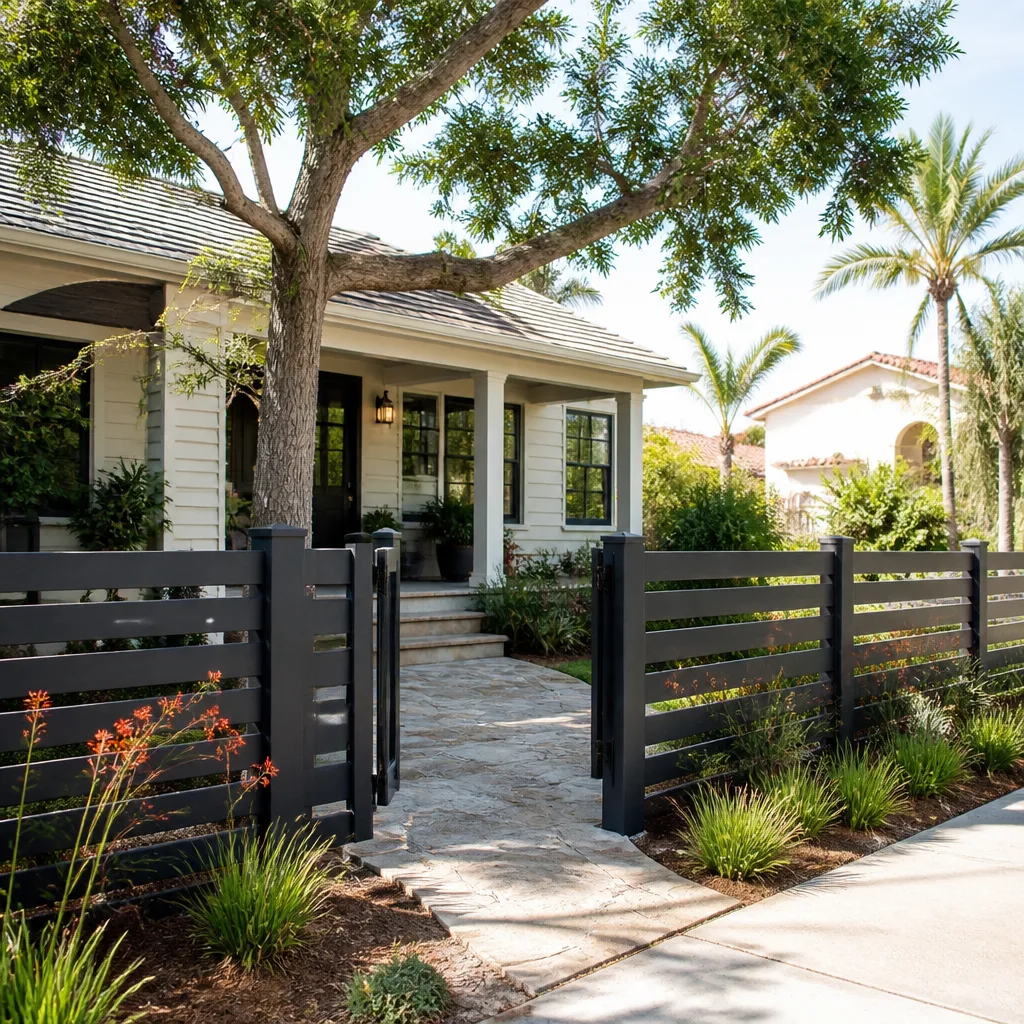
Powder-coated aluminum is the most stable performer in coastal Long Beach. It won’t rust, doesn’t need refinishing, and holds color well. The tradeoff is cost and the fact that it’s an open style – you get a boundary, not privacy. Great for front yards where height rules favor open materials.
Steel (Ornamental Iron and Corten)
Ornamental steel looks excellent for decades if it’s powder-coated or regularly painted. Bare corten steel develops its characteristic patina within a year and stabilizes – it’s a design statement that holds up. Standard painted steel will show rust at welds and at grade within three to four years if water pools at the base; a proper install keeps the bottom rail above grade and caps the post tops.
Our brand partners in fencing include James Hardie for composite panels and Belgard for hardscape integration – both hold up to coastal conditions when installed to spec. If your fence project also includes a patio or walkway, our fence installation service in Long Beach handles the full scope so materials and finishes coordinate.
Permits, Setbacks, and the Inspection Sequence
Most fences over 42 inches in Long Beach require a permit, though enforcement varies by scope and by neighborhood. The safe default is to assume you need one unless your contractor can show you the specific exemption in writing. An unpermitted fence is a problem at resale – title issues, buyer objections, and in some cases a city order to remove.
Here’s the sequence a proper install follows:
- Confirm zoning and any overlay district. Some Long Beach parcels sit in historic districts or specific plans that add review steps.
- Survey or locate the property line. Even if you skip a full survey, you need to know where the line is.
- Submit the permit application. This usually requires a site plan, a fence elevation, and material and height specs. Corner lots often require extra documentation on the visibility triangle.
- Call for utility locates (811). Free and mandatory before digging. Gas, water, and irrigation lines run close to fence lines more often than you’d think.
- Dig and set posts. This is where footing depth gets verified. Some inspections require seeing the holes before concrete pour.
- Frame and hang panels. Spacing, hardware, and top/bottom rail specs get checked against the approved plan.
- Final inspection. Once passed, the permit closes and the fence is on the record as legal.
A typical Long Beach fence permit runs $150 to $400 depending on linear footage, and the review-to-approval window is usually two to four weeks. Add a week for a corner lot or historic district.
We’ve seen homeowners save a few hundred dollars on the permit by skipping it and then pay thousands later to fix the problem at resale. It’s not a good trade.
What Fence Installation Costs in Long Beach
Fence pricing in Long Beach breaks down into materials, labor, permits, and one wildcard: the property-line work. Here’s a realistic 2026 range for a standard residential lot of 150 to 200 linear feet:
- Pressure-treated pine privacy fence, 6-foot: $4,200 to $6,800
- Cedar privacy fence, 6-foot: $6,500 to $9,500
- Vinyl privacy fence, 6-foot: $7,000 to $10,500
- Aluminum ornamental, 4 to 5-foot: $6,800 to $11,000
- Steel ornamental, custom: $9,500 to $18,000+
- Permit and inspection fees: $150 to $400
- Boundary survey (if needed): $600 to $1,400
- Post replacement on an existing line (reuse panels): $1,800 to $3,400
Real costs go up when: the ground has hardscape to remove, the lot has slope requiring stepped panels, utility locates find conflicting lines, or the design includes a gate with hardware. Those aren’t surprises – they’re predictable line items in a written scope.
What we insist on in our estimates is a line-item written quote with material specs, footing depth, and permit responsibility clearly stated. The number you see is the number you pay. No change orders buried in a verbal agreement. If your project also touches the front of the house, ask about bundling with Groundwork Construction Co. of Long Beach home services to consolidate scheduling.
HOA Overlays: The Rules That Supersede the City
If you live in a planned community, the HOA’s architectural rules govern your fence, not the city’s minimums. The city is a floor; the HOA is often a ceiling and a material spec layered on top. Common Long Beach HOA restriction types we see:
- Maximum height below the city limit: many HOAs cap rear fences at five feet, front fences at three feet.
- Approved materials only: “no chain link,” “no bare wood that isn’t stained to the approved palette,” “vinyl only in a specific profile.”
- Color palettes: fencing must match the community palette, even if you’d prefer natural cedar.
- Architectural review before install: you submit plans, get approval in writing, then build. Building before approval is the single most common HOA dispute.
- Maintenance obligations: some HOAs require the fence facing the street or common area to be maintained by the homeowner at a specific standard – including repainting or restaining on a schedule.
The way to avoid the removal-and-rebuild scenario is to request the HOA’s architectural guidelines before you sign a contract, and to submit plans before permits. If you’re unsure whether your property sits in an HOA overlay, the title documents from your purchase will say. Pull them out before you spend a dime on materials.
Common Mistakes to Avoid
- Assuming the city limit is the only limit. Long Beach’s 42-inch front yard rule is a starting point – your HOA, historic district, or specific plan can reduce it further or restrict material. Verify all overlays before you buy materials.
- Building before checking the property line. Six inches on the wrong side of the line becomes an encroachment, and in Long Beach a neighbor can require removal three or more years after the fact with no obligation to share the cost.
- Specifying inland footing depths on a coastal lot. A 24-inch footing that works in Riverside will lean in Long Beach within two wind seasons. Post depth and concrete diameter need to match the exposure zone, not a generic default.
- Skipping the utility locate call. Calling 811 before digging is free and mandatory. If you hit a gas or irrigation line, the fence becomes the cheapest line item on your invoice.
- Choosing material by showroom appearance. Cheap vinyl chalks and yellow within four years at the coast; standard zinc-plated screws rust in 18 months. Spec UV-stabilized vinyl and stainless or hot-dipped galvanized hardware.
- Verbal agreements with neighbors on shared fences. California courts reward written documentation. A two-line text before work starts beats a friendly handshake every time.
- Building without a permit to save a few hundred dollars. An unpermitted fence becomes a resale problem, and Long Beach can order removal at your expense. The permit cost is not where you want to negotiate.
See the difference
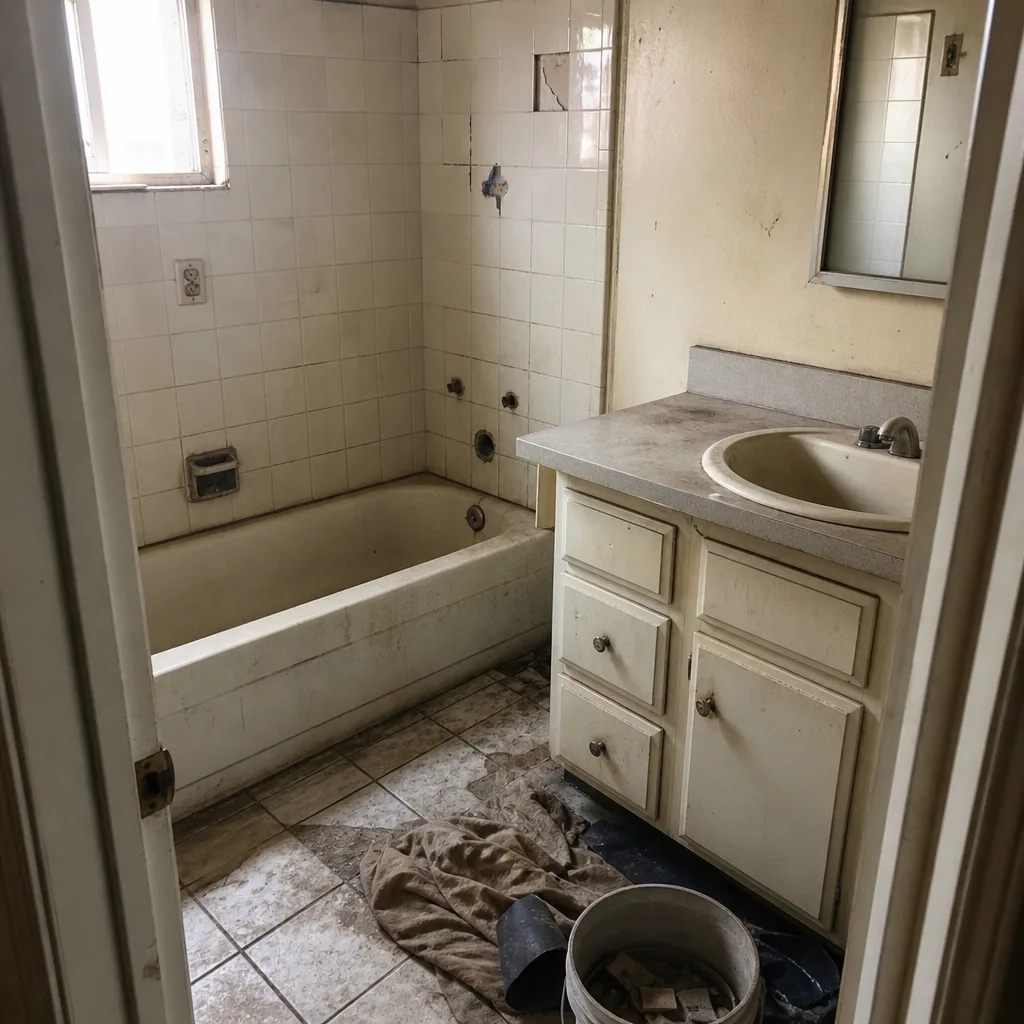 Before
 After
 Before
 After
 Before
 After
When to Call a Professional
Call a professional when: the fence is on or near a property line, you’re in an HOA overlay or historic district, the lot has slope or existing hardscape to remove, the fence sits within two miles of the coastline, or you’re replacing a fence that’s already failed and you need to understand why. Any one of these conditions turns a weekend project into a scope that needs permits, engineering, or legal documentation. Groundwork Construction Co. of Long Beach fence installation offers free estimates with written line-item quotes – call (888) 345-8164 to schedule a walk-through. Our technicians have up to 12 years of experience, and every install is backed by the 730-Day Done Right Promise – if it’s not done right, we make it right.
Frequently Asked Questions
Fence installation in Long Beach typically runs $4,200 to $9,800 for a standard residential lot, with cedar and vinyl at the higher end and pressure-treated pine at the lower. Permit fees add $150 to $400, and a boundary survey (if needed) adds $600 to $1,400. Call (888) 345-8164 for an exact quote – estimates are free.
Most fences over 42 inches in Long Beach require a permit, though some exemptions apply based on scope and zone. The safe default is to assume you need one unless your contractor can show you the specific exemption in writing. We handle permits and inspections as part of the estimate – call (888) 345-8164 to confirm what your specific lot requires.
If the fence sits on a shared boundary and is reasonable in height and material, a neighbor generally cannot force removal without going to court, though they can dispute cost-sharing and material choices. If the fence sits on their side of the line, even six inches, it’s an encroachment and they can require removal. A written notice before work begins protects you either way.
A survey is worth the money when the fence sits near the property line, when the lot is in an older subdivision with historic re-plats (Belmont Shore, Bluff Park, Rose Park), when the lot is a corner or hillside (Signal Hill, Bixby Knolls), or when the fence backs up to an alley or open space. If the fence is clearly inside your yard by several feet with no history of dispute, you can often skip it.
Fence posts within roughly two miles of the coastline typically need 30 to 36-inch footings with 10 to 12-inch diameter concrete, versus the 24-inch / 8-inch spec common inland. Sandy lots in the Peninsula and Alamitos Bay areas often need the deeper end of that range because soil has less lateral resistance. Ask your contractor how they’re sizing footings for your specific lot.
Powder-coated aluminum holds up best with minimal maintenance, followed by quality UV-stabilized vinyl. Cedar and redwood look excellent but need re-staining every two to three years. Pressure-treated pine works but will show checking and split ends by year three without annual sealing. Any material lasts longer with stainless or hot-dipped galvanized fasteners – standard zinc-plated screws rust within 18 months at the coast.
The Bottom Line
A fence in Long Beach isn’t just a materials purchase. It’s a legal boundary question, an HOA compliance question, a wind engineering question, and a material science question – and getting any one of those wrong undoes the other three. Confirm your overlays before you buy materials. Survey if the fence is near the line. Spec coastal footings. Document shared-boundary agreements in writing. Pull the permit. Choose material based on what holds up in salt air, not what looks best in a showroom. Every install we do is covered by the 730-Day Done Right Promise and comes with a written line-item quote so there are no surprises after the first shovel hits the ground.
Ready to get a fence that will still be standing – and legally compliant – a decade from now? Call (888) 345-8164 to schedule your free estimate. Calls are answered by a live person 24/7, and our team can walk your Long Beach property, verify your overlays, and put together a written quote with fixed pricing and no change orders. If you’re also planning hardscape, roofing, or a larger renovation, ask about bundling with our other Long Beach services – the same 730-Day Done Right Promise applies across every scope. We also offer $1,000 off projects over $10,000 and 0% financing for 18 months to make the work accessible without pressure.
Written by the team at Groundwork Construction Co. of Long Beach.