
Free written scope consultation - allowances, timeline, and change-order rules on paper before a single trade is scheduled
ADU Site Prep & Utilities in Compton, CA: What the Work Actually Involves
ADU site prep and utilities in Compton typically runs $45,000 – $130,000, and the utility trenching and site work portion is usually six to ten weeks of a longer build. That covers excavation, grading, the foundation pour, and running separate electrical, water, sewer and gas service from the street or main panel to the new unit. If you’re planning a detached or converted ADU on a small Compton lot, call (888) 345-8164 and we’ll walk your property and price it in writing.
How We Run Site Prep and Utility Work, Stage by Stage
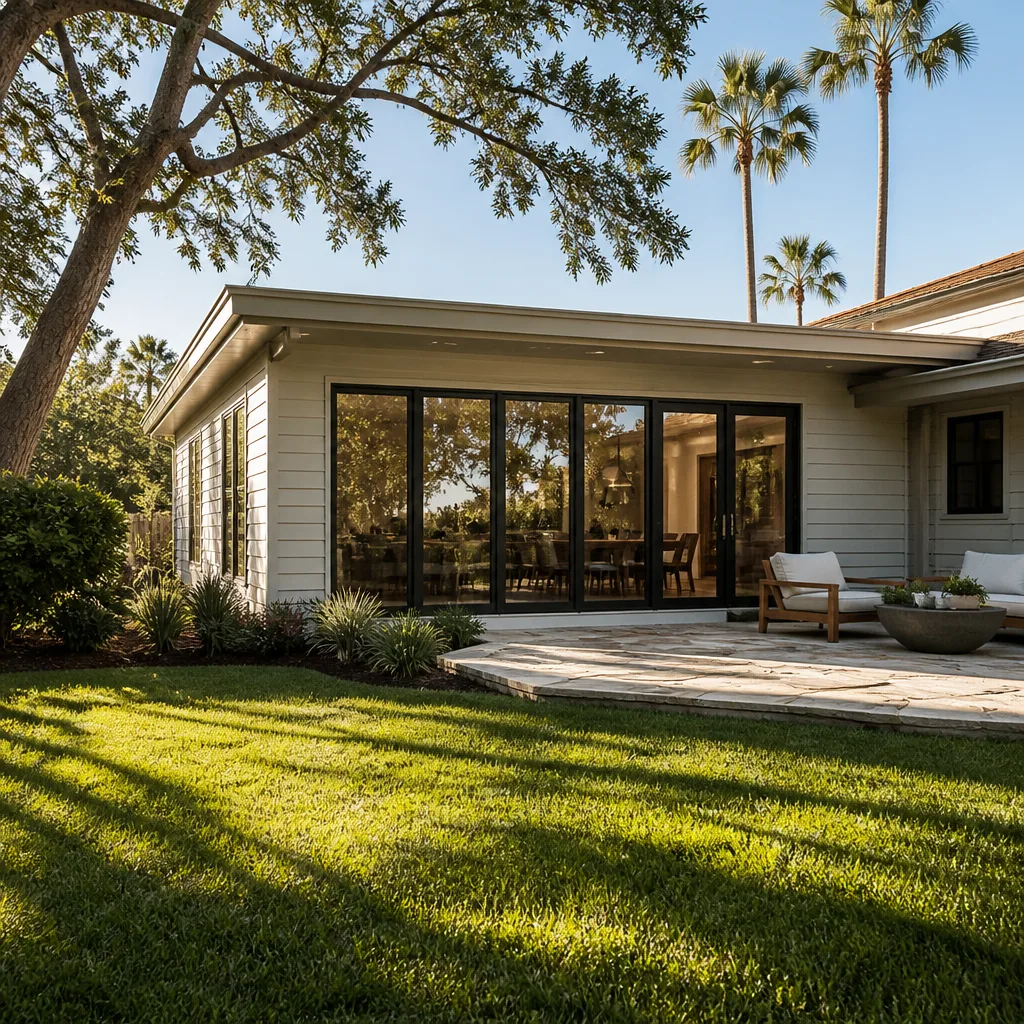
Site prep on an ADU isn’t one job – it’s a sequence, and each stage has a decision attached to it. Here’s how it actually plays out on a Compton property.
Stage 1: Survey, locate and utility potholing (days 1 – 3)
Before anything gets dug, we call 811 to mark existing lines and often pothole the sewer lateral and water main to confirm depth and condition. On older Compton lots, original galvanized plumbing is common, and the sewer line may be clay or deteriorated cast iron. You decide here whether to tie into the existing lateral or run a new one – a decision that can add thousands or save it depending on what we find.
Stage 2: Demolition and clearing (days 3 – 7)
Old concrete, sheds, fences and tree stumps come out, and we haul the debris. If the ADU footprint sits over an existing detached garage slab, that slab gets broken out and the subgrade re-compacted. You confirm the final footprint and setbacks before we grade – this is the last easy point to shift the building a foot.
Stage 3: Grading and excavation (days 7 – 14)
We cut and fill to bring the pad to finished grade, usually with a slight slope away from the structure for drainage. Compton’s near-coastal climate means minimal frost concern, but intense summer sun and seasonal Santa Ana winds mean we plan for drainage and wind exposure, not freeze depth.
Stage 4: Foundation and underground utilities (days 14 – 30)
Footings get dug, rebar set, and underslab plumbing and electrical conduit laid before the pour. Rough inspection happens before concrete goes in – no exceptions. Seismic anchoring matters here given Southern California requirements, and older Compton soils sometimes need over-excavation and re-compaction.
Stage 5: Utility tie-ins and final inspection (days 30 – 60)
We trench electrical, water, gas and sewer from the main structure to the ADU, install the subpanel, and coordinate the utility company for the meter. Final inspections follow. You’ll be choosing panel size, trench depth and whether you upgrade the main service – decisions that affect both cost and future capacity.
Styles & brands we work with
- Kitchen remodeling
- Bathroom remodeling
- Home additions & ADU
- Roofing
- Windows & doors
- Driveway & pavers
- Fence
The Choices You’ll Make on Site Prep and Utilities
Most of the money and most of the trade-offs live in a handful of decisions. Here’s what you’re actually choosing between.
- Foundation type. A slab-on-grade is fastest and cheapest; a raised or pier-and-beam foundation suits sloped lots and gets you under-floor access for future repairs. On tight Compton lots, slab usually wins unless the grade forces otherwise.
- Trench route and depth. A short direct trench across the yard is cheapest; a longer reroute around a mature tree or driveway adds labor but preserves hardscape you’d otherwise replace.
- Main panel upgrade vs. subpanel. If the existing house panel is older or undersized, you may be deciding between a full service upgrade and a dedicated ADU subpanel fed from a new meter. The subpanel route is cheaper short-term; the upgrade future-proofs for EV charging and solar.
- Sewer tie-in approach. Tying into the existing lateral is cheaper but only viable if the line is sound; a new lateral is more expensive but starts clean. On homes built in the 1940s – 1960s, this is the decision that most often surprises people.
- Hardscape materials. A poured concrete pad near the ADU entry is the low-cost choice; pavers laid on a compacted base cost more but handle root movement and repairs better. Brands like Techo-Bloc or Cambridge Pavers are what we typically price when the homeowner wants a paver pad or path; Quikrete is used for small concrete patches around utility penetrations.
What ADU Site Prep & Utilities Costs in Compton, CA
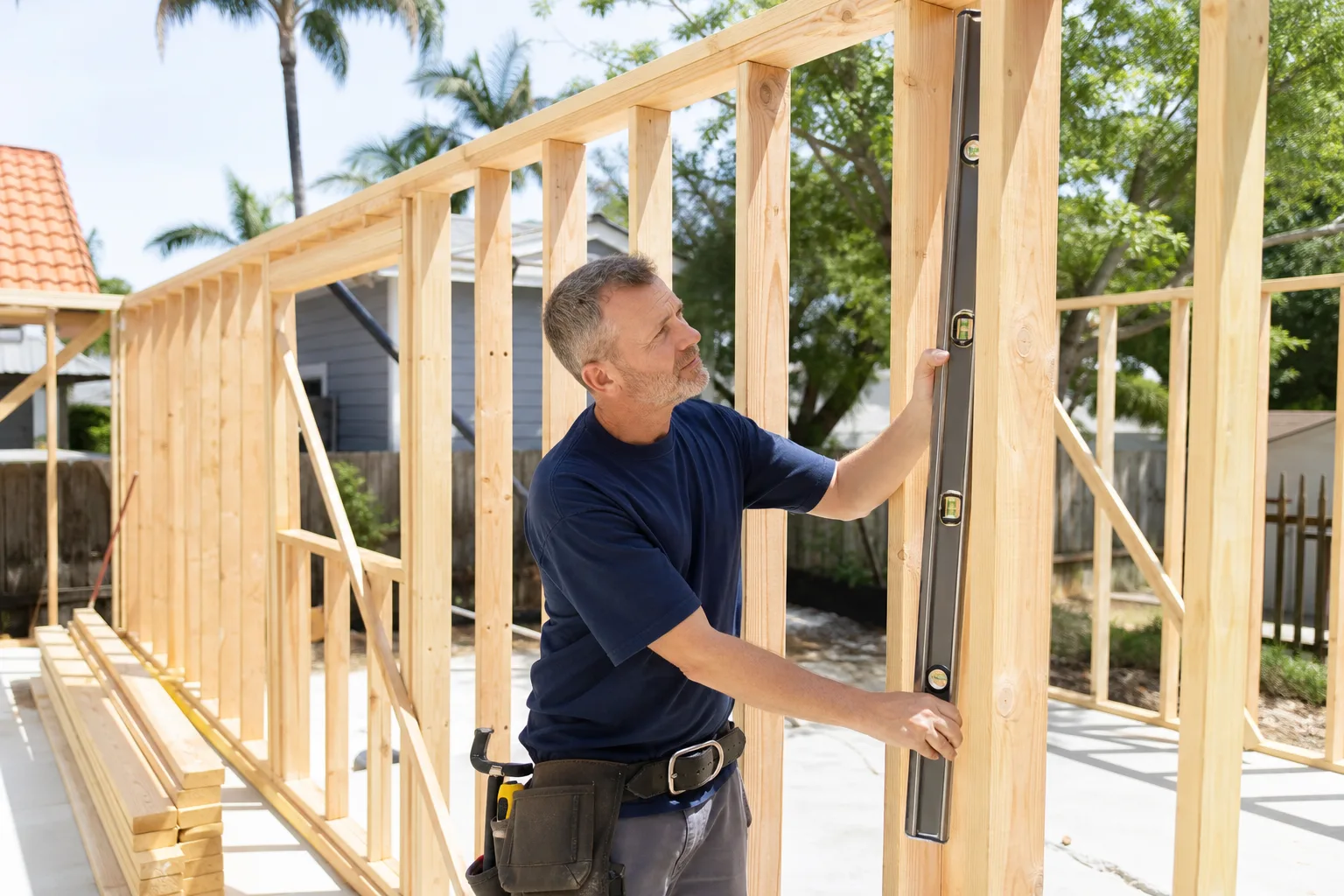
Site prep and utility work on a Compton ADU generally lands between $45,000 and $130,000, with the tightest concentration of jobs in the $60,000 – $95,000 range. That number swallows the trenching, grading, foundation, utility runs and inspections – not the structure above it. The variables that push a job toward the low or high end are consistent:
- Lot condition and existing utilities. A flat, clean lot with modern service sits at the low end. A lot with an old lateral, a tree canopy over the trench route, or a walled backyard with alley-only access pushes higher.
- Trench length and distance from the main. Every extra foot of trench adds labor and material – a fully detached ADU set back deep on a narrow lot costs more than one placed close to the main panel and lateral.
- Panel and service capacity. Upgrading a main panel or adding a second meter moves the number meaningfully.
- Foundation depth and soil. Over-excavation, re-compaction or a pier foundation adds cost but prevents settlement later.
- Permit and inspection scope. Utility tie-ins, seismic anchoring and drainage all require sign-off; the permitting path affects both time and dollar amount.
A written estimate from us covers demolition, excavation, the foundation, underslab plumbing and conduit, trenching, tie-ins, and inspections. It typically excludes the structure above the foundation, finishes, appliances and landscaping – we list the excludes so nothing is a surprise later.
See the difference
 Before
 After
 Before
 After
 Before
 After
What Compton’s Housing Stock and Lots Do to an ADU Site Prep Job
Compton’s construction market is dominated by redeveloping the dense post-war tract housing around the 90220 and 90222 ZIP codes, plus parts of 90223 and 90224 – where most single-family homes are 1940s – 1960s stucco-and-drywall builds on small, tight R-1 lots. That gives us narrow side-yard setbacks, detached garages and original galvanized plumbing and early wiring to work around on nearly every job. Where a garage conversion is part of the plan, that work often pairs with the site and utility scope here, and homeowners planning the wider project see the full picture in Home Additions & ADU in Compton.
Alley-load access, close side-yard clearances and parking constraints are the ordinary reality here – trench routes often run through a narrow path between the house and the property line, and staging material takes planning. Because so many of these lots are tight, any ADU placement triggers neighbor-sensitive setback scrutiny and sometimes a survey. Seismic retrofit and drainage requirements matter more than frost or snow loads in this climate. If a homeowner is updating the interior while they’re at it, they often pair this with Small & Partial Kitchen Remodels in Compton or Full Bathroom Remodeling in Compton inside the main house, since both trades can share the same utility upgrade.
We serve Compton and the surrounding area, and the site-prep part of our Home Additions & ADU service is built around these older, tightly packed lots. Our technicians have up to 12 years of experience with the utility tie-ins and foundation work these homes demand.
Serving Compton, CA – Our Local Coverage Area
We serve Compton and nearby communities. Use the map below to see the area we cover. If you’re nearby, we can almost certainly help.
Frequently Asked – ADU Site Prep & Utilities in Compton
Usually six to ten weeks from first dig to final inspection, depending on trench length, soil and how quickly utility inspections clear. Narrow-lot access and older utility conditions are the two things that most often push it toward the longer end. Call (888) 345-8164 for a schedule estimate specific to your lot.
Yes. Any ADU foundation, utility tie-in and electrical service work requires permits and inspections. We pull the permits and coordinate the inspections as part of the job, so you’re not chasing sign-offs yourself. Call us for a free estimate and we’ll walk you through the permit path.
Sometimes, but it depends entirely on what we find under the surface. If the existing lateral and panel are sound and the ADU sits close to them, the work is simpler; if not, a new lateral or service upgrade may be the cleaner path. The pothole stage in the first few days tells us which way it goes.
Between $45,000 and $130,000, with most of that range driven by trench length, existing utility condition and panel capacity. We give a written line-item estimate up front and hold to it. Call (888) 345-8164 for an exact quote – estimates are free.
Every ADU site prep and utility job we complete is backed by our 730-Day Done Right Promise – if it’s not done right, we make it right, for two years. That covers the workmanship on the foundation, trenching and tie-ins. Call for the full terms before work starts.
Get a Free Estimate for ADU Site Prep & Utilities in Compton
If you’re ready to price site prep and utilities for an ADU on your Compton property, call (888) 345-8164. A live person answers around the clock, and we’ll schedule a free on-site estimate, walk the lot with you, and hand you a written line-item quote with the equipment and material brands spelled out. No surprises between the estimate and the invoice.
Written by the team at Groundwork Construction Co.