
Last updated November 17, 2026

Free written scope consultation - allowances, timeline, and change-order rules on paper before a single trade is scheduled
Seasonal Construction Care for Long Beach: Year-Round Homeowner’s Guide
Long Beach averages about 12 inches of rain a year, which sounds like a reason to stop worrying about your house. Here’s the catch: that rain doesn’t fall gently across the calendar. It lands in a few intense, compressed winter events, and a surface that looked perfectly fine in October can soak up enough water during a 72-hour January storm to cause damage you won’t notice until spring. Add the marine layer, the Santa Ana wind events, and the UV load that comes with our coastal sun, and you’ve got a maintenance calendar that’s anything but quiet. This guide walks Long Beach homeowners through what to do in each season, what to check after a storm, and where the line sits between a weekend task and a call to a professional.
Quick Answer
Seasonal construction care in Long Beach means getting ahead of three distinct stress windows: the compressed fall-to-winter rainy season, the winter storms themselves, and the summer Santa Ana and UV cycle. The core work is sealing and clearing drainage in September through November, inspecting for water intrusion during and right after major storms, assessing soil and foundation movement in spring, and addressing UV degradation on finishes before summer. Homes that follow a real seasonal calendar catch small problems while they’re cheap; homes that don’t usually discover them after the damage has spread.
Styles & brands we work with
- Kitchen remodeling
- Bathroom remodeling
- Home additions & ADU
- Roofing
- Windows & doors
- Driveway & pavers
- Fence
Table of Contents
- Why Mild Weather Is the Wrong Reason to Skip Maintenance
- The Fall Prep Window (September to November): Seal, Caulk, and Clear
- Winter Response Protocol: What to Inspect During and After a Big Rain Event
- Spring Assessment: Reading the Damage Winter Left Behind
- Summer and Santa Ana Season: UV, Wind, and the Products That Hold Up
- Roof, Fence, and Driveway: The Three Surfaces That Take the Most Abuse
- How a Maintenance Calendar Tied to the 730-Day Done Right Promise Works
- Common Mistakes to Avoid
Why Mild Weather Is the Wrong Reason to Skip Maintenance
The biggest seasonal-care myth in Long Beach is that the weather never really does anything, so your house never really needs anything. Walk through a neighborhood like Belmont Heights after a strong winter storm and you’ll see what mild weather actually hides: ponding at the base of fences, sodden soil sitting against a foundation wall, and stucco that’s been quietly pulling water for weeks. None of it announced itself. It just happened.
Long Beach weather creates load in cycles rather than a constant grind. The marine layer keeps surfaces damp well into the morning, which feeds mold and wood rot on the north and west faces of a house. The winter rains arrive in short, heavy bursts over clay-heavy soil that drains slowly. The Santa Anas then arrive dry and hot, driving wind loads into fences and roofs and baking UV into every finish that faces south or west. Three different stress patterns, three different times of year, all aimed at the same building envelope.
That’s why the homeowner who does nothing because it’s 72 degrees and sunny in October ends up paying for it in March. The calendar isn’t about snow load or a hard freeze. It’s about getting the exterior watertight before the compressed rainy season, watching for intrusion during it, and rebuilding the finish protection before the UV months. On a coast where the weather looks forgiving, the only houses that stay cheap to own are the ones maintained on a schedule.
- Marine layer stress: persistent damp, morning condensation, and mold pressure on shaded elevations.
- Rain event stress: short, intense storms over slow-draining clay soil, which drives hydrostatic pressure against foundations and fence posts.
- Santa Ana and UV stress: dry wind, driven dust, and the intense sun cycle that degrades exterior finishes year after year.
The Fall Prep Window (September to November): Seal, Caulk, and Clear
If you do nothing else in a year, do the fall prep. September through November in Long Beach is the one window where the ground is still dry, the marine layer has thinned, and there’s usually enough clear weather to get exterior work done before the rainy season lands. Miss it, and you’re racing storms to seal a house that’s already absorbing water.
Fall prep is mostly small, unglamorous work, and it’s the cheapest seasonal care you’ll ever buy. The goal is a watertight shell and a clear drainage path before the first heavy storm. Here’s the specific checklist we walk through on Long Beach properties:
- Caulk the envelope. Walk every window and door frame and every penetration point on the exterior, and caulk or reseal anything that’s cracked, pulled away, or gone chalky. On a Long Beach house with a marine layer, this is also the early-warning step for windows that are losing their seal.
- Check roof flashing and penetrations. Look at the flashing around chimneys, vents, and skylights, and at the condition of the shingles or tile at the roof edges. Loose or lifted material is where the first January storm finds its way in.
- Clear gutters and downspouts. Palm fronds, eucalyptus leaves, and the fine debris that blows in off the coast clog gutters faster than most homeowners expect. A clogged downspout sends water straight down a wall instead of away from the house.
- Check grading and drainage. Soil should slope away from the foundation, not toward it. On Long Beach’s clay-heavy lots, poorly graded soil holds water against the foundation wall long after the storm ends.
- Inspect the fence line. Posts take on water at the base, and a saturated post is where a fence fails first when the wind picks up. Check for softness at the bottom of posts and any leaning panels.
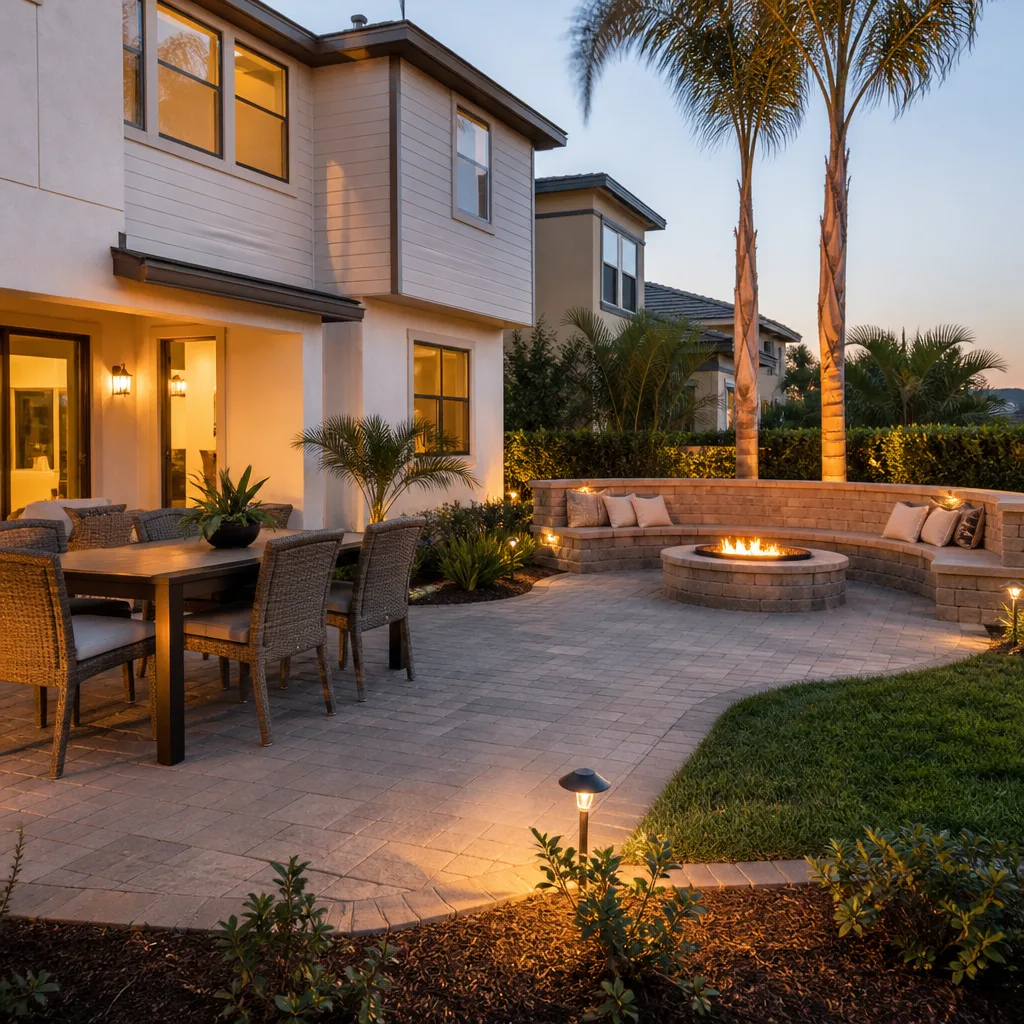
- Look at the driveway and pavers. Sealing a driveway or paver surface before the rainy season protects it from water sitting in the joints and freezing the base. If you’ve been putting off a paver project, fall is when you want the design and estimate done.
The fall window is also the best time of year to book larger exterior work before the rainy season, whether that’s a roof replacement, a new fence, or a paver driveway. If you’ve been meaning to schedule that work, our Groundwork Construction Co. of Long Beach home page is a good place to start, and the free estimate process is a low-stakes way to find out what your fall prep actually needs.
Winter Response Protocol: What to Inspect During and After a Big Rain Event
The winter rain in Long Beach doesn’t spread itself out. It shows up as a few big storms, often dropping several inches over a 24 to 72 hour window. That’s the opposite of the slow, steady rain a lot of homeowners imagine, and it’s much harder on a building because it overwhelms drainage all at once. The window to catch a problem is short: usually the first 24 hours after the storm passes.
You don’t need to climb on your roof in the rain to do a solid winter inspection. In fact, you shouldn’t. Check what you can safely see from the ground, and call a professional for anything that requires a ladder or a roof. The point of the winter response is early detection, not heroics.
- Walk the interior ceiling and walls. Look for water stains, bubbling paint, or a musty smell. A new stain on the ceiling is the first sign a roof penetration or flashing has failed.
- Check window and door frames. Water tracking inside the frame, a soft or spongy feel at the sill, or visible moisture on the interior side of a window means the seal is compromised.
- Inspect the base of exterior walls. Discoloration, bubbling stucco, or a soft spot near the ground can mean water is pooling against the foundation and soaking upward.
- Look at the drainage paths. Where the water went during the storm matters. If you see standing water against the house or a saturated patch that doesn’t drain after a day or two, the grade or drainage needs work.
- Check the fence and driveway. A leaning fence post after a storm means the post base has saturated and lost bearing. Cracks or lifting pavers after a wet season are a sign of base movement.
- Note what you find and act fast. A small roof leak caught in the first week costs far less to fix than one that’s had two months to spread into sheathing, insulation, and interior finishes.
If anything you find in a winter inspection points to roof damage, window failure, or movement in a fence or driveway, get a professional on it before the next storm. That’s the difference between a repair and a claim. Free estimates are the right first step, and a written line-item quote tells you exactly what you’re fixing.
Spring Assessment: Reading the Damage Winter Left Behind
Spring in Long Beach is when the winter’s water bill comes due. Our lots are often clay-heavy, which means they hold water long after a storm passes, and saturated soil does something to a foundation that the homeowner never sees on the surface. The spring assessment is about reading the signs of soil movement and delayed water damage before they turn into expensive structural work.
The soil saturation pattern on a Long Beach lot creates a specific kind of movement: soil swells where water pools and settles where it drains, and that differential pulls on the foundation and the structures attached to it. Clay-heavy soil makes this worse because it doesn’t release water quickly. Santa Ana wind events earlier in the year also add to the picture, since sun-baked soil can dry and shrink after a wet winter, reversing the movement.
Here’s what to look for in spring:
- New cracks or enlarged cracks in the foundation, stucco, or interior walls. Hairline cracks that have been there for years are usually benign. New diagonal cracks, or ones that widen over a few weeks, need attention.
- Doors that stick or rub where they didn’t before. Interior doors that suddenly won’t close the same way are a common early sign of foundation or framing movement.
- Uneven floors or visible slope. Small slopes are common in older Long Beach homes, but a slope that’s gotten worse over the winter is worth a professional look.
- Settled fence posts and driveway slabs. If a fence line has gone saggy or your driveway has a new dip, the soil under it moved. That’s the point to consider repair or replacement.
- Mold or rot on the north and west elevations. The marine layer kept those walls damp all winter. Spring is when the rot or mold shows up, and it’s the right time to catch it before summer.
- Windows and doors that have lost their seal. A failed window seal that held up during the dry months often shows its true condition after a wet winter. If you’re weighing a window replacement, our Windows & Doors page covers the options and what to expect from a quality installation.
Spring is also the right moment to schedule larger exterior projects that need dry weather, since you have a clear runway before the next wet season. If your spring inspection turns up a fence line that’s gone saggy, or a driveway that needs rebuilding, that’s the point to get a professional assessment before you spend another year patching it.
Summer and Santa Ana Season: UV, Wind, and the Products That Hold Up
Long Beach summers combine two things that are separately survivable and together are hard on a house: marine air that keeps surfaces moist at night, and intense UV that bakes them dry during the day. That daily wet-dry cycle is far harder on finishes, caulk, and paint than the dry heat of an inland climate. Then the Santa Ana winds arrive dry and fast, driving grit against every exterior surface and pulling at any loose material.
The result is predictable. Caulk that was fine in spring starts to chalk and crack by mid-summer. Paint on the south and west elevations fades and thins. Vinyl and wood-poly fence panels fade and dry out. Roof material on the sun-facing plane takes the most UV load of any surface on the house. A window that was sealed well will hold up. One that wasn’t will show the gap by August.
The best defense is a finish and a product that are rated for a marine-plus-UV climate, and that’s a big part of why we partner with manufacturers like PGT and CGI on windows, and why we favor brands that back their products over decades for roofing and exterior work. Material choice is doing the heavy lifting here. Here’s the practical checklist for the summer:
- Re-check caulk and paint. Inspect the south and west elevations and touch up anything that’s chalking or cracking before the UV takes more of it.
- Wash and inspect the roof. A quick exterior look from the ground after the dry season shows you the state of the shingles and the flashing before winter comes back.
- Clean debris off the roof and out of the gutters. Hot, dry months are exactly when the flammable debris accumulates. That matters even in a coastal neighborhood.
- Check the fence for wind damage. Santa Ana gusts pull at loose panels and top rails. Catch a wobbling panel before it becomes a full fence replacement.
- Look at the driveway and pavers. Summer sun drives UV onto paver finishes and joint sand. A reseal early in the season extends the life of the surface significantly.
- Schedule any exterior work that requires dry weather. Windows, doors, roof replacement, and exterior paint should go on the calendar before fall.
If the summer inspection turns up a roof or window that’s showing its age, don’t push it to next year. Replacing on your own schedule is far cheaper than replacing it after a storm has found the weak spot.
Roof, Fence, and Driveway: The Three Surfaces That Take the Most Abuse
Three surfaces do most of the seasonal fighting on a Long Beach home: the roof, the fence, and the driveway. Each takes a different kind of stress and each has its own maintenance cadence. Getting specific about what to check on each one is what separates a real seasonal calendar from a generic to-do list.
The roof is where winter water and summer UV meet. Long Beach’s brief, heavy storms test every flashing detail and every roof edge, while the summer sun bakes the same material for months. GAF and Owens Corning shingles held to their spec when installed correctly will hold up for the long haul, but the flashing and penetrations are the spots that fail first regardless of shingle quality. Check the flashing after every major storm, and look at the shingle condition each summer before the next wet season. If you’d rather not climb up there yourself, our roofing service page walks through what a professional roof inspection actually looks at.
The fence is the surface that takes the most wind. Santa Ana gusts drive hard against it, and winter rain saturates the post bases that anchor it. A fence that was stable in October can go visibly out of plumb after a wet winter and a windy spring. Check the post bases after storms, watch for panels that have pulled loose from the top rail, and don’t wait for a full failure to get an assessment. Our Fence Installation in Long Beach page covers material options that hold up against wind and marine air, whether you’re repairing a line or replacing it.
The driveway and pavers carry the water from every storm, so the base is the piece that matters most. Long Beach clay soil holds water, and a driveway base that wasn’t built for it will settle and heave over a few wet seasons. Sealing the surface and re-sanding the joints in late summer protects it from the UV and the wet-dry cycle. If your driveway has already started to dip or crack after this winter, that’s a sign the base needs rebuilding rather than patching. Our Driveway & Pavers in Long Beach page covers the options and the base prep that makes the difference.
Get ahead of all three surfaces in the same fall window, because they share the same enemy: a compressed rainy season against slow-draining soil. A single seasonal pass through the roof, fence, and driveway catches the small repairs before they compound.
How a Maintenance Calendar Tied to the 730-Day Done Right Promise Works
A seasonal maintenance calendar is only useful if you know where your homeowner responsibility ends and the contractor’s accountability begins. That line matters for every project we complete, because the whole point of the 730-Day Done Right Promise is that you know exactly what we’re on the hook for and for how long. If something we installed fails in its first two years, we make it right. That’s not a marketing line, it’s the contract.
The way we split the seasonal calendar with a homeowner looks like this:
- Homeowner responsibility, every season: cleaning gutters, checking interior ceilings for new stains, clearing debris from drains and downspouts, and eyeballing the exterior for anything that looks different. This is light, safe work that catches problems early.
- Homeowner responsibility, quarterly: a walk around the exterior to check caulk, paint, fence panels, and drainage. Ten minutes, four times a year, prevents most of the expensive version of these problems.
- Contractor accountability, for the full 730 days: anything we installed that fails to perform, from a roof flashing detail to a fence post to a window seal. If it fails within the promise period, we come back and make it right.
- Professional inspections, recommended annually: a proper roof inspection before each rainy season, and a foundation and structural check if you see movement. These are the inspections a homeowner shouldn’t DIY on a two-story roof or a raised foundation.
- Project-specific care: for a kitchen or bath remodel, the seasonal exterior calendar overlaps with interior humidity and ventilation care. If you’re planning a major interior project, seasonal care on the exterior is the cheapest way to keep the interior work protected. Our Home Additions & ADU in Long Beach page covers how exterior integrity plays into a larger project.
This is where a calendar and a warranty work together. If you’ve had exterior work done by us in the last two years and something fails a seasonal check, that’s a call we want you to make. Live person on the line, 24/7, and the promise is on us to make it right.
Common Mistakes to Avoid
- Treating mild weather as permission to skip fall prep. Long Beach looks forgiving in October and pays for it in January. The sealing and drainage work has to happen before the compressed rainy season, not during it.
- Climbing on the roof to “check it” after a storm. Roofs are wet, slippery, and higher than they look from the ground after a rain. Save the roof inspection for a professional and check the interior ceiling for stains instead.
- Ignoring a small interior ceiling stain as “probably condensation.” In a Long Beach house with a marine layer, condensation is real, but a new stain that appears after a storm is almost always a roof penetration or a flashing failure. Catch it in the first week.
- Patching a driveway or fence without checking the base. Clay-heavy soil on many Long Beach lots moves under a driveway and fence, so a cosmetic patch just hides the failure for a season before it comes back.
- Skipping the caulk walk in fall because the exterior “still looks fine.” Caulk is cheap and it fails invisibly. A two-hour fall walk around the exterior is the highest-return maintenance task a Long Beach homeowner can do.
- Waiting for a full failure before calling anyone. A wobbling fence post in October is a repair. The same fence in January is a replacement after the wind takes it down. Small problems are where the real savings are.
- Choosing a finish or material rated for an inland climate. A product that works in Riverside doesn’t automatically handle a marine-plus-UV cycle. Ask for materials rated for coastal exposure, and don’t settle for “close enough.”
See the difference
 Before
 After
 Before
 After
 Before
 After
When to Call a Professional
Some seasonal checks are homeowner work, and some need to be done by someone who knows what to look for. Call us when you find water staining on an interior ceiling or wall that’s new since the last storm, when a window or door frame feels soft or shows moisture after rain, or when you see new diagonal cracks or movement in the foundation. Call when a fence line has gone out of plumb or a driveway slab has visibly settled, and call when the roof is older than its warranty spec or you’ve had a leak somewhere in the last two years. These aren’t panics, they’re just the right moment to get a professional assessment. Groundwork Construction Co. of Long Beach offers free estimates in Long Beach, and our technicians have up to 12 years of experience on the specific surfaces and materials we install. Call (888) 345-8164 for a free estimate.
Frequently Asked Questions
Long Beach homeowners should do a formal exterior walk at least four times a year, with a heavier prep pass in September through November before the rainy season. The fall window is the important one, because it’s the last chance to seal and clear the exterior before the compressed storms arrive. A quick walk after every major winter storm, and one in early summer for UV and wind, rounds out the calendar. If you’re not sure what you’re looking at, a free estimate from a professional is a low-cost way to find out.
Start with the interior: any new water stains on ceilings and walls, and any soft spots at window sills and exterior wall bases. Then walk the exterior from the ground, checking for standing water against the house, gutters that didn’t drain, and fence panels that have gone out of plumb. A damp or discolored area near the foundation is the sign of a drainage problem. Call a professional for a roof or structural inspection – don’t climb a wet roof to check it yourself. Free estimates are available if you find something that needs professional attention.
No. Mild weather is precisely why fall prep gets skipped and why the calendar still matters. Long Beach’s 12 inches of rain come in a few intense winter events, so a house that isn’t watertight before the first storm absorbs far more water than the annual average suggests. The marine layer keeps the exterior damp well into the morning, and the UV months follow. Skipping fall prep is how a small issue becomes an expensive one.
A homeowner walkthrough of caulk, paint, gutters, drainage, and fence line costs nothing but an afternoon, and it’s the highest-return seasonal task. Professional inspections and repairs vary by scope: a roof inspection is typically a small line item, while a fence repair or a driveway base rebuild is a larger project priced from a written quote. We give free estimates with line-item pricing so you know exactly what you’re paying for before we start. Call (888) 345-8164 for an exact quote – estimates are free.
Most seasonal maintenance does not require a permit: caulk, paint, gutter cleaning, and minor fence repair typically don’t. Larger repairs often do. A full roof replacement, a driveway rebuild, or a fence replacement on a lot line frequently need a permit and an inspection under Long Beach and California code, and we pull the permits and pass the inspections on the projects we handle. If you’re not sure whether your repair crosses the line, ask before you start. Call (888) 345-8164 and we’ll walk you through it.
The 730-Day Done Right Promise covers the workmanship on what we install for two full years – if it isn’t done right, we make it right. That means a seasonal check that turns up a failed flashing detail, a fence post that’s already gone soft, or a window seal that isn’t holding is a call we want you to make. Warranty and calendar work together: the calendar catches the problems early, and the promise covers the fix on our work. Calls are answered by a live person 24/7.
The Bottom Line
Long Beach’s mild weather is a reason to maintain on a schedule, not a reason to skip it. The rain comes in compressed bursts, the marine layer keeps surfaces damp, the clay-heavy lots hold water, and the Santa Ana and UV cycle wears on every exterior finish. Fall is for sealing and clearing, winter is for watching for intrusion, spring is for reading the damage, and summer is for UV and wind. If you get the calendar right, most of these problems get caught while they’re still cheap. If you don’t, the small problems compound. Either way, the fix starts with a professional look at the surfaces that matter most.
If your seasonal walk turns up water staining, a soft window frame, a fence line that’s out of plumb, or a driveway that’s started to settle, this is the right moment to get it looked at. Groundwork Construction Co. of Long Beach offers free estimates, written line-item pricing, and the 730-Day Done Right Promise on every project we complete. Calls are answered by a live person, 24/7, and our technicians are background-checked and arrive in uniform. Ask about the current promotions too: $1,000 off projects over $10,000, a free project estimate and design consult, and 0% financing for 18 months. Call (888) 345-8164 to schedule your free estimate today.
Written by the team at Groundwork Construction Co. of Long Beach.


