
Free written scope consultation - allowances, timeline, and change-order rules on paper before a single trade is scheduled
Styles & brands we work with
- Kitchen remodeling
- Bathroom remodeling
- Home additions & ADU
- Roofing
- Windows & doors
- Driveway & pavers
- Fence
See the difference
 Before
 After
 Before
 After
 Before
 After
Pavers vs Concrete Driveway in Long Beach, CA: Which One Fits Your Property?
Choose pavers if your Long Beach home sits in a historic-context overlay like Belmont Heights or Rose Park, or if you want a surface you can repair one unit at a time in salt air. Choose concrete if you’re outside any overlay zone and want the lowest upfront number with the fastest install. That’s the short answer. The longer answer depends on something most comparison articles skip entirely: permitting and design review, not aesthetics.
If your bungalow or Spanish Colonial Revival falls inside one of Long Beach’s designated historic districts, your driveway material may need to clear a design review board before a single paver gets set. Call (888) 345-8164 and we’ll tell you whether your address triggers review.
Why the Permitting Question Comes First in Long Beach
Long Beach construction is dominated by the collision of very old stock with very new regulation. Pre-1933 bungalows and 1930s Craftsman fourplexes in neighborhoods like Rose Park and Belmont Heights sit inside both a Coastal Zone and a designated historic context. That means a driveway replacement can stack Coastal Commission review, historic-district design review, and seismic rules onto one small lot, a permitting pile you simply don’t hit inland in Lakewood or Compton.
Most homeowners don’t learn this trigger exists until they’re already mid-project and a neighbor’s complaint pulls the permit. Here’s how it plays out in practice:
- Historic-context properties often require design review of the visible driveway surface. Pavers frequently pass faster because a period-appropriate unit paver reads closer to the original look than a poured slab.
- Properties outside any overlay usually need only a standard right-of-way or encroachment permit, and concrete clears that faster because there’s less material review.
- Coastal Zone parcels can add a separate layer of review depending on how close the work sits to a bluff or tidelands boundary.
We check your address against the overlay maps before we quote, so the number you see is the number you pay. That’s the home standard we hold on every driveway we touch.
Pavers Win on Repairability in Long Beach’s Salt Air
Salt air off the Port of Long Beach is hard on everything exterior, and driveways are no exception. A concrete slab that develops salt-induced spalling or a hairline crack typically needs patching, resurfacing, or full replacement, and that means a disruptive tear-out. Pavers behave differently.
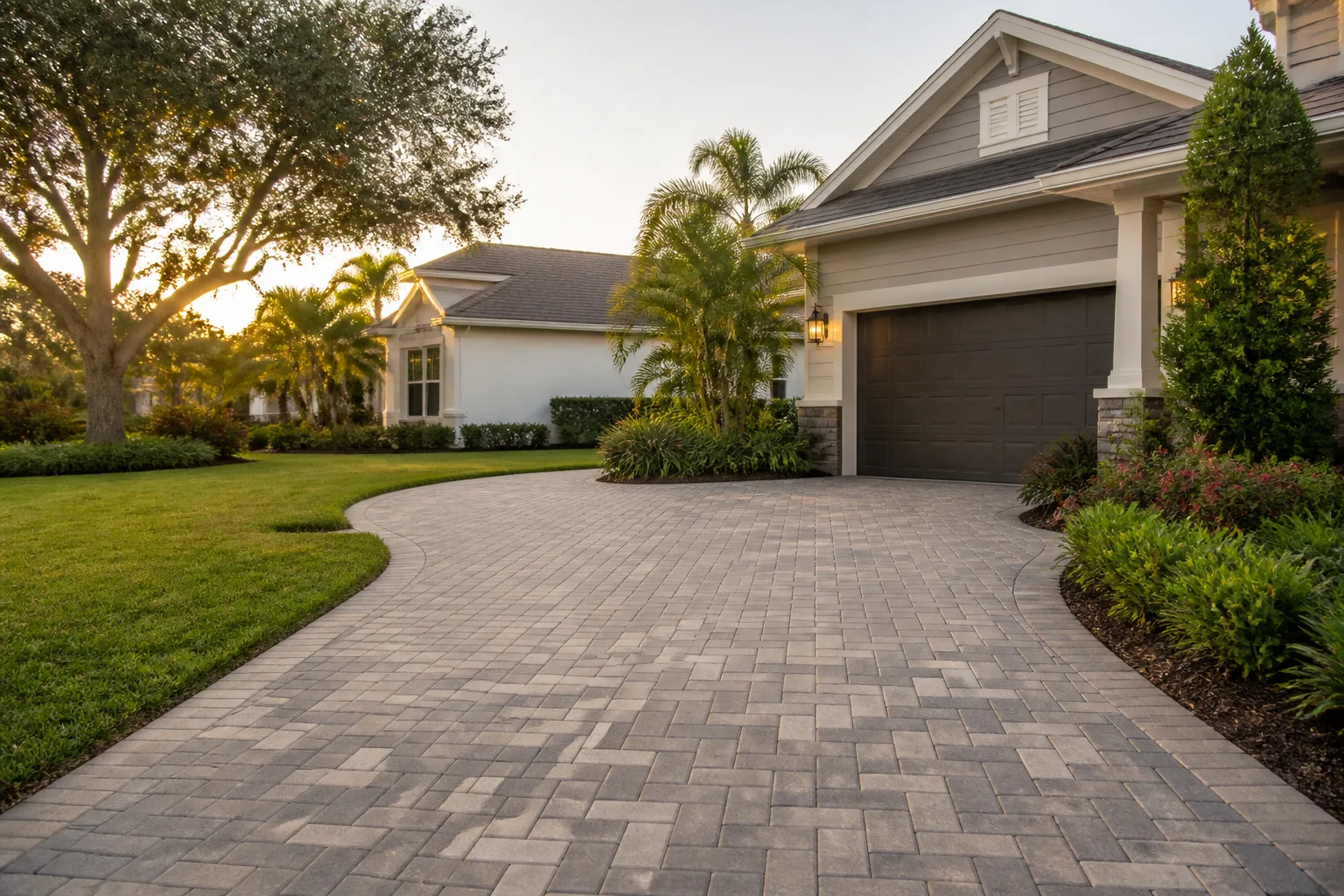
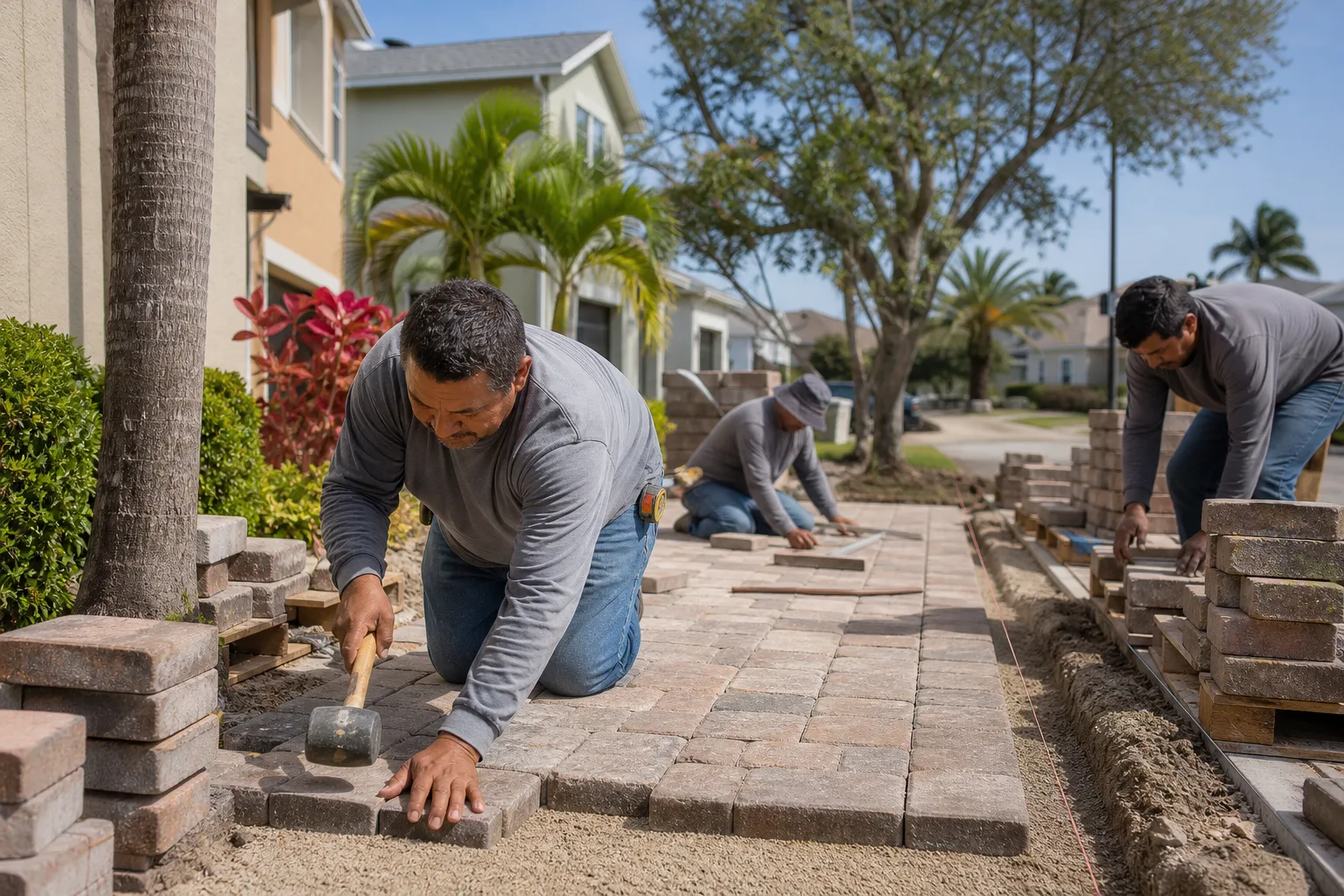
When a single unit cracks or the sand joint erodes, you lift that one paver and set a new one. The rest of the driveway stays put. On a beach-adjacent property where the marine layer keeps surfaces damp more months than not, that repairability adds up over a decade. We source pavers from top-tier manufacturers like Oldcastle, and we can bring physical samples to your driveway so you’re comparing real color and texture in real Long Beach light, not a website catalog.
Concrete Wins on Cost and Speed Outside Any Overlay
Honest numbers matter. For a straightforward east-side tract home sitting well outside any historic overlay, concrete is the cheaper and faster call, and pretending otherwise doesn’t help you. A standard concrete driveway installation in Long Beach runs $4,500-$12,000, while a paver driveway runs $7,000-$18,000. That gap is real.
Here’s the comparison most articles won’t give you straight:
| Factor | Pavers | Concrete |
|---|---|---|
| Typical install cost (Long Beach) | $7,000-$18,000 | $4,500-$12,000 |
| Install timeline | Longer, more handwork | Faster pour and cure |
| Single-point repair | Lift one unit | Patch or replace slab section |
| Historic design review | Often passes faster | More scrutiny on visible surface |
| Salt-air behavior | Units can be swapped | Spalling means wider intervention |
| Base prep cost | Virtually identical | Virtually identical |
The Base Prep Is the Same Either Way
Here’s a point that surprises a lot of Long Beach homeowners: the sub-base requirements are essentially identical for both materials given our expansive soils. We’re excavating and compacting to the same depth whether you choose pavers or concrete. That means the base prep line on your quote barely changes, and the surface choice is what drives the final price difference, not the foundation work underneath it.
We mix base material from partners like Quikrete and Sakrete to spec, and we test compaction before we lay anything on top. Done wrong, expansive soil will telegraph every shortcut through your finished surface within a season.
Common Local Scenarios We See
After enough Long Beach driveways, certain patterns repeat:
- Belmont Heights bungalow, 1920s: Historic review on the visible surface. A period unit paver usually clears faster than a slab.
- Rose Park Spanish Colonial: Coastal Zone plus historic context. We map both before quoting.
- East-side tract home, 1960s: No overlay, straight permit. Concrete is often the right value call.
- Beach-adjacent rental property: Salt-driven corrosion makes single-unit paver repair the smarter long game.
If you want the full material and process rundown, our Driveway & Pavers page covers spec, timeline, and finish options in detail.
What Groundwork Brings to a Long Beach Driveway
Groundwork Construction Co. of Long Beach works from the same curated material partnerships we use across every trade, from KraftMaid and Cambria in kitchens to hardscape paver manufacturers on your driveway. Our technicians have up to 12 years of experience, and every job is backed by our 730-Day Done Right Promise: if it’s not done right, we make it right, one of the longest workmanship guarantees in residential construction.
Calls are answered by a live person, 24/7, no voicemail, no waiting until Monday. Technicians are background-checked and arrive in uniform. Pricing is upfront, and we offer 0% financing for 18 months plus $1,000 off projects over $10,000.
FAQs
Repair is cheaper short-term, typically running a few hundred dollars for a patch, while a full replacement runs $5,000-$14,000. But if your slab has widespread salt-induced spalling or multiple structural cracks, patching becomes a loop and replacement is the better spend. Call (888) 345-8164 for an honest read on which side of that line your driveway sits, the estimate is free.
Usually yes, and in historic-context neighborhoods you may also need design review of the visible surface. That’s the piece most homeowners miss. Permits are handled through the City of Long Beach, and overlay properties like those in Belmont Heights or Rose Park can add a design review layer. We check your address before quoting so you’re not surprised mid-project.
Both last decades when the base is prepped correctly, but they fail differently. Pavers let you replace one damaged unit without tearing up the rest, while a concrete slab exposed to marine salt tends to spall and require wider intervention. The base prep drives longevity more than the surface material, and we test compaction before laying either.
Yes. We bring physical paver samples on-site so you can see color and texture in the actual light of your property, not a screen. We source from top-tier hardscape manufacturers like Oldcastle alongside our broader material partnerships. No-pressure assessment, upfront pricing, and a free design consult, call (888) 345-8164.
If you’d rather have it looked at, Groundwork Construction Co. of Long Beach offers a no-pressure assessment in Long Beach. We’ll walk your driveway, check the overlay maps, and hand you a straight number. Call (888) 345-8164 for a free estimate.
Written by the team at Groundwork Construction Co. of Long Beach, serving Long Beach, CA.


