
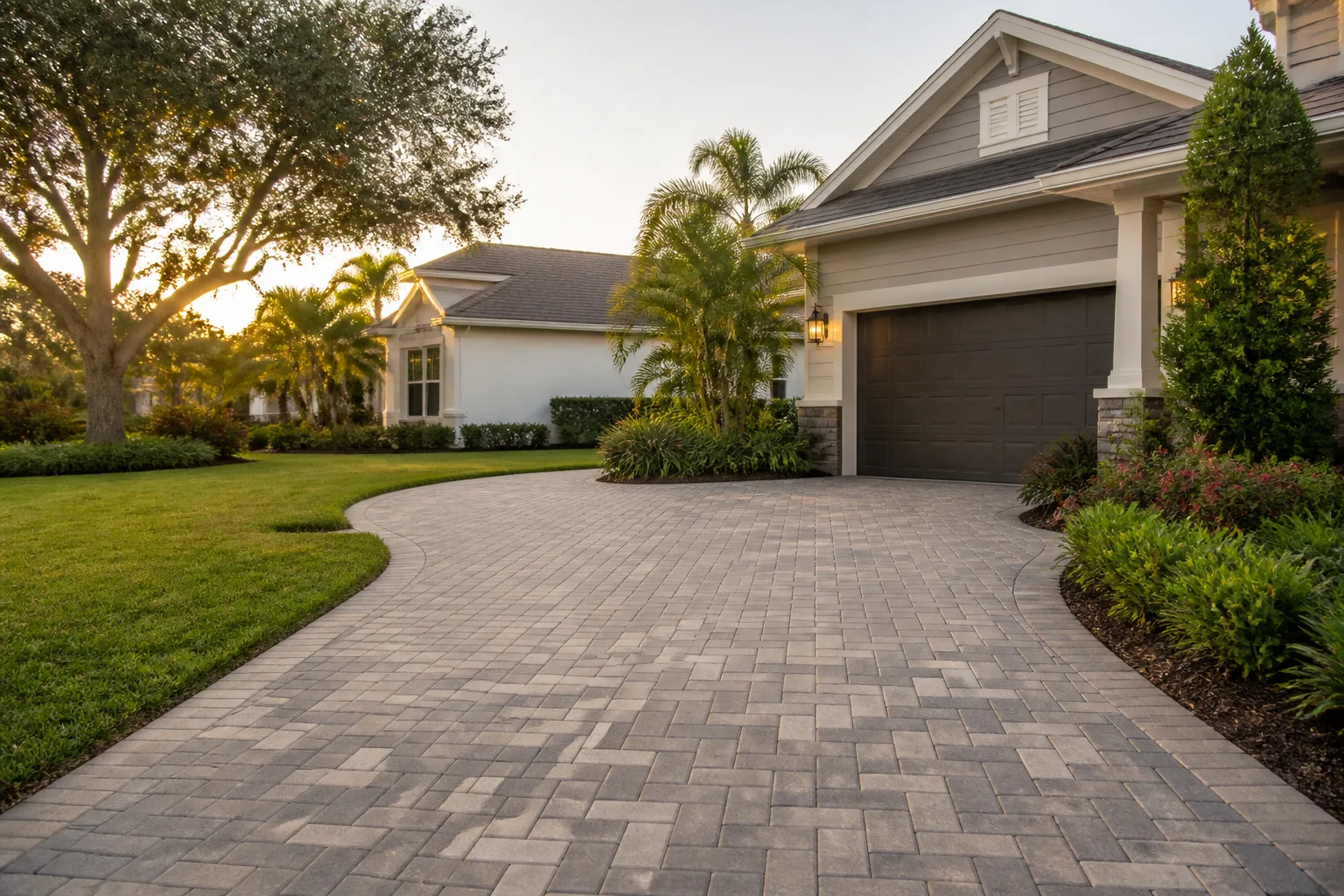
Last updated November 17, 2026
Free written scope consultation - allowances, timeline, and change-order rules on paper before a single trade is scheduled
DIY vs Professional Driveway & Pavers: What’s Safe to Do Yourself
Laying pavers is learnable in a weekend. Building the base those pavers need to last 20 years in Long Beach’s soil conditions is a different job entirely, and confusing the two is how a $4,000 DIY project becomes a $9,000 redo. The pavers themselves aren’t the hard part. The excavated, graded, compacted, properly drained base underneath them is, and it’s the part no YouTube video can teach you through a screen. In this guide we’ll draw the line honestly: which driveway work a homeowner can safely take on, which work is a genuine structural gamble, and how to avoid paying twice for the same square footage in Long Beach.
Quick Answer
Sand-leveling, joint-sand refills, sealing, and re-setting a single loose paver with no base problem are safe for most homeowners to do themselves. Full driveway construction, base excavation, compaction, and anything involving vehicle traffic should go to a professional crew. In Long Beach, the base work is the make-or-break step, and homeowners who skip it usually pay for the whole driveway twice.
Styles & brands we work with
- Kitchen remodeling
- Bathroom remodeling
- Home additions & ADU
- Roofing
- Windows & doors
- Driveway & pavers
- Fence
Table of Contents
- What’s Really Under a Long Beach Driveway
- The Base Prep Steps That Separate a 20-Year Driveway From a 2-Year One
- What a Homeowner Can Legitimately Do Yourself
- The Long Beach Permit Reality Nobody Warns You About
- Real Cost Comparison: DIY vs Professional
- The One Scenario Where DIY Makes Complete Sense
- Common Mistakes to Avoid
- When to Call a Professional
What’s Really Under a Long Beach Driveway
Long Beach sits on a mix of sandy loam, older fill, and the kind of expansive clay that swells when it’s wet and shrinks when it dries. Along the coast and in neighborhoods like Belmont Shore or Naples, you also get a high water table and salt air that attacks metal edging faster than most inland cities. Drive a few miles inland toward Lakewood-adjacent blocks or the older parts of Bixby Knolls, and you’ll hit fill soil that was never compacted to any modern standard when the homes went up. Three different soil profiles, three different base solutions.
That matters because pavers don’t fail. Bases fail. A paver is a 2-inch-thick piece of concrete or clay that will easily last decades sitting on a properly built base, and will crack, heave, and rut within a couple of rainy seasons sitting on an improperly built one. When we open up a failed driveway in Long Beach, the story is almost always the same: 2 inches of sand over native soil, no compacted aggregate, and no drainage path for water to leave. The pavers looked great for two years and then the whole surface went wavy.
In our experience, the homes most vulnerable to this are the ones built between the 1940s and 1960s, when driveways were often poured thin or paved over dirt with a thin aggregate skim. If your driveway is original to a mid-century Long Beach house, assume the base needs full replacement, not a top-up.
Why coastal Long Beach is harder on driveways than inland cities
Salt-laden air corrodes steel edging and accelerates spalling on concrete pavers. Seasonal moisture swings pull fine particles down through the joint sand and pump them back up, a process called migration that leaves voids under the surface. And the marine layer keeps the subgrade damp for weeks at a time, so any base layer that wasn’t properly drained stays soft. That’s why we recommend a compacted crushed aggregate base (typically 4 to 6 inches for a residential driveway, more depending on soil) over geotextile fabric, with a properly sloped subgrade that moves water away from the foundation and toward the street or a drainage point.
The Base Prep Steps That Separate a 20-Year Driveway From a 2-Year One
This is where the DIY conversation actually lives. You can set pavers beautifully on top of a bad base and it will still fail. The base is the whole job, and the base requires tools most homeowners have never operated, plus judgment about soil that only comes from doing it repeatedly.
- Excavation to the correct depth. You’re not digging for the pavers. You’re digging for the pavers plus the bedding sand (about 1 inch) plus the compacted aggregate base plus a safety margin for soil that will settle. For most Long Beach residential driveways that means excavating 8 to 11 inches, not the 3 or 4 inches a first-timer estimates. Getting this wrong by 2 inches is a full redo.
- Subgrade evaluation. Once the hole is open, the exposed soil has to be checked for soft spots, fill, and moisture. A trained eye knows what to look for; a first-timer usually doesn’t. If the subgrade is soft, it has to be over-excavated and replaced before anything else happens.
- Geotextile fabric. A separation layer goes down over the subgrade to stop fine soil particles from migrating up into the aggregate base. Skip it and your base loses integrity from the bottom up.
- Aggregate placement in lifts. Crushed stone goes in 2- to 3-inch layers, each one compacted before the next is added. Dumping 6 inches in one pass and hitting it once with a plate compactor leaves the bottom half loose.
- Plate compaction with the right equipment. A rental plate compactor will do residential driveways. A hand tamper will not, not even close. Most homeowners rent a plate compactor without realizing the rental yard staff can’t teach them to read soil moisture or know when a lift is done.
- Slope and drainage. The base has to be graded so water moves off the driveway and doesn’t pool against the garage slab or the house. On Long Beach’s flatter lots this is often a couple of inches over 20 feet, a slope subtle enough that a first-timer who eyeballs it usually gets it wrong.
- Bedding sand screeding. The 1-inch sand bed that the pavers sit on has to be screeded flat and consistent. Thick spots settle, thin spots rock. This step alone is worth a full day on a two-car driveway.
None of this is impossible. All of it is equipment- and experience-heavy. And in Long Beach, where the soil under a mid-century driveway can change character from one side of the slab to the other, the base decisions get made on the spot, not on a shopping list. If you want to see what a full professional build looks like from excavation through joint sand, our Driveway & Pavers in Long Beach page walks through the process.
What a Homeowner Can Legitimately Do Yourself
Here’s where the honest answer has some real room in it. Once a professionally built paver surface is in place, several ongoing maintenance tasks are well within reach of a homeowner with a few hours and the right materials. These aren’t the construction steps. They’re the keeping-it-together steps.
- Joint sand refills. Polymeric joint sand washes out over time, especially on a sloped driveway in a coastal climate. Topping it up annually or after heavy rainy seasons keeps the pavers locked together and keeps weeds from finding the joints. Quikrete and similar brands sell bagged polymeric sand that works well for homeowner-level refills.
- Sealing. A penetrating sealer applied every two to three years protects pavers from salt air and slows stain absorption. This is a solo-project task: clean, dry, roll or spray on. No compaction equipment, no permit, no structural risk.
- Re-leveling a single loose paver with no base issue. If one paver has lifted but the neighbors are flat and firm, it can usually be pulled, the sand bed re-flattened underneath, and the paver re-set. That’s a maintenance fix. If three or more pavers in the same area are rocking, the base underneath is the problem and it’s not a homeowner fix anymore.
- Weed and moss control. A wire brush and a hose handle most of it. Weeds growing out of joints are a sign the joint sand needs a refill, not a sign of structural failure.
- Surface cleaning. A stiff broom, a garden hose, and a mild detergent keep a paver surface looking sharp for years. Skip the pressure washer at full pressure, which can blast joint sand out.
What ties all of those together is that none of them require touching the base. The base is built once, by someone with the equipment and judgment to build it right, and then maintenance is a homeowner job for the life of the driveway. Get those two things separated in your head and the whole DIY vs professional question gets a lot clearer.
The Long Beach Permit Reality Nobody Warns You About
Long Beach requires a building permit for driveway work above a certain square footage, and the specifics matter for resale and insurance. The permit thresholds and requirements aren’t something to eyeball from a forum post, so the correct move is to confirm the current requirement with the Long Beach Community Development Department before any work begins. What homeowners consistently get wrong is assuming a paver driveway isn’t “construction” because nothing is being poured or framed. Paver driveways are construction. They touch the ground plane, they affect drainage and runoff, and they can affect your property’s compliance with lot coverage rules.
The real pain shows up years later, at resale or after a claim. An unpermitted driveway can be flagged during a title search or a buyer’s inspection, and the fix can require removing and rebuilding the work to get it signed off. Insurance carriers have their own opinions about unpermitted hardscape on the property, and a claim that traces back to drainage runoff from an unpermitted driveway can get complicated fast. Every completed driveway we hand off to a homeowner in Long Beach has been permitted and inspected, and we pull the permit as part of the job. That’s one of the reasons our pricing is written as a fixed line-item number with no change orders: the permit cost is in the quote, not a surprise appearing halfway through the project.
One more local reality: Long Beach neighborhoods vary widely in lot sizes and setbacks, and a driveway expansion that pushes toward a side yard or property line can run into setback rules you didn’t know existed. A permit review catches that before the excavation starts, which is a lot cheaper than catching it after.
Real Cost Comparison: DIY vs Professional
This is where the “DIY saves money” assumption usually breaks down. There is a real cost gap between doing a small paver project yourself and hiring a crew, but that gap narrows fast once you account for everything that isn’t in the material quote. The comparison table below is based on typical Long Beach market conditions; exact numbers always depend on square footage, site access, soil, and the paver line you choose.
What each path actually costs on a driveway-sized project
- Materials (pavers, base aggregate, bedding sand, fabric, edging, joint sand): DIY and professional projects pay roughly the same. Material cost doesn’t improve because you’re doing the work.
- Equipment rental (mini excavator or walk-behind, plate compactor, laser level, wheelbarrow, hand tools): DIY homeowners typically spend several hundred to over a thousand dollars on rentals for a two-car driveway, plus delivery and fuel. A pro crew uses owned equipment that’s already on the trailer, so you’re not paying a one-off rental cost.
- Disposal fees: Excavated soil and demolished old concrete or pavers are heavy, and in Long Beach the cost to haul and dispose of them is real. DIY homeowners often underestimate this by a wide margin.
- Permit costs: Paid either way, but a professional pulls it correctly the first time, which avoids the re-inspection or re-permit fees that can show up on DIY jobs.
- Time: A first-time DIY driveway is typically several weekends, sometimes a couple of months. That’s not a cash cost, but it’s real, and it usually compounds the rental bill.
- Likelihood of a base redo: This is the number the DIY math usually leaves out. When we’re called to fix failed DIY driveways in Long Beach, the base redo runs a significant fraction of what the original project cost, and usually it happens within two to five years. That’s the double-payment problem.
Add it up honestly for a two-car driveway and the “DIY is way cheaper” story gets thinner. Those several-hundred-dollar rentals, the disposal, the permit, and the odds of a partial redo are what most DIY budget spreadsheets miss. Meanwhile, we offer 0% financing for 18 months and $1,000 off projects over $10,000, which narrows the gap for a lot of homeowners. Our Groundwork Construction Co. of Long Beach home page has more on that side of the equation.
- Upfront pricing, no surprises. Every estimate is written line-item, so you can see exactly where the cost goes: base, pavers, edging, permit, and labor.
- The 730-Day Done Right Promise. Every completed driveway is covered. If it’s not done right, we make it right, for two years.
- Brand partners you can name. Techo-Bloc and Cambridge Pavers both make products that hold up in a salt-air climate, and we source through trusted suppliers.
The One Scenario Where DIY Makes Complete Sense
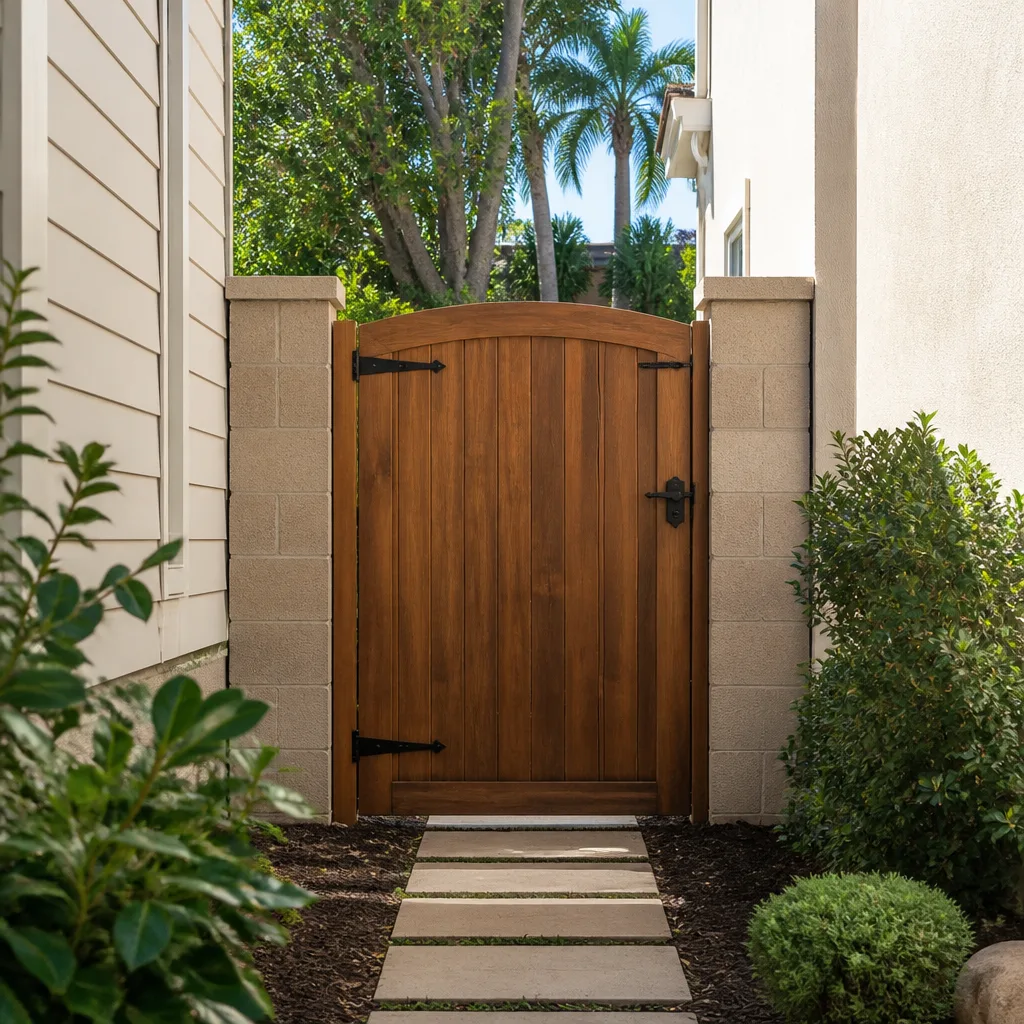
There’s a category of paver project where a homeowner can do the work themselves and come out ahead: small accent work and pathways away from vehicle traffic. If you’re laying a 3-foot-wide walkway from the back patio to the gate, a decorative border around a garden bed, or a small accent pad under a grill, the base requirements are genuinely different. Loading is near zero, so the 6-inch compacted aggregate base a driveway needs can be much smaller, sometimes just a few inches of compacted base plus bedding sand. The excavation is shallow and manageable by hand. And a failure is cosmetic, not structural, no car is going to roll over it.
Pathway and accent work also doesn’t require the same engineering you’d apply to a driveway that has a car parked on it every night. Sand-set pavers on a compacted base over a fabric layer, properly edged, will hold up for years in a pathway setting if you’re careful and patient. A reasonable rule of thumb: if a car will never drive on it, the DIY ceiling is much higher. If anything with a motor will touch it, hire a pro.
The other place DIY works is a small repair. If a single paver has cracked and the neighbors are solid, swapping that one paver is a half-day job. Buy a few spares at the start of the project, keep them in the garage, and you’ll have the right color and size available when you need it years down the road.
If you’re planning a paver pathway or an accent pad and want to see what it looks like when it ties into a larger hardscape plan, our crews handle those as part of larger projects too. The same standards for base and edging apply.
Climatic and Site Realities That Change the Math in Long Beach
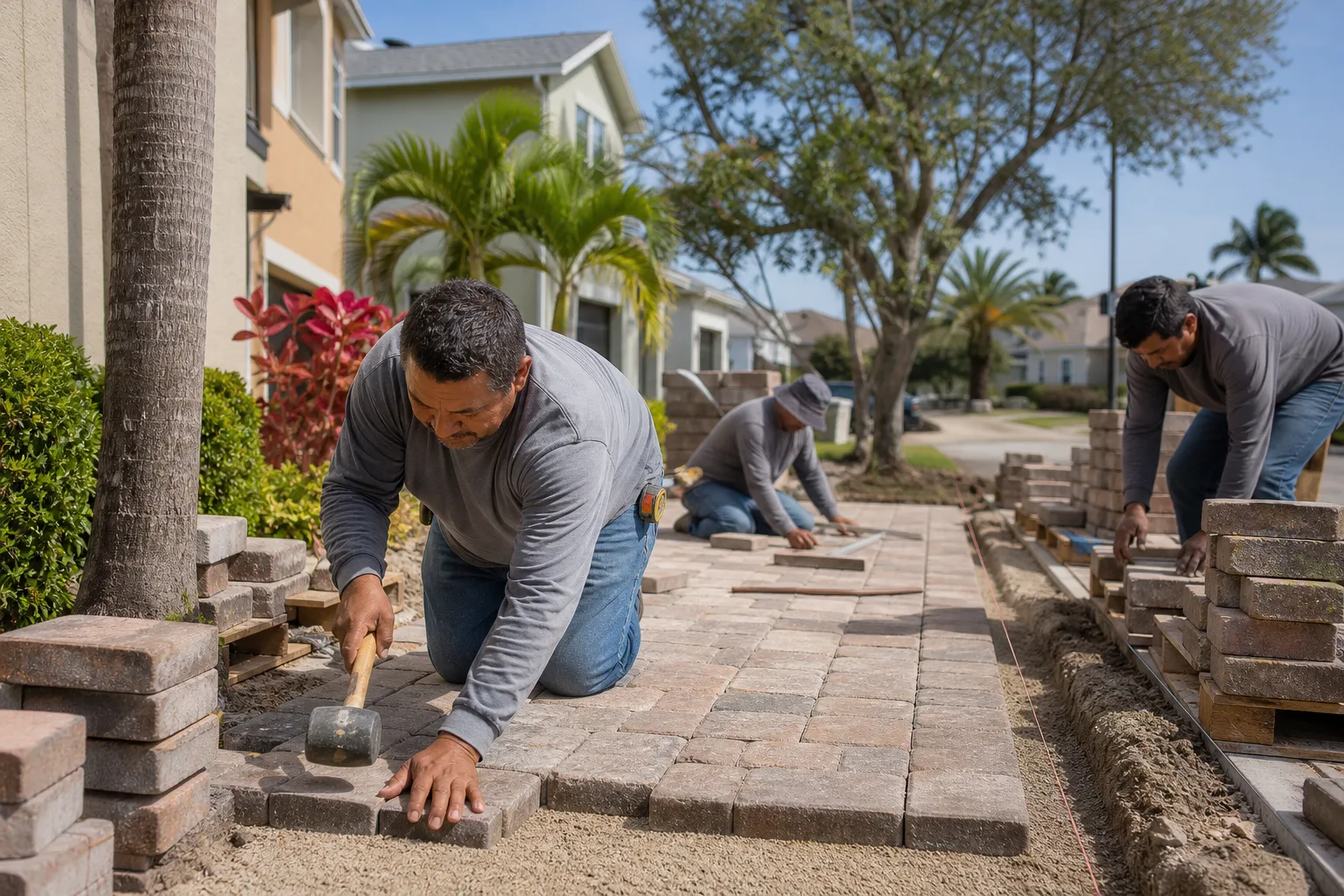
Not every Long Beach driveway is a candidate for the same solution. Neighborhood matters. Along the coast, salt air and marine moisture mean any metal edging needs to be galvanized or composite, and joint sand needs to be polymeric to resist being washed out by the seasonal damp. In the older inland neighborhoods, non-compacted fill soil is common enough that we plan on over-excavation as a rule, not an exception. In areas with mature ficus and eucalyptus trees, root intrusion under a rigid driveway is common, and sometimes a flexible paver surface is the better choice over concrete because it can be lifted and reset.
Driveway access also changes the picture. Long Beach lots are often tight to the property line and to the neighbor’s wall, which can complicate excavation equipment access and the direction you can slope water. A driveway along a side yard with a narrow access point may need smaller equipment and additional hand work, which shows up in the estimate as a labor line. None of this is surprising to a crew that has built driveways all over Long Beach. All of it is surprising to a homeowner running their first project from a rental yard.
And then there’s the weather. Paver installation wants dry, moderate conditions. Rain in the forecast in Long Beach is rare, but when it shows up mid-project it exposes any weakness in drainage and compaction immediately. A pro crew knows how to protect an open excavation and how to read whether the base is saturated after a wet night. On a DIY job that wet night typically means redoing the base.
See the difference
 Before
 After
 Before
 After
 Before
 After
Fire, Fence, and Foundation: Adjacent Site Work You Should Plan Together
Driveways rarely happen in isolation in Long Beach. Homeowners who are replacing a driveway often discover the fence along the property line is at the end of its life, especially wooden fences that have been through a few decades of coastal air. Doing the fence alongside a driveway project usually costs less than doing them separately because the equipment and disposal are already on site, and the access that makes one job easier makes the other easier too. Our Fence Installation in Long Beach page covers what that looks like on a combined project.
Larger site work, like a detached garage rebuild, a room addition with a new driveway approach, or an ADU project that changes the front setback, needs a site plan that considers all of it at once. In our experience, homeowners who try to sequence those projects one at a time end up re-doing driveway edges and re-sloping the approach multiple times. Planning the whole site at once saves money and avoids the driveway-replacement-twice problem. Our Home Additions & ADU in Long Beach page goes into how a full-scope build coordinates the hardscape and the structure together.
If your garage slab is failing at the same time the driveway is, that’s a coordination conversation too. It’s often cheaper to rebuild the approach and the slab together than to patch the driveway up to a failing slab and re-do it again a year later.
Common Mistakes to Avoid
- Skimping on excavation depth. The single most common failure point on a DIY driveway in Long Beach is digging too shallow. The base should be 4 to 6 inches of compacted aggregate plus bedding sand, which means 8 to 11 inches of total excavation. Homeowners routinely dig 4.
- Renting a compactor they don’t know how to run. A plate compactor will do the job if it’s operated correctly, with the right number of passes and the right soil moisture. The operator’s judgment is the difference between a solid base and a base that looks solid on the surface but is still loose underneath.
- Dumping all the aggregate in one lift. Base material placed all at once and compacted from the top leaves the bottom half loose. Each 2- to 3-inch lift needs its own compaction pass before the next goes down.
- Skipping the geotextile fabric. Fabric costs very little and prevents fine Long Beach soil particles from migrating up into the aggregate base. Skipping it costs a lot later.
- Practicing on a driveway instead of a pathway. Your first paver project should be the 3-foot walkway to the back gate, not the driveway. You’ll learn sand screeding and edging fundamentals on a small project before you risk a driveway.
- Forgetting the permit. Unpermitted driveway work in Long Beach can create title and insurance complications at resale, plus re-inspection costs when it gets flagged. Pull the permit, even for a “small” expansion.
- Sloping the driveway toward the house. On a flat Long Beach lot, it’s easy to get the pitch wrong so water pools at the garage slab. Water intrusion at the garage is a common reason we get called to look at failed driveway work.
- Choosing pavers by color before checking the brand’s suitability. Techo-Bloc and Cambridge Pavers both make excellent products, but the right series depends on the driveway’s freeze-thaw exposure, expected traffic, and the joint pattern. Sorting that out before you order saves a return and re-order.
When to Call a Professional
Call a professional when the work involves vehicle traffic, when there’s any question about the base under an existing driveway, when the project crosses the permit threshold in Long Beach, when the site has tight access or complicated drainage, or when you’ve had a first attempt fail and you don’t want to pay a third time. Also call when the driveway is part of a bigger project: a garage rebuild, an ADU, a fence-plus-driveway combo, or a full front-yard renovation.
Groundwork Construction Co. of Long Beach offers free estimates in Long Beach. We’ll walk the site, confirm the base situation, and write a line-item estimate you can actually compare to other bids. The quote you see is the number you pay, backed by the 730-Day Done Right Promise. Call (888) 345-8164 to schedule your free estimate.
Frequently Asked Questions
You can, legally, if you pull the right permit and build the base correctly, but the base work is the part that fails for most first-timers. Driveway pavers carry vehicle load, which is a fundamentally different engineering requirement than a pathway. In Long Beach’s variable soil, a properly excavated and compacted 4- to 6-inch aggregate base is what determines whether the driveway lasts 20 years or 2. If you’re considering it, get an estimate first so you can compare the real DIY cost against a professional build. Call (888) 345-8164 to schedule a free estimate.
Joint sand refills, sealing, cleaning, weed control, and re-setting a single loose paver with no underlying base problem are all safe and reasonable homeowner tasks. They don’t require excavation, compaction equipment, or a permit. If multiple pavers in one area are rocking or heaving, that points to a base failure and is not a homeowner fix.
Long Beach requires a building permit for driveway work above a certain square footage, and the specifics should be confirmed with the Long Beach Community Development Department before any work starts. The risk of skipping it isn’t the permit itself, it’s the resale and insurance complications that turn up years later. Professionals pull the permit as part of the job, and it’s included in the written estimate. Call (888) 345-8164 for a free estimate that itemizes it.
The material cost is roughly the same either way, but the total DIY cost is usually higher than homeowners expect once equipment rental, disposal fees, permits, and the likelihood of a base redo are factored in. For most two-car driveways, the DIY math doesn’t hold up after two years, because a base redo doubles the cost of the original project. A professional build with a fixed line-item price and the 730-Day Done Right Promise removes that risk. Call (888) 345-8164 to get an exact number.
Yes, reliably. Pavers are strong; the base is the variable. A paver surface installed over 2 inches of sand on native soil will look fine for a couple of seasons and then go wavy, rut, or heave. In Long Beach, the combination of expansive clay, coastal moisture, and older fill soil under mid-century homes makes a properly compacted aggregate base a structural necessity, not an upgrade. If a driveway is showing multiple failing areas, the fix is usually a full base rebuild. Call (888) 345-8164 to schedule an assessment.
A pathway that never carries a vehicle needs a far smaller base, shallower excavation, and no permit in most cases, which makes it genuinely DIY-friendly. A driveway that carries a car every day needs the full base build: 4 to 6 inches of compacted aggregate over geotextile, proper excavation depth, correct slope, and permitting. The two projects share the same skill set on the surface but demand completely different engineering underneath.
The Bottom Line
Laying the pavers is the beginner step. Building the base is the professional step. In Long Beach, where the soil under a driveway can vary from block to block and mid-century fill is common, the base work isn’t optional polish, it’s the entire job. DIY makes complete sense for joint sand, sealing, single-paver repairs, and pathways and accent work away from vehicle traffic. It stops making sense the moment a car enters the picture or the base needs excavation, compaction, and permitting. If you’re planning driveway work, the smartest first move is a free estimate that shows you the real numbers side by side, so you don’t pay for the same square footage twice. Groundwork Construction Co. of Long Beach answers every call with a live person and puts the numbers in writing. Call (888) 345-8164 for your free estimate.
Written by the team at Groundwork Construction Co. of Long Beach.


