Last updated November 17, 2026





Free written scope consultation - allowances, timeline, and change-order rules on paper before a single trade is scheduled
Construction Warning Signs: A Long Beach Homeowner’s Reference Guide
A diagonal crack running from the corner of a window frame isn’t random. In a Long Beach home built on the clay soils that underlie much of the city’s older residential blocks, that crack is one of the most reliable early indicators of differential foundation settlement, and in our experience it typically shows up 18 to 24 months before the problem turns structurally serious. Most construction failure in Long Beach homes doesn’t arrive without warning. It announces itself months ahead through physical patterns that homeowners are never taught to read. This guide translates those signals into plain language so you know when to watch, when to measure, and when to call today.
Quick Answer
The most reliable construction warning signs in a Long Beach home are diagonal and stair-step cracks in masonry, efflorescence and paint blistering on exterior concrete and siding, doors that suddenly won’t latch, and ceiling stains with distinct shapes that point to specific leak sources. Most of these signals appear months before a failure becomes expensive, which means a homeowner who documents them early usually has time to plan a repair instead of reacting to an emergency. The one exception is active water intrusion or a widening crack you can fit a coin into; those need a professional assessment now, not next month.
Styles & brands we work with
- Kitchen remodeling
- Bathroom remodeling
- Home additions & ADU
- Roofing
- Windows & doors
- Driveway & pavers
- Fence
Table of Contents
- The Long Beach Crack Pattern Dictionary
- Coastal Exterior Warning Signs: Efflorescence and Paint Blistering
- Interior Signals That the Exterior Has Failed
- Foundation and Soil Movement in Long Beach
- Roof and Attic Clues You Can Read From the Ground
- How to Photograph and Document Warning Signs Correctly
- The Triage Framework: Monitor, Assess, or Act Now
- Neighborhood Patterns We See Across Long Beach
The Long Beach Crack Pattern Dictionary
Not every crack means the same thing. The direction, width, and location of a crack tell you which failure mechanism is at work underneath. Learning to read the pattern saves you from panicking over cosmetic shrinkage while ignoring the one crack that actually matters. Here’s how we read them in Long Beach homes.
Diagonal cracks
A diagonal crack that runs from the corner of a window or door opening outward and upward is the classic signature of differential settlement. One part of the foundation is dropping or heaving faster than the rest, and the wall is cracking along its weakest line. In Long Beach, this pattern shows up most often on homes built on expansive clay that swells with winter rain and shrinks through the dry summer. Width matters. A hairline diagonal crack under 1/16 inch is usually cosmetic. One you can slip a dime into, or one that’s wider at the top than the bottom, deserves a professional look within 30 days.
Stair-step cracks in masonry
Stair-step cracking through brick or block mortar joints is the masonry version of the same problem. The crack climbs diagonally through the mortar because the mortar is the weakest material in the wall. A stair-step that’s isolated and stable is often old and harmless. A stair-step that’s actively opening, or one paired with a bulge in the wall, points to foundation movement or a failing footing and needs an assessment now.
Horizontal cracks
Horizontal cracks in a foundation wall or a masonry pier are the ones that worry us most. They usually indicate lateral pressure pushing against the wall from saturated soil or a failing retaining structure, not simple settlement. In coastal Long Beach, where heavy winter rain can saturate clay fast, a horizontal foundation crack is a same-week call, not a monthly check.
Hairline shrinkage cracks
Fine, web-like cracking on a concrete slab or stucco surface is normal curing and thermal movement. It’s rarely structural. The test is whether the crack grows. Measure it once, mark the ends with a pencil and date, and check it in 90 days. No change means no problem.
Coastal Exterior Warning Signs: Efflorescence and Paint Blistering
Long Beach sits close enough to the marine layer that exterior surfaces live in a different environment than the inland county. Salt air, fog, and winter rain drive two specific warning signs that homeowners routinely misdiagnose: efflorescence and paint blistering near the roofline.
Efflorescence on concrete and stucco
Efflorescence is that white, powdery salt bloom you sometimes see on a concrete driveway, a foundation wall, or the base of a stucco finish. It happens when water moves through the material, dissolves salts, and deposits them on the surface as the water evaporates. A light bloom on a north-facing wall after a wet spring is often just surface moisture. Persistent efflorescence that returns after you wash it off is the important signal. It means water is moving through the concrete or stucco from the inside, and it will keep coming back until the water source is addressed.
Blistering paint near the roofline
Paint blistering on the upper portion of a wall, especially near the roofline or under a gable, usually points to moisture escaping from the interior or getting behind the siding. On a coastal home, the distinction between marine humidity and actual water intrusion matters. Marine air creates an even, chalky dulling across a whole wall. Water intrusion creates localized blistering, bubbling, or peeling in one area, often with a musty smell nearby. If you can pop a blister and find damp wood or a dark stain behind it, that’s intrusion, and it needs a repair, not a repaint.
Wood trim and fascia decay
Run a screwdriver tip along the fascia and window trim once a year. Soft wood that gives under light pressure means rot has started behind the paint. On ocean-facing sides of a Long Beach home, we’ve seen fascia fail faster than on sheltered walls because the salt spray accelerates the process. Catching it early is a small repair; ignoring it can mean a roofline rebuild.
Interior Signals That the Exterior Has Failed
The inside of a house is a diagnostic tool. When the envelope, foundation, or roof fails, the interior shows it in ways that are easy to read if you know what you’re looking at.
Doors and windows that stop latching
A door that suddenly sticks or won’t latch, especially a door that worked fine last season, is one of the clearest signs of structural movement. The frame has shifted relative to the door slab. Check the same door in wet and dry weather. If the swing changes with the seasons, the movement is likely tied to soil moisture and settlement. If it stays stuck, the frame has moved for good and needs a look.
Floor bounce patterns
Every floor has some give. A floor that bounces in one spot but feels solid everywhere else can indicate a joist that’s sagging, a subfloor that’s delaminating, or a support post that’s settled. Walk the floor with a full glass of water in hand. If the water ripples in a defined zone, that zone is worth inspecting from underneath, especially in older Long Beach homes with raised foundations and crawlspaces.
Ceiling stain shapes
Ceiling stains are maps. A circular brown ring with a darker center usually points to a roof leak that’s been dripping slowly and drying between storms. A stain with a hard, straight edge often traces to a plumbing line above. A sprawling, irregular stain near an exterior wall is more likely wind-driven rain getting in past flashing or siding. Photograph the shape, note the location relative to the roofline, and check it after the next rain. A stain that grows is a leak that’s winning.
Sticking baseboards and gaps at the wall-floor joint
A baseboard that pulls away from the wall, or a visible gap opening at the floor-to-wall joint, suggests movement in the floor system or the wall above it. Combined with a sticking door elsewhere, it’s a pattern, and patterns matter more than single symptoms.
Foundation and Soil Movement in Long Beach
Long Beach has a mix of soil conditions that make foundation movement common. Much of the city sits on expansive clay that swells when wet and shrinks when dry. Some neighborhoods are on fill or former marshland. Nearly all of it is subject to the annual rain-and-dry cycle that drives settlement and heave. That’s why a small crack that would be harmless in a stable-soil market is worth reading closely here.
What differential settlement looks like
Differential settlement means one part of the foundation is moving faster than another. The tell is asymmetry. A crack that’s wider at one end, doors that stick on one side of the house but not the other, or a floor that slopes toward a single corner all fit the pattern. This is the mechanism behind the diagonal cracks we described earlier, and in our experience it’s the most common structural issue we’re called to assess in older Long Beach homes.
When to bring in a structural professional
If you see any of the following, skip the monitoring phase and get an assessment:
- A crack wider than 1/8 inch anywhere in a foundation wall
- Any horizontal crack in a foundation wall or pier
- A stair-step crack that’s actively widening
- Doors or windows that have visibly shifted out of square
- A floor that noticeably slopes over a short distance
These are the signs where a trained assessment is worth the cost even if the answer turns out to be “watch it for now.”
Roof and Attic Clues You Can Read From the Ground
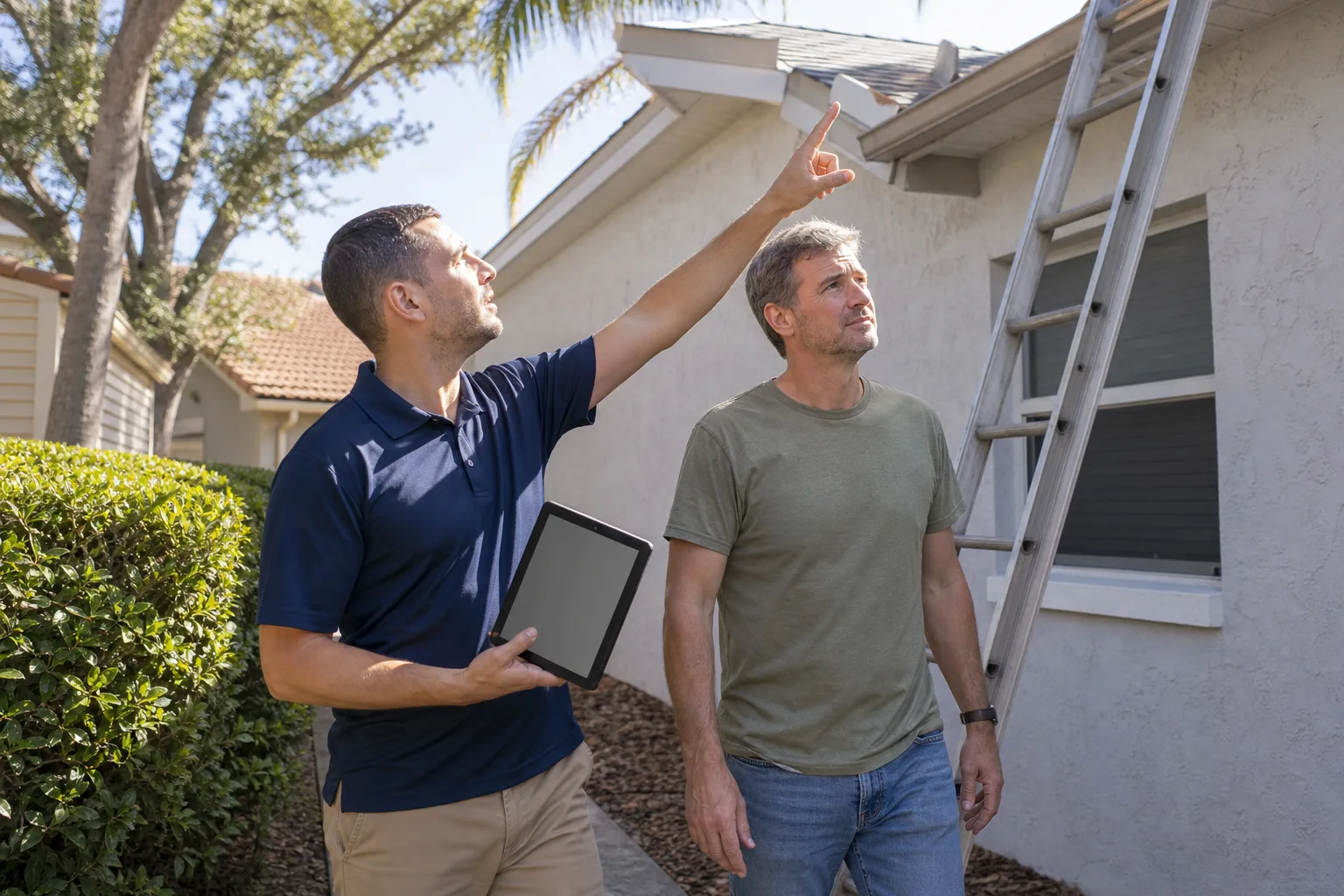
You don’t need to get on a roof to read its condition, and we’d rather you didn’t. Climbing on a pitched roof to inspect it yourself is a real fall hazard, and the serious signs are visible from the ground or the attic hatch. Leave the roof walking to a trained professional.
From the ground
- Curling or lifting shingles: Edges that lift at the bottom of the shingle point to age or heat damage. On a GAF or CertainTeed architectural shingle roof, that usually means the shingles are near the end of their service life.
- Granule loss: Piles of dark grit in the gutters or at the base of downspouts mean the shingle surface is breaking down.
- Sagging roofline: A dip along the ridge or eave can indicate a structural problem in the framing.
- Missing or torn flashing: Flashing at chimneys, valleys, and wall intersections is where most Long Beach roof leaks start.
From the attic
Shine a light along the underside of the roof deck after a rain. Fresh water stains, dark streaks on the rafters, or damp insulation point to an active leak. Daylight showing through the deck means the roof covering or decking has a gap. Also check for water staining on the chimney or around a vent pipe; that’s often where a slow leak has been running unnoticed for months.
How to Photograph and Document Warning Signs Correctly
Good documentation does two things. It lets a contractor assess a problem without a site visit, and it gives you a dated record if a warranty claim ever becomes necessary. Most homeowners take photos that are impossible to interpret because there’s no scale and no context. Here’s how to do it right.
- Shoot wide first, then close. Take one wide photo showing the whole wall, room, or roofline so the location is clear. Then a close photo of the crack, stain, or damage itself. A close-up with no context is useless.
- Add scale. Hold a coin, a tape measure, or a ruler next to the crack. A crack that looks wide in a photo may be a hairline; the scale removes the guesswork.
- Mark the ends and date it. For any crack, mark both ends with a pencil and write the date next to the mark. In 60 or 90 days, measure again. Growth is the signal that matters.
- Note the date, time, and weather. Write down when the photo was taken and whether it was rainy, dry, hot, or cold. Moisture-related signs behave differently across the season.
- Water-test safely. For interior water stains, have someone run a hose on the roof area above for a few minutes while you watch from inside. Don’t stand on the roof to do it. If the stain darkens or drips, you’ve confirmed the leak source.
- Keep a simple log. A notebook or a phone note listing each sign, its location, and the dates you checked it becomes a strong record if you ever need to file a warranty or insurance claim. Contractors and adjusters trust a dated log far more than a memory.
The Triage Framework: Monitor, Assess, or Act Now
Every warning sign falls into one of three buckets. Sorting them correctly keeps you from overreacting to a cosmetic crack or underreacting to a structural one. Here’s the framework we use.
Monitor monthly
- Hairline shrinkage cracks under 1/16 inch with no growth
- Light, isolated efflorescence that washes off and doesn’t return quickly
- A single door that sticks slightly with changing weather
- Minor paint dulling on ocean-facing walls
Mark it, date it, and check it once a month. No change means no action.
Professional assessment within 30 days
- A diagonal crack you can fit a dime into, or one that’s widening
- Efflorescence that returns after washing
- A ceiling stain that’s growing or that reappears after rain
- A floor that bounces in one defined spot
- A baseboard pulling away from the wall
None of these are emergencies, but each one points to something active that’s better caught now than after it spreads.
Act now (same-week urgency)
- Any horizontal crack in a foundation wall or pier
- A crack wider than 1/8 inch or one that’s opening visibly
- Active water intrusion, dripping, or a bulging wall
- A floor that visibly slopes or a sagging roofline
- A door or window that has shifted far enough to be hard to close
These are the signs where waiting risks a much larger repair. When you call, a live person should pick up regardless of the hour. Groundwork Construction Co. of Long Beach answers calls 24/7 with a real person, not a voicemail box, so you can describe what you’re seeing and get direction the same day.
Neighborhood Patterns We See Across Long Beach
Long Beach isn’t one housing stock. Neighborhoods differ in age, soil, and construction style, and the warning signs follow those differences. Here’s what we’ve learned over hundreds of assessments.
- Belmont Shore and Belmont Heights: Older bungalows and Spanish-style homes close to the water. Coastal moisture drives paint blistering and wood rot on ocean-facing walls, and the older foundations show diagonal settlement cracks after heavy rain seasons.
- Bixby Knolls and Virginia Country Club: Larger homes on mature lots. We see roof-age signals and drainage issues where gutters and grading push water against foundations.
- Lakewood and the eastern blocks: Post-war tract homes with raised foundations. Floor bounce and crawlspace moisture show up here more than anywhere, and slab cracks in driveways and patios are common after the dry cycle.
- Naples and the peninsula: High water table and salt exposure. Efflorescence and foundation moisture are the dominant signals, and any active seepage deserves an immediate look.
- North Long Beach and the inland edges: Expansive clay soil. Diagonal and stair-step cracks from soil movement are the pattern to watch, and they often appear first at window and door corners.
What these neighborhoods share is a climate that cycles between wet winters and dry summers, which is exactly what stresses foundations and building envelopes. Reading the local pattern is half the diagnostic.
Common Mistakes to Avoid
- Caulking over a crack without measuring it first. Caulk hides the one thing that matters, which is whether the crack is growing. Measure, mark, and date it before you seal anything.
- Repainting blistering exterior paint without finding the water source. Paint over moisture and it blisters again within a season. On a coastal Long Beach wall, damp wood behind the paint needs to be found and dried first.
- Assuming a sticking door is just a humidity issue. Seasonal sticking is a soil-moisture signal. A door that stays stuck is structural movement, and the two need different responses.
- Climbing on the roof to inspect it yourself. Most roof warning signs are readable from the ground or the attic. A fall off a pitched roof on a coastal home is not worth the few minutes it saves.
- Waiting for a ceiling stain to “dry out.” A stain that’s stopped growing may still be a slow leak that’s been running for months. Check it after the next rain, not just after the current one.
- Ignoring the first light efflorescence bloom. Efflorescence that returns after washing means water is moving through the material. Catching it early keeps a small moisture fix from becoming a wall rebuild.
- Hiring without a written, dated scope. A verbal “we’ll take a look” leaves you with no record if the problem returns. Get the assessment in writing with the date and the specific findings, especially before any warranty claim.
See the difference
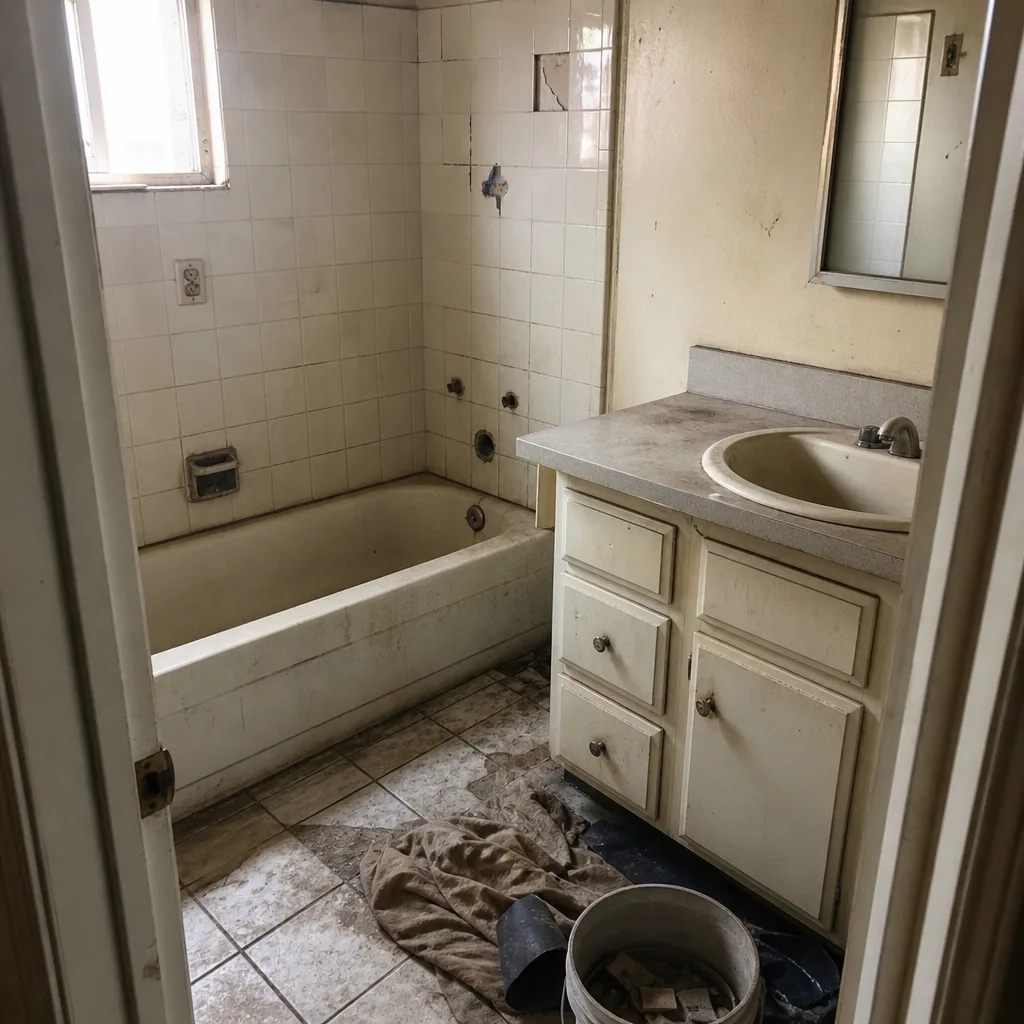 Before
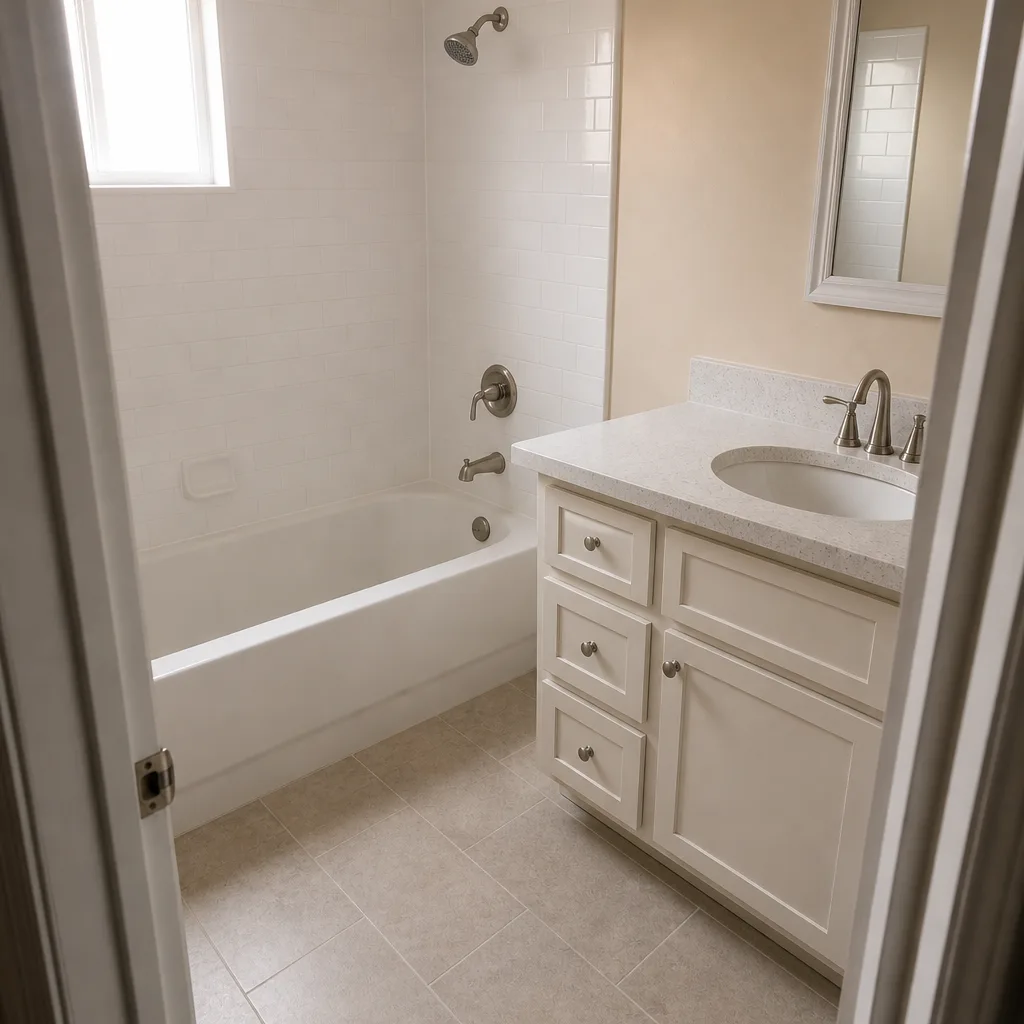 After
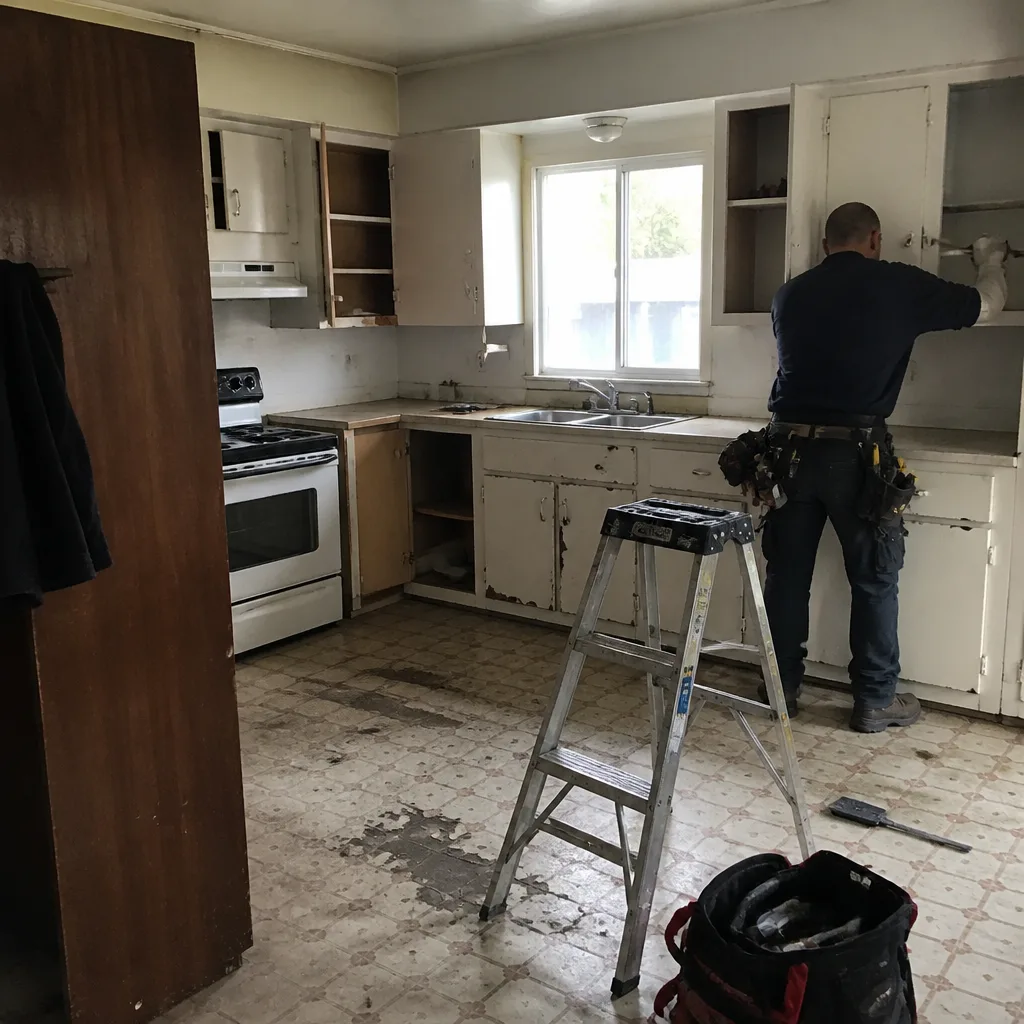 Before
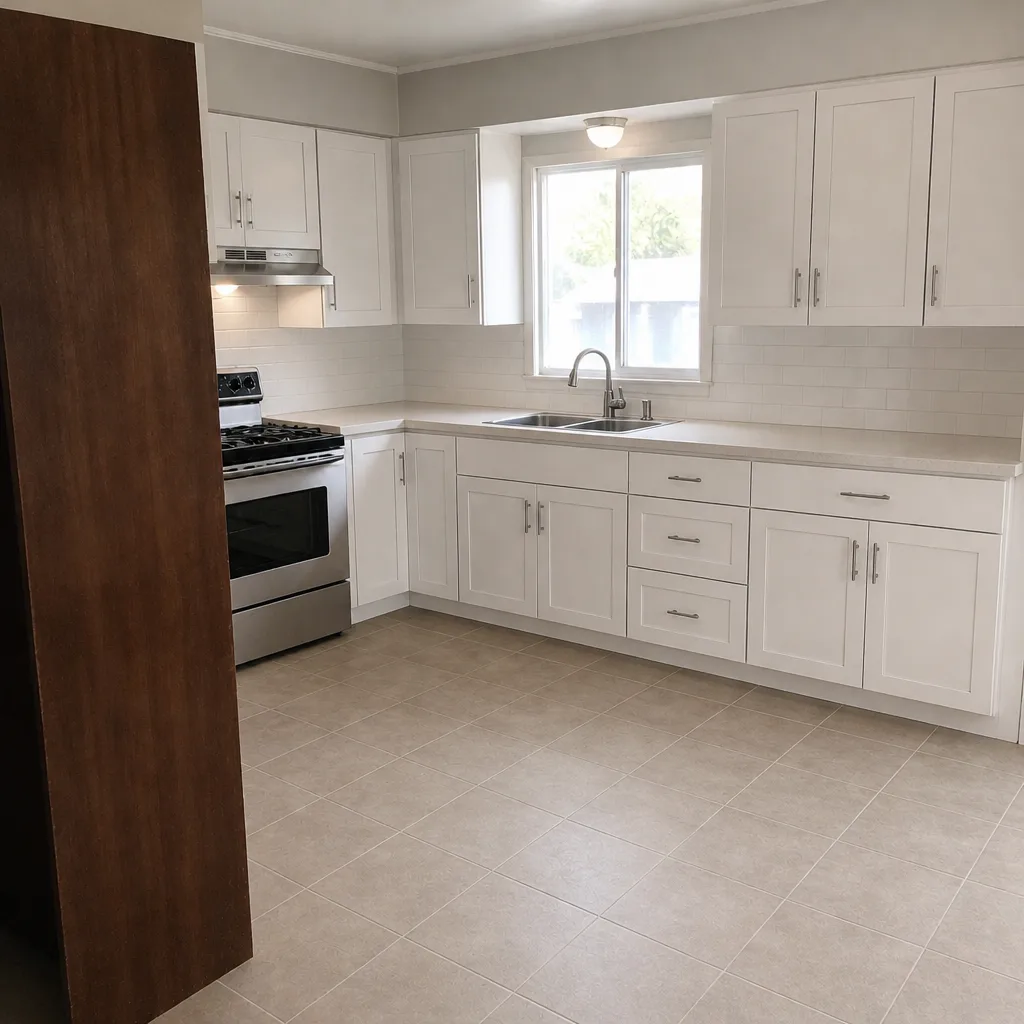 After
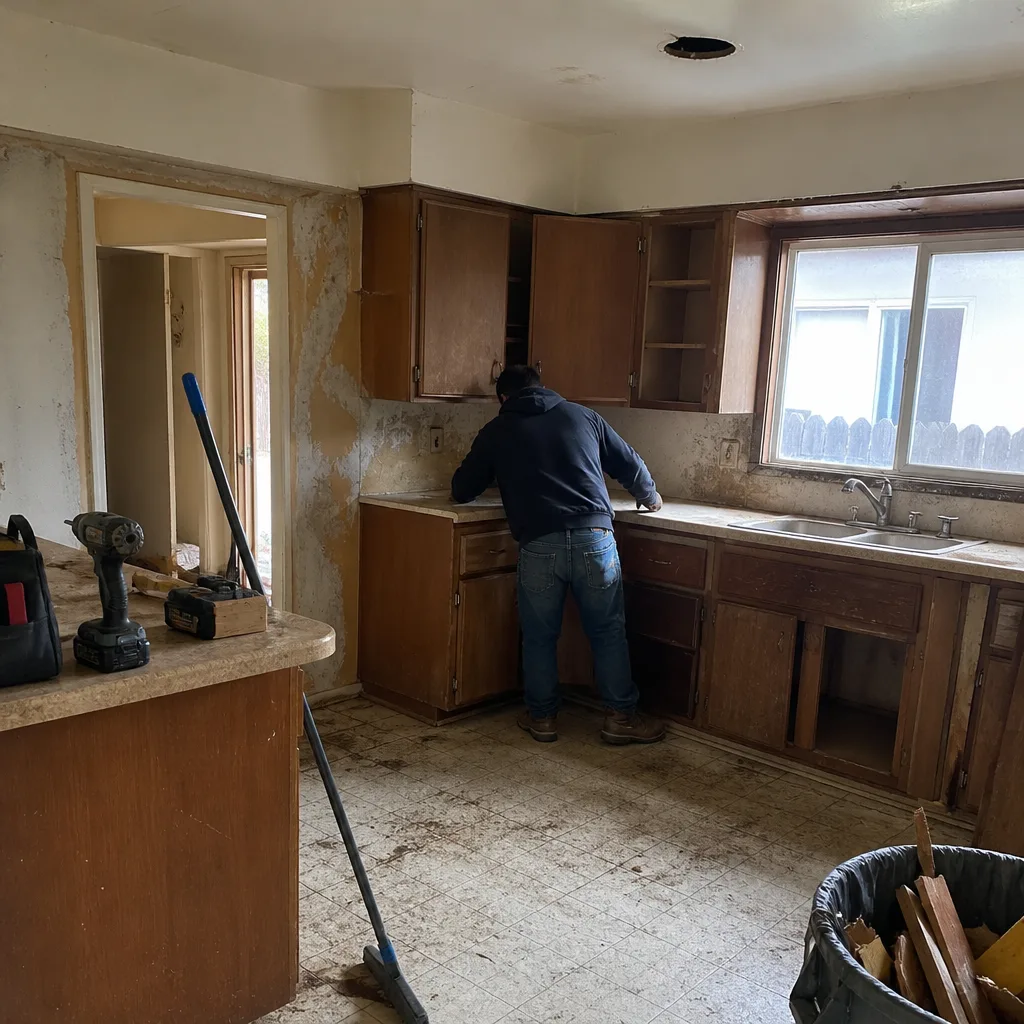 Before
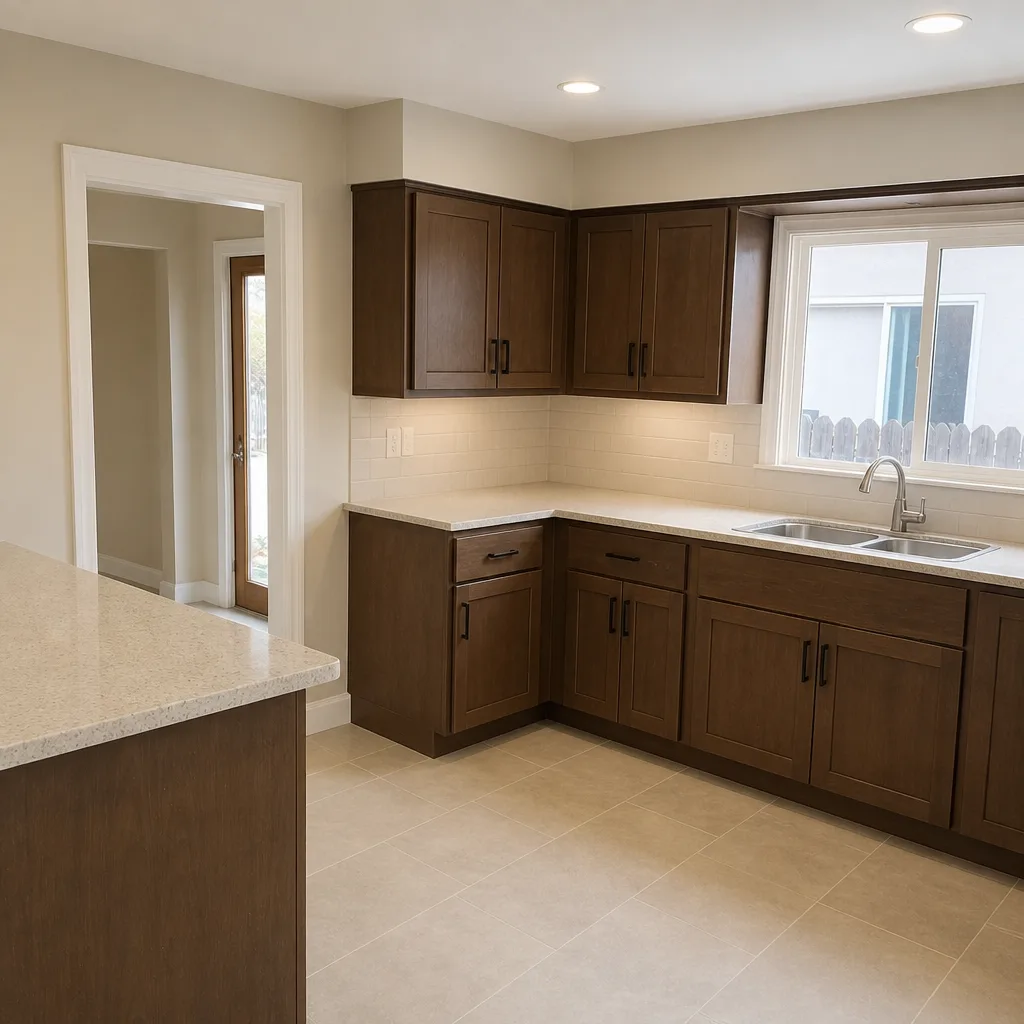 After
When to Call a Professional
Call a professional when a warning sign is active rather than stable. That means a crack that’s visibly widening, any horizontal foundation crack, active water intrusion, a sloping floor, or a sagging roofline. It also means any time you’re unsure whether a sign is serious; a trained assessment costs far less than the repair you avoid. Structural and roofing work involves real fall and failure hazards, so the right move on anything beyond a cosmetic surface check is to bring in someone trained to evaluate it safely. Groundwork Construction Co. of Long Beach offers free estimates in Long Beach. Call (888) 345-8164 to schedule yours.
Frequently Asked Questions
Measure the width and track whether it’s growing. A hairline crack under 1/16 inch that hasn’t changed in 90 days is usually cosmetic, while any diagonal crack you can fit a dime into, any crack wider than 1/8 inch, and any horizontal crack in a foundation wall are serious enough to warrant a professional assessment. Call (888) 345-8164 for an exact evaluation; estimates are free.
Efflorescence is a white salt bloom that means water is moving through the concrete or stucco and evaporating on the surface. A one-time bloom after a wet spring is often just surface moisture, but efflorescence that returns after washing indicates an active water path that needs to be traced and corrected before it causes more damage. Call (888) 345-8164 to have it assessed.
A door that stops latching usually means the frame has shifted relative to the door slab, often from foundation movement or soil-moisture changes. Check whether the sticking changes between wet and dry weather; if it does, soil movement is likely the cause, and if it doesn’t, the frame has moved permanently and needs a look. Groundwork Construction Co. of Long Beach can evaluate the movement at no charge with a free estimate.
Only if the work that caused them is still within its warranty period and the signs are documented. That’s why dated photos and a written log matter: a warranty claim needs a clear record. Any project completed by Groundwork Construction Co. of Long Beach is covered by the 730-Day Done Right Promise, one of the longest workmanship guarantees in residential construction, so if it isn’t done right, we make it right. Call (888) 345-8164 to discuss your situation.
Marine air damage is even and gradual across a whole wall, showing as a chalky dulling or uniform dulling of the paint. Water intrusion is localized, showing as blistering, bubbling, or peeling in one area, often with damp wood or a musty smell behind it. If you can pop a blister and find moisture, it’s intrusion and needs a repair, not a repaint. Call (888) 345-8164 for a free estimate.
A professional assessment varies with what’s found, but a free estimate is the right starting point and we don’t charge for it. What a sign costs to fix depends entirely on how early you catch it: a monitored hairline crack costs nothing, while a foundation issue caught 18 months late can run into five figures. Call (888) 345-8164 for a free estimate and a written, line-item scope before any work begins.
The Bottom Line
Construction failure in a Long Beach home almost never happens without warning. It shows up first as a diagonal crack, a returning efflorescence bloom, a sticking door, or a ceiling stain, and those early signals give you months to plan a repair instead of reacting to one. Read the pattern, measure and date what you find, and use the triage framework to sort cosmetics from the signs that need a call this week. The homeowners who catch these early are the ones who keep a modest repair modest. When a sign is active or you’re unsure, Groundwork Construction Co. of Long Beach is a call away.
From foundation to finish line, we connect Long Beach homeowners with independent local professionals who do the work, and we back every project with the 730-Day Done Right Promise. Explore our Groundwork Construction Co. of Long Beach home page to see how we work, and when you’re ready, Driveway & Pavers in Long Beach, Fence Installation in Long Beach, and Home Additions & ADU in Long Beach show the full scope of what we cover. Every estimate comes with no-hassle upfront pricing, the number you see is the number you pay. Call (888) 345-8164 for a free estimate and a real conversation about what your home is telling you.
Written by the team at Groundwork Construction Co. of Long Beach.