Free written scope consultation - allowances, timeline, and change-order rules on paper before a single trade is scheduled
Styles & brands we work with
- Kitchen remodeling
- Bathroom remodeling
- Home additions & ADU
- Roofing
- Windows & doors
- Driveway & pavers
- Fence
See the difference
 Before
 After
 Before
 After
 Before
 After
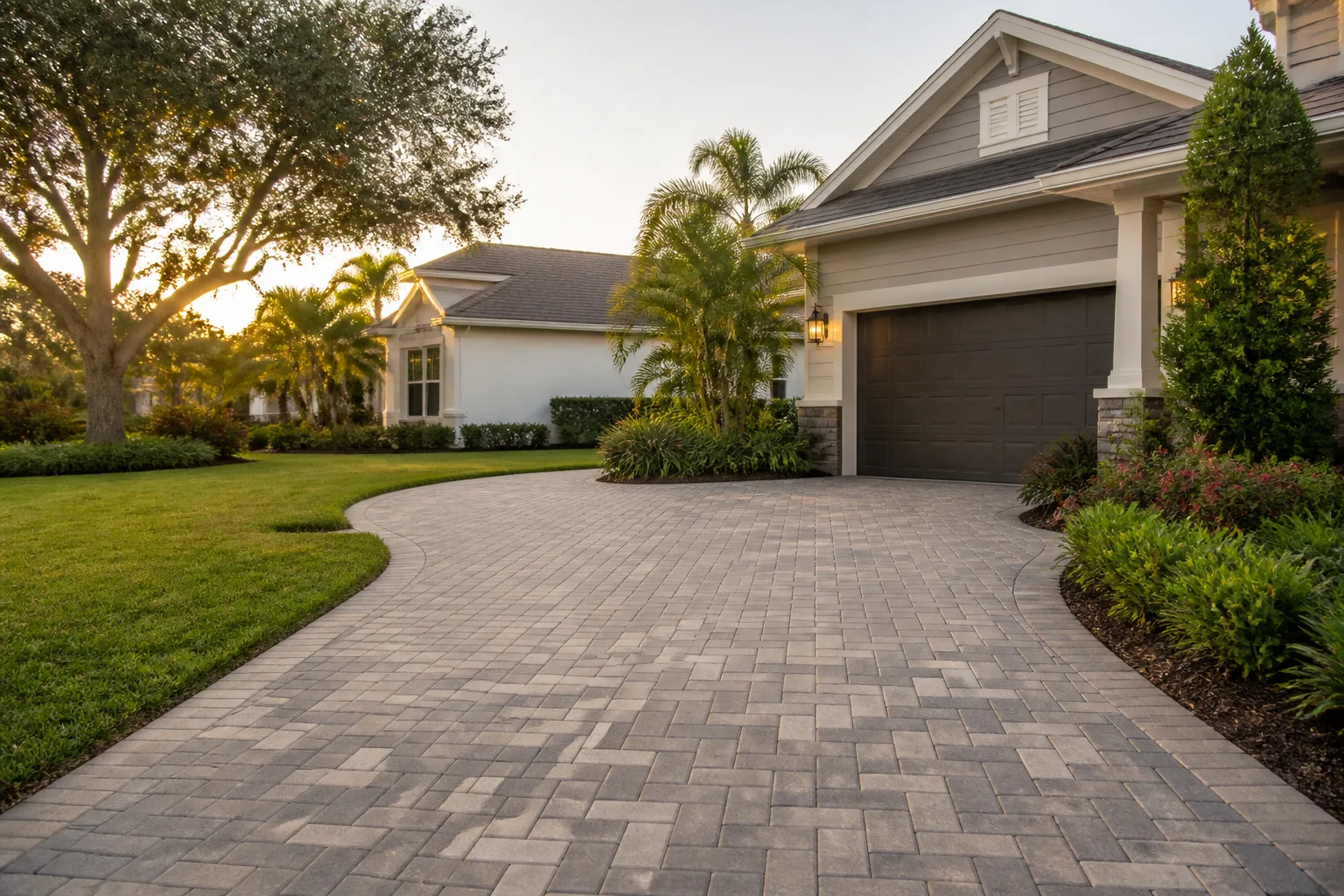
Paver Driveway Cost in Long Beach, CA: What Drives the Price Underground
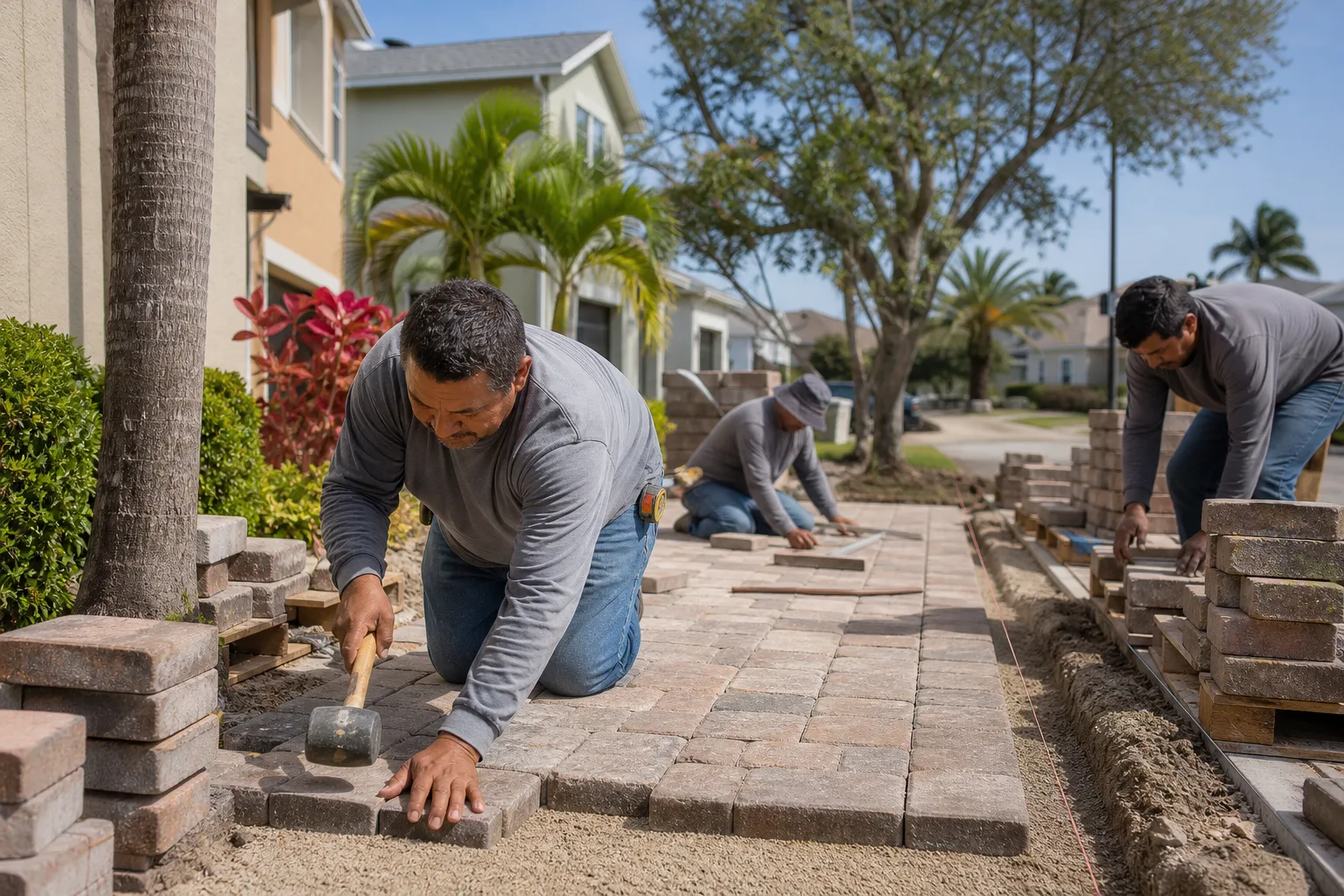
Paver driveway installation in Long Beach runs $7,000-$18,000 for a typical two-car driveway, and the number that matters most isn’t the pavers you see – it’s the gravel base you don’t. Long Beach gets fewer than 13 inches of rain a year, but when it comes, it lands in concentrated events on bone-dry clay soil that can’t absorb it fast enough. The result is base saturation and lateral shift that lifts pavers within 3-5 years on driveways installed over an undersized aggregate base. That’s not a material failure. It’s an engineering failure, and it’s the single biggest reason two Long Beach quotes for the same driveway can differ by thousands of dollars. Call (888) 345-8164 for a free estimate with upfront pricing – the number you see is the number you pay.
Why Long Beach Clay Soil Changes the Base Spec (and the Price)
Southern California’s expansive clay soils swell when they’re wet and shrink when they’re dry. In a climate with freeze-thaw cycles, pavers get specified around frost heave. Long Beach doesn’t have that problem. It has a different one: months of bone-dry soil followed by a handful of heavy rain events that hit ground which has already shrunk away from the base.
For vehicular load on expansive clay, a paver driveway needs a compacted aggregate base of 6-8 inches, not the 4-inch minimum many budget installers pour. That extra base depth is real cost – more gravel, more hauling, more compaction passes – but skipping it saves roughly $800 on paper and fails in year 3. We’ve torn out and rebuilt driveways in Belmont Heights and Rose Park where exactly that happened: pavers looked fine at handoff, then the first real storm sent water under the edges and the surface started heaving at the joints.
What a base specification actually involves before anyone touches a paver:
- Soil assessment – checking clay content and drainage behavior on your specific lot, not assuming from the ZIP code
- Excavation to engineered depth – typically 6-8 inches of compacted Class II base for driveways carrying vehicles
- Plate compaction in lifts – thin layers compacted one at a time, not one thick dump flattened once
- Geotextile separation fabric where clay migration into the base is likely
- Grading and slope set before the base goes down, so water has somewhere to go
Groundwork Construction Co. of Long Beach determines the base specification from the soil under your driveway before the contract is written. The number you approve already reflects the actual ground condition, not a best-case assumption.
Salt Air and Steel Edging: The Corrosion Line Item Most Quotes Skip
Standard steel edge restraint – the hardware that holds the paver field in place – corrodes fast in Long Beach’s coastal environment. The marine layer and salt air off the Port of Long Beach accelerate rust on exterior fasteners and metals, and once the edging gives way, the pavers migrate. Joints widen, the field spreads at the driveway entrance, and the whole surface starts shifting a half-inch at a time.
That’s a material spec decision, and it shows up as a line item in a credible Long Beach paver quote. We spec aluminum or a polymer-based edge restraint on coastal-side jobs, plus stainless fasteners where the restraint pins down. It adds a few hundred dollars versus plain steel. It’s also the difference between a driveway that holds its lines for decades and one that needs edge repair in year 5. Paver selection gets the attention – and Belgard, GAF, and CertainTeed systems all hold up well when the base and edge are right – but the hidden hardware is what keeps the surface honest.
Drainage, Grading, and Long Beach’s Flat Topography
Long Beach is flat, and flat means water sits where it lands unless the driveway is graded to move it. In older neighborhoods, that grading has to respect two things at once: aging bungalow foundations that don’t tolerate water pushed against them, and the city-side surfaces where runoff can’t simply disappear.
Paver driveways are permeable when installed with open-graded joint material, which helps – but only if the slope directs water toward the street or a designed outlet rather than toward the house. On older multi-family lots and 1920s-40s bungalows, we set fall away from the foundation and check where the water actually goes at the property line before final compaction. This is the part generic paver cost guides never mention, and it’s the part that prevents a $4,000 foundation repair complaint two winters after installation.
The same salt air and moisture that attack edging also drive rot and corrosion on exterior wood and fasteners across Long Beach’s older housing stock. If your driveway project touches gates, fences, or garage aprons, it’s worth reading our guide to fence installation before the crew mobilizes.
Paver Driveway Cost by Size and Base Specification
Here’s what Long Beach homeowners actually pay, broken out by the spec that drives the number:
| Item | Price Range |
|---|---|
| Paver driveway installation (standard 4-inch base) | $7,000-$18,000 |
| Paver driveway with engineered 6-8 inch base (recommended for clay soils) | $9,500-$21,000 |
| Base depth upgrade delta (per two-car driveway) | +$2,500-$3,000 |
| Aluminum or polymer edge restraint upgrade | $400-$900 |
| Driveway replacement (full tear-out and rebuild) | $5,000-$14,000 |
| Concrete driveway installation (comparison) | $4,500-$12,000 |
| Asphalt driveway paving (comparison) | $3,500-$9,000 |
| Driveway sealing | $250-$700 |
The base upgrade is the whole argument in one number. A standard-base driveway saves about $2,500 up front and typically needs edge and joint repair or partial rebuild inside 3-5 years. An engineered-base driveway costs more on day one and holds its surface far longer. If you’re weighing materials against each other, our Driveway & Pavers in Long Beach page walks through paver versus concrete versus asphalt on Long Beach soil specifically.
Every paver job falls under our 730-Day Done Right Promise – if it’s not done right, we make it right. That’s one of the longest workmanship guarantees in residential construction, and it applies to the base and edging work, not just the visible surface. Paver work also qualifies for our current promotions: a free project estimate and design consult, $1,000 off projects over $10,000, and 0% financing for 18 months. Upfront pricing, no surprises.
What a Long Beach Paver Quote Should Show You
When you get three bids, compare the specs, not the totals. A quote that doesn’t name the base depth, the edge restraint material, and the grading plan is a quote that can legally deliver a 4-inch base and steel edging. Ask what happens to the soil under the driveway. Ask about slope and where runoff goes. And confirm the workmanship warranty in writing – a one-year warranty on paver work in coastal Southern California doesn’t cover the first heavy rain event that tests the base. Read the broader Driveway & Pavers service page for how we scope this work from foundation to finish line.
Frequently Asked Questions
A paver driveway in Long Beach costs $7,000-$18,000 for a standard two-car installation, and $9,500-$21,000 when the base is engineered to the 6-8 inch depth that expansive clay soil requires. The delta reflects base material, hauling, and compaction – not paver quality. Call (888) 345-8164 for an exact quote based on your soil – estimates are free.
Yes, when both are engineered correctly – a properly based paver driveway typically outlasts poured concrete by 15 to 20 years because individual pavers can be lifted and replaced without tearing out the slab. In Long Beach’s clay soil, paver performance depends entirely on base depth and edge restraint. Call us at (888) 345-8164 and we’ll assess your soil before quoting.
Often, yes – if the base underneath is still sound, pavers can be lifted, the base re-graded and re-compacted, and the field reset with new edge restraint. If the base has failed across the whole driveway, partial repair just kicks the problem down the road. Our team inspects with a probe and drainage check to tell you which you’re facing. Call (888) 345-8164 to schedule a free assessment.
Most two-car paver driveways in Long Beach take 2-4 days from excavation to final joint sand, with engineered base work adding roughly a day. Cure and compaction checks can extend that on lots with heavy clay or tight access. Call (888) 345-8164 for a schedule built around your address, not a sales average.
Get a Paver Driveway Quote That Reflects Your Actual Soil
You don’t need a sales pitch. You need a base specification, a drainage plan, and a written price that won’t move. Groundwork Construction Co. of Long Beach builds quotes from the ground up – literally – with the soil assessment done before the contract. Our technicians have up to 12 years of experience, we’re licensed and insured, and a live person answers the phone 24/7. That includes the Driveway & Pavers portfolio of Belgard systems and the trades that back them. Call (888) 345-8164 today for a free estimate and design consult.
Written by the team at Groundwork Construction Co. of Long Beach, serving Long Beach, CA.
What Our Customers Say
"Found unpermitted work by the previous owner once he opened the wall. He stopped, explained the options and what each would cost, and let me decide rather than making it my emergency."
- Marco Castillo"He pulled the permits himself, scheduled every sub and ran the inspections. I made one decision a week and otherwise stayed out of it, which is exactly what I was paying for."
- Robert Sullivan"The finished work is exactly what we wanted. It did run about three weeks over, mostly waiting on a cabinet delivery that was out of his hands, though I would have liked more updates during that stretch."
- Dev Sharma