Last updated November 17, 2026




Free written scope consultation - allowances, timeline, and change-order rules on paper before a single trade is scheduled
DIY vs Professional Bathroom Remodeling: What’s Safe to Do Yourself
A homeowner in Long Beach saved $1,200 tiling their own shower floor, then spent $8,400 fixing a subfloor that rotted because the waterproofing membrane underneath was installed wrong. That gap between the money you save and the money you lose is the whole story of DIY bathroom work. The popular framing is cost savings vs. quality. That’s not where the real line sits. The real line is between cosmetic work and systems work, and crossing it without a permit or a license can stall a home sale or leave your insurance claim denied. This guide draws that line task by task, so you know exactly which jobs you can safely own and which ones will cost you far more than you save.
Quick Answer
Cosmetic work like painting, swapping a vanity top, replacing a toilet, changing fixtures, and hanging a mirror is safe to do yourself. Anything that touches the plumbing rough-in, electrical circuits, waterproofing, or structural framing requires a licensed contractor and a permit in California. The dividing line isn’t difficulty. It’s whether the work is inspected, warrantable, and defensible at resale.
Styles & brands we work with
- Kitchen remodeling
- Bathroom remodeling
- Home additions & ADU
- Roofing
- Windows & doors
- Driveway & pavers
- Fence
Table of Contents
- Where the Real Line Sits: Cosmetic vs. Systems Work
- What You Can Legally and Safely DIY in California
- Why Permits Protect You at Resale, Not Just the Contractor
- The Silent Failure of DIY Waterproofing
- What “Helping” on Your Own Remodel Actually Costs You
- The Tasks That Void Manufacturer Warranties
- Long Beach-Specific Conditions That Change the Math
- A Decision Framework for Every Task
Where the Real Line Sits: Cosmetic vs. Systems Work
Every bathroom task falls into one of two buckets. Cosmetic work changes how the room looks and feels. Systems work keeps water where it belongs and electricity where it belongs. Cosmetic mistakes cost you time and a little pride. Systems mistakes can cost five figures, a failed inspection, or a claim denial.
Here’s how the split shakes out in a typical Long Beach bathroom:
- Cosmetic: Paint, wallpaper, caulk lines, towel bars, mirrors, shower curtains and rods, vanity cabinet fronts, drawer hardware, light fixture covers (not the wiring), and re-grouting a sound joint.
- Systems: Shower pan and waterproofing membrane, tile backer board, drain relocation, supply and waste plumbing, GFCI outlets and dedicated bathroom circuits, exhaust fan ducting to the exterior, subfloor repair, structural modifications, and any change to the room’s footprint.
The word “systems” is the key. A homeowner can absolutely lay tile. What they often can’t do is build the waterproof envelope under that tile to spec, and that envelope is what determines whether the floor lasts five years or twenty-five. Same logic applies to a vanity. Hooking up a new faucet to an existing supply line is cosmetic. Moving the drain line two feet to the left is systems plumbing, and it needs a permit.
A quick way to sort any task: if water or electricity flows through it, or if a structural load passes through it, treat it as systems work. Everything else is yours to take on.
What You Can Legally and Safely DIY in California
California is permissive with homeowners doing work on their own primary residence, with real limits. You can pull an “owner-builder” permit for most work on a home you live in and sell to no one within a set window, and you can do that work with your own hands. What you cannot do is hire an unlicensed contractor to do permit work under your name, and you cannot skip the permit because you’re the one swinging the hammer.
Here’s what’s genuinely safe to take on in a Long Beach bathroom, assuming the underlying systems are sound:
- Painting walls, ceiling, and trim. No permit, no inspection, low risk. Prep is 80% of the result.
- Replacing a toilet on an existing flange in the same location. A wax ring and a supply line are beginner-friendly. Moving the toilet does not qualify.
- Swapping a faucet or showerhead on existing rough-in. Shut the water off first, use new supply lines, check for leaks over 24 hours.
- Installing a new vanity cabinet where the plumbing already sits. Disconnect and reconnect only. Relocating the drain or supply lines is out.
- Hanging mirrors, shelving, towel bars, and hooks. Anchor into studs or use proper drywall anchors rated for wet environments.
- Replacing a light fixture cover or shade. Wire work belongs to an electrician.
- Re-caulking and re-grouting where the substrate is confirmed dry and sound. If grout is crumbling or caulk is peeling repeatedly, stop. That’s a sign of water behind the tile.
For everything else, the math is closer than most homeowners assume. A bathroom is a small room with a high concentration of code requirements, and in a dense city like Long Beach, the permit and inspection process runs through the local building department on a schedule you’ll want a professional navigating. Our Groundwork Construction Co. of Long Beach home page lays out how a full-scope remodel is sequenced from first demo to final walkthrough.
Why Permits Protect You at Resale, Not Just the Contractor
This is the part most DIY guides get wrong. They frame permits as a tax on the contractor, or as red tape to route around. Permits exist to protect the homeowner, and the protection shows up years later at the closing table.
When you sell a home, the buyer’s inspector will look at the bathroom. If there’s a shower pan with a curb you didn’t have before, or a tile pattern that reads as new construction, the inspector will ask whether the work was permitted. If the answer is no, three things can happen:
- The sale stalls. The buyer’s lender can refuse to fund until the work is documented or remediated.
- You pay for retroactive permitting. Retrofitting a permit after the fact is more expensive and more invasive than permitting upfront, because the inspector may require the wall to be opened to verify the work behind it.
- Your insurance claim gets denied. If a failure happens later – a leak into the ceiling below, a mold event – and the insurer determines unpermitted work contributed, they can deny the claim.
Permits also produce inspection records that function as proof. An inspector signs off on the plumbing rough-in and the electrical before the walls close. That signed record is the difference between a bathroom that’s a documented asset and one that’s a liability in escrow. In our experience, homeowners who’ve been through a failed sale once never skip a permit again.
Any licensed contractor pulls the permit for you and schedules the inspections. The permit is issued in the contractor’s name, they carry the inspection risk, and the record follows the property. That’s not overhead. That’s the value. If you want to understand how a properly permitted full bathroom remodel is sequenced, our Home Additions & ADU in Long Beach guide shows how our team handles structural scope and permitting when a project grows beyond a bathroom.
The Silent Failure of DIY Waterproofing
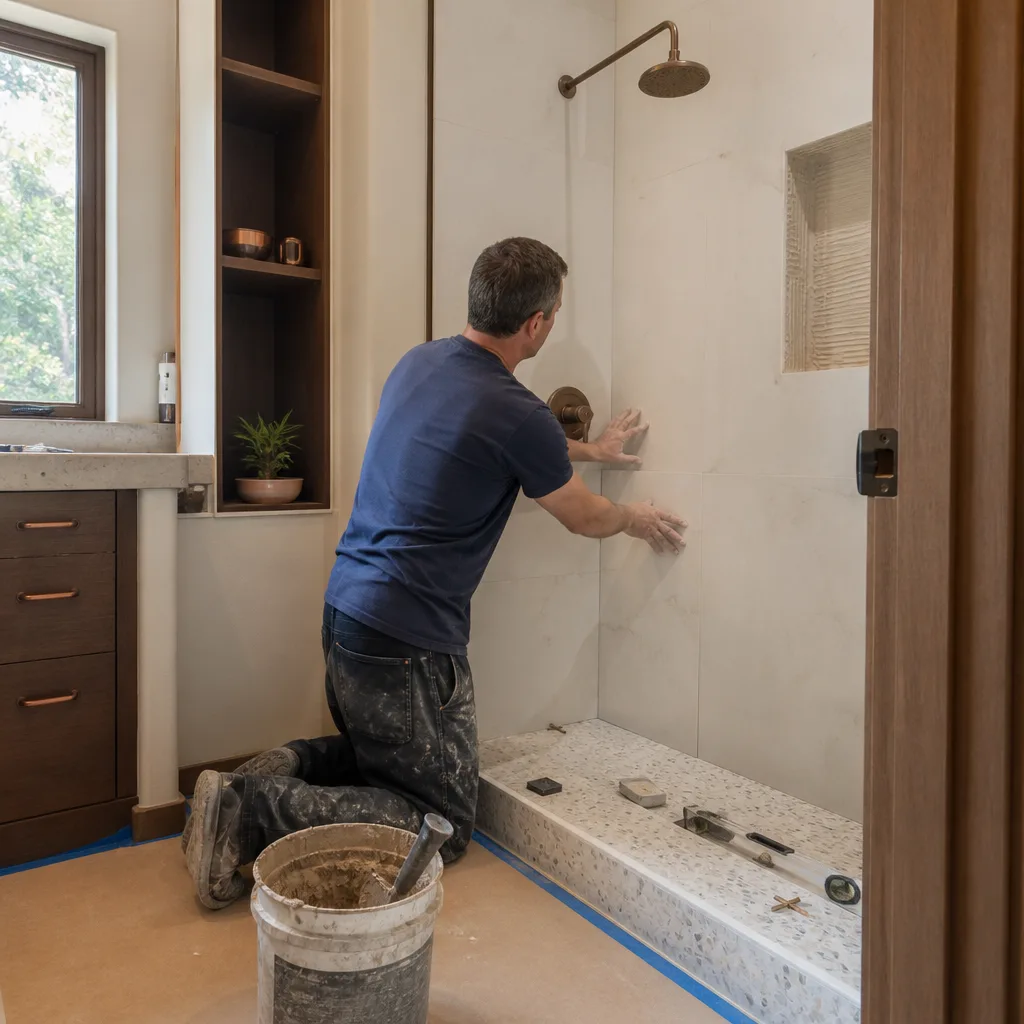
This is the single most expensive DIY mistake in bathroom remodeling, and it’s invisible while it’s happening. A shower pan has to be built so water drains and never pools. That means a properly sloped mortar bed, a waterproofing membrane applied to spec, sealed seams, and a drain connection that ties correctly into the membrane system. Get any of those steps wrong and the shower still works. It looks great. It passes the eye test for months.
Then it fails from the inside out. The typical timeline looks like this:
- Months 1-6: The shower functions. Small amounts of water wick past the membrane or through a failed seal underneath the tile.
- Months 6-12: Grout begins to discolor or crumble. Caulk peels at the corners. Homeowners re-caulk and think it’s resolved.
- Months 12-24: The subfloor softens. A soft spot appears under a foot. Tile may sound hollow or tent upward. Mold or musty smell appears.
- Year 2+: Water finds the ceiling below. The full scope becomes visible: subfloor replacement, framing repair, mold remediation, and a full re-do of the shower and surrounding flooring.
At that point, the savings from doing it yourself have reversed course by a factor of five or more. The repair touches structural framing, drywall, flooring, and the ceiling of the room below. In older Long Beach homes – particularly the 1920s to 1950s bungalows common in the Alamitos Beach and Rose Park neighborhoods – that ceiling below is often the dining room or a bedroom, and the damage footprint is much larger than a homeowner expects.
This is why waterproofing is the one task we’d push any homeowner away from doing themselves, even a very handy one. The margin between “works fine” and “silently rotting” is measured in millimeters of slope and the quality of a single seam. If you’re weighing how much of a bathroom remodel to take on, this is the line to hold.
What “Helping” on Your Own Remodel Actually Costs You
The instinct to help is human. You want to be part of the project. You want to save money on labor. You want to keep an eye on the work. In some cases, a homeowner genuinely wants to knock out a light task here and there. In a permitted, insured remodel, all of that has a cost.
Here’s what “helping” actually involves from a liability standpoint:
- You’re not covered. The contractor’s general liability policy and workers’ comp cover their employees and the subcontractors they’ve hired. They don’t cover you. If you help move a piece of material and injure your back, or drop something on your foot, the contractor’s insurance may not respond to that claim.
- You may contaminate a warranty. If you participate in a task and the task later fails, the argument over who caused the failure becomes harder to resolve. Most workmanship warranties, ours included in the 730-Day Done Right Promise, are clean and simple when the scope is ours and ours alone.
- You can create a permit problem. If the inspector shows up and you’re the one doing the rough-in, the inspector can hold the permit. Owner-builder work has rules about who’s performing it, and it doesn’t mix with a contractor’s permit.
- You slow the crew down. The most expensive part of a good contractor’s day is momentum. A helper who doesn’t know the sequence slows the crew and adds to the project’s schedule.
What helping actually looks like on a well-run job is preparation, not execution. Picking finishes, choosing tile and fixtures, keeping the workspace accessible, and being available for walkthroughs makes a real difference. Swing a hammer on the demo and you might shave an hour of labor – and add a week of schedule risk and an uninsurable claim.
The Tasks That Void Manufacturer Warranties
Fixture and material manufacturers spell out installation requirements in their warranty documents. If the install deviates, the warranty is void. Homeowners often discover this only after a failure, when the manufacturer asks for the installer’s credential and it doesn’t exist.
The tasks that most consistently trigger denials in our experience:
- Shower valves and cartridge trim installs. Brands like Kohler and other major manufacturers require installation by a licensed plumber in many of their warranty terms. A DIY install of a thermostatic valve or pressure-balance valve will void coverage if the cartridge fails.
- Tankless and high-efficiency water heater connections. Same story. The manufacturer isn’t on the hook for a failure if the install didn’t meet code or wasn’t done by a licensed trade.
- Tile adhered improperly. A porcelain tile laid with the wrong thinset, wrong trowel size, or without the correct substrate will crack, and the tile manufacturer will decline the claim. The floor doesn’t fail because of the tile. It fails because of the install.
- Waterproofing membrane products. Sheet membranes and liquid membranes have specific coverage, cure, and seam-tape requirements. A membrane failure almost never comes back to the manufacturer unless the install was documented to spec.
- Vanity and cabinetry installs in high-moisture environments. Cabinet makers like KraftMaid specify clearance and sealing requirements that protect the cabinet from moisture. Deviating voids the finish warranty.
The pattern here is that warranties follow the install, not the material. A properly installed mid-tier fixture outlasts a badly installed premium one every time. This is one of the reasons we work with a curated set of brand partners – the warranty flows cleanly from a verified install to the manufacturer, and stays with the homeowner.
Long Beach-Specific Conditions That Change the Math
Long Beach has a few local realities that make DIY bathroom work riskier than it is in a dry inland market.
- Salt air and marine humidity. Homes within a few miles of the water, from Belmont Shore through Bluff Park and up to Naples, sit in a persistently humid salt-air environment. Metal fixtures corrode faster. Caulk lines fail sooner. Subfloors absorb more ambient moisture. A shower that would last twenty years inland may only see twelve near the coast, and build tolerances matter more.
- Older housing stock. A significant portion of Long Beach housing dates to the 1920s through 1950s. Bungalows in Rose Park, Cal Heights, and Alamitos Beach frequently have original framing, cast iron or galvanized plumbing, and floor joists that don’t match modern dimensional lumber. A minor plumbing move that works in a 2005 build can turn into a subfloor replacement in a 1938 build.
- Clay soil and slab movement. Long Beach sits on expansive clay soils in parts of the city, and slab movement can crack a moderately-specified tile floor within a year. Proper substrate preparation and a flexible crack-isolation membrane aren’t optional here – they’re the difference between a floor that lasts and one that tents in the first year.
- Permitting timeline. Long Beach permitting runs through the city’s building department, and permitted bathroom work typically requires multiple inspection visits (rough plumbing, rough electrical, tile/membrane, final). Sequencing this well is the difference between a six-week project and a four-month one. A professional team is on this schedule weekly; a homeowner is on it once.
Any one of these conditions on its own is manageable. Together, they mean Long Beach bathrooms reward professionals who work in this market regularly and punish homeowners who treat the work as a weekend project.
A Decision Framework for Every Task
When you’re staring at a task and wondering whether to do it yourself, run it through this sequence. Ask the questions in order and stop at the first one that applies.
- Does water or waste flow through this? If yes – new or moved plumbing, drain relocation, valve replacement, shower pan construction – it’s systems work. Licensed and permitted.
- Does electricity flow through this? If yes – new outlets, new circuits, moved switches, exhaust fans, wiring for a new fixture – it’s systems work. Licensed and permitted.
- Is a structural load carried here? If yes – wall removal, joist repair, subfloor replacement – it’s systems work. Licensed and permitted.
- Is the waterproof envelope involved (shower pan, backer board, membrane)? If yes – systems work. This is where most DIY disasters happen.
- Is the task purely finish or surface – paint, fixtures on existing rough-in, cabinet fronts, tile over a known-good substrate? These are yours. Take them on with confidence and a good tutorial.
- Is the task ambiguous or will a permit be pulled for surrounding work anyway? Fold it into the professional scope. The savings rarely justify the risk of splitting the work.
If you’re not sure how a task sorts, ask a contractor. A free estimate conversation will tell you in ten minutes what a hundred hours of YouTube won’t. Groundwork Construction Co. of Long Beach offers a free project estimate and design consult for any bathroom, and we’ll tell you honestly which tasks are yours to take on and which aren’t. Our Driveway & Pavers in Long Beach guide also shows how we think about exterior sequencing when a bathroom or interior job starts to pull exterior work into scope.
Common Mistakes to Avoid
- Skipping the permit to keep the project “simple.” The permit is a piece of paper. Not having it is a five-figure problem at resale or a denied insurance claim. Pull the permit.
- Believing the shower “looks fine” is the same as “is waterproofed.” In our experience across Long Beach shower repairs, most failures look perfect from the surface for the first year. Waterproofing has to be built correctly – it can’t be inspected by eye after the fact.
- Re-caulking a failing shower corner instead of investigating it. If a caulk line peels twice in a year, water is getting behind the tile. Put the caulk gun down and call a pro.
- Moving the drain an inch “because the tile design needs it.” Every inch of drain movement draws a permit and a rough-in inspection. Design the tile around the drain, not the other way around.
- Ordering tile and fixtures before confirming the substrate. In older Long Beach homes, a “simple retile” frequently reveals a rotted subfloor once the old tile is off. Budget for what’s behind the wall and under the floor, not just what you see.
- Using the wrong thinset for the tile type. Porcelain wants modified thinset. Large-format tile wants specific coverage. The wrong choice cracks the floor within a year, especially on Long Beach’s expansive clay soils.
- Doing the demo yourself to “save money” and slowing the crew down. Demo is a couple hundred dollars of labor. One damaged water line during demo is a five-figure repair. Let the crew do it.
- Forgetting GFCI protection on a DIY outlet install. Every bathroom outlet in California must be GFCI-protected. Skipping it is a code violation and a safety hazard, and it will fail the final inspection.
See the difference
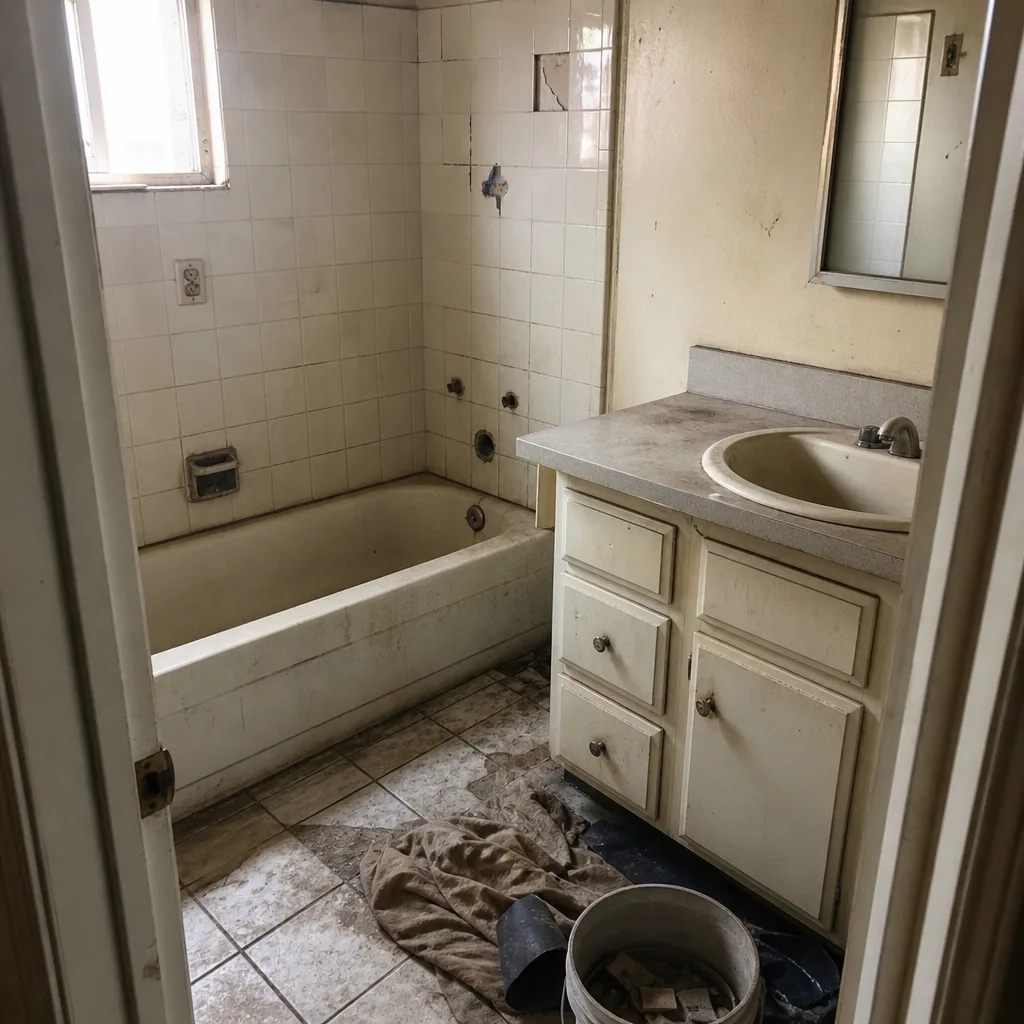 Before
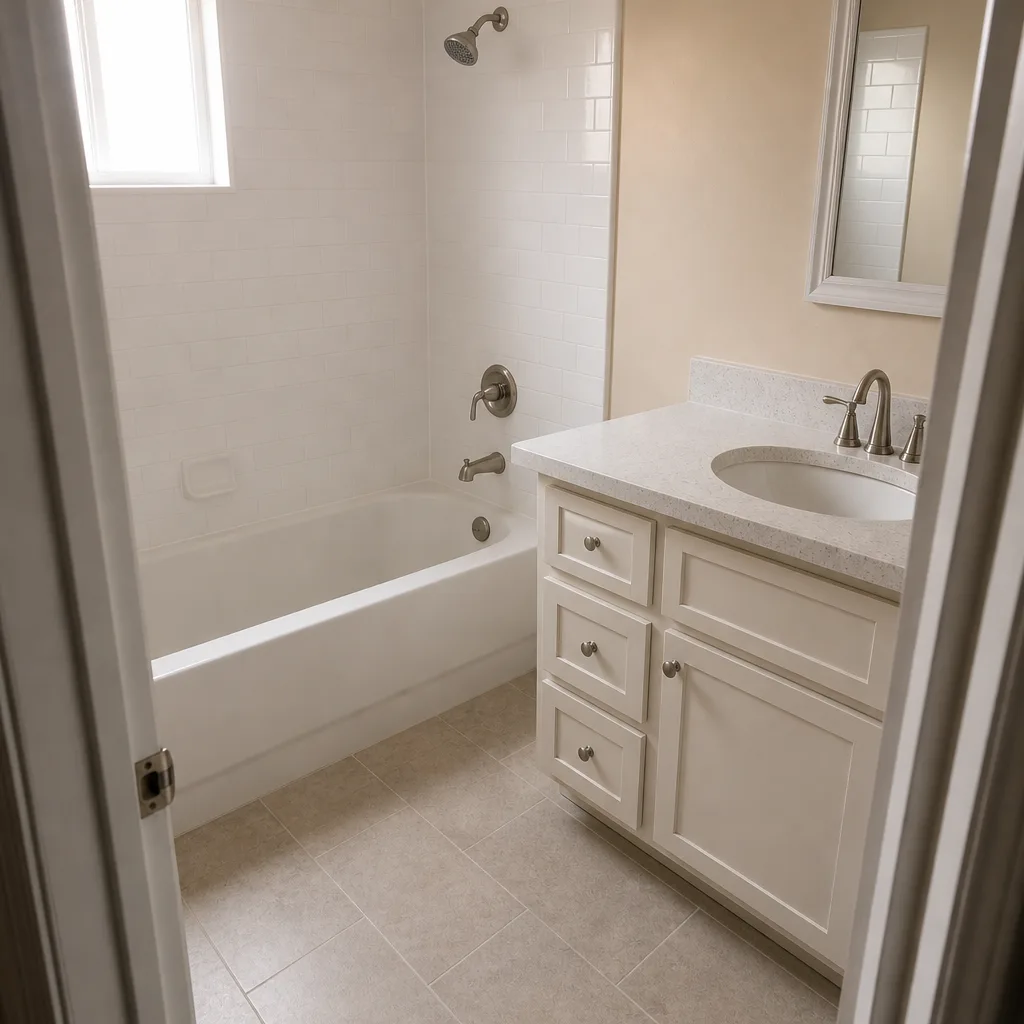 After
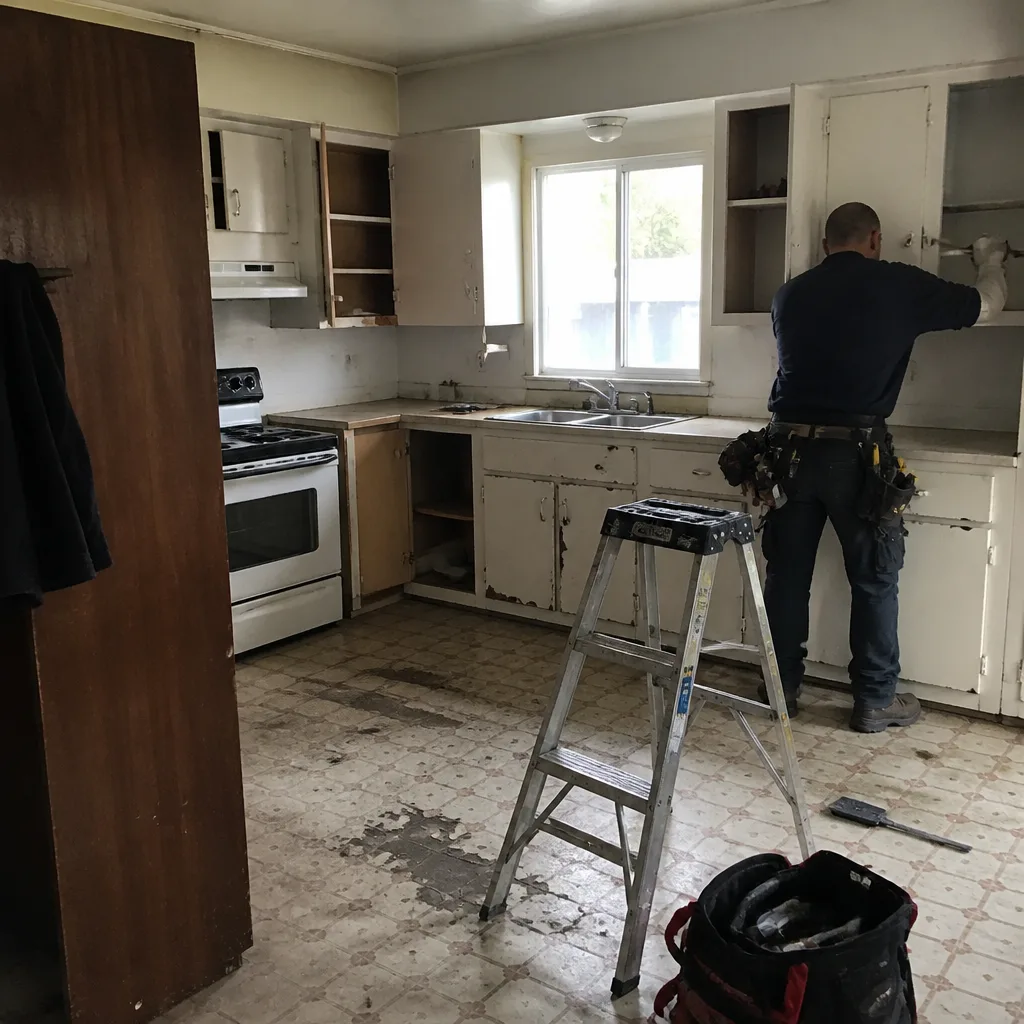 Before
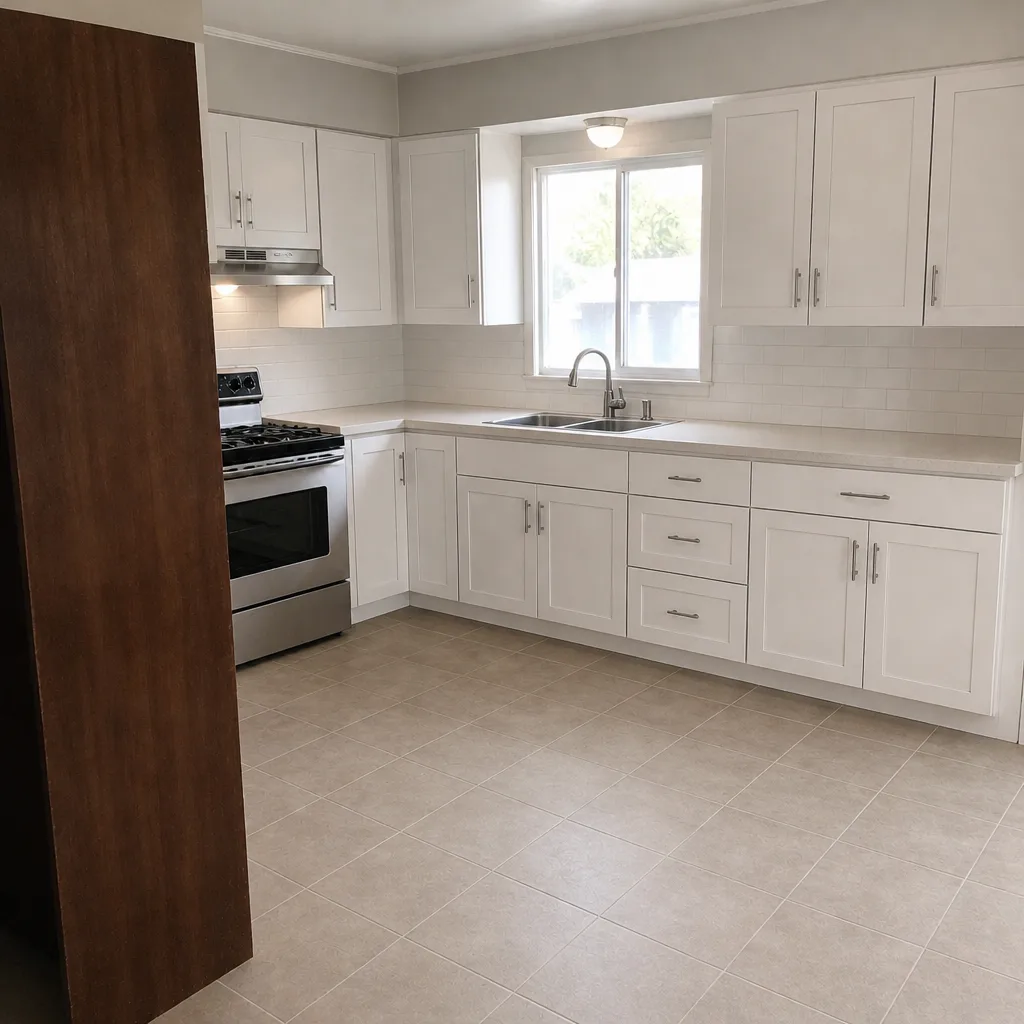 After
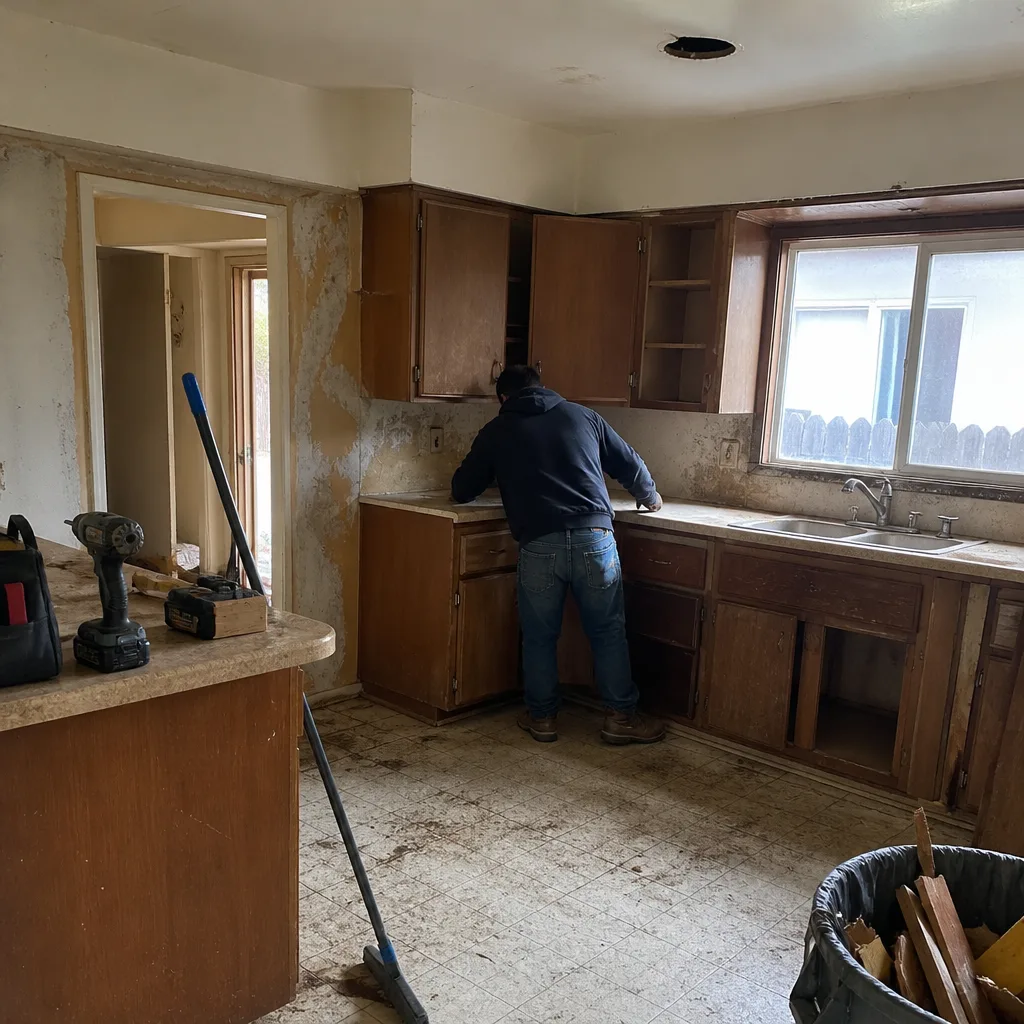 Before
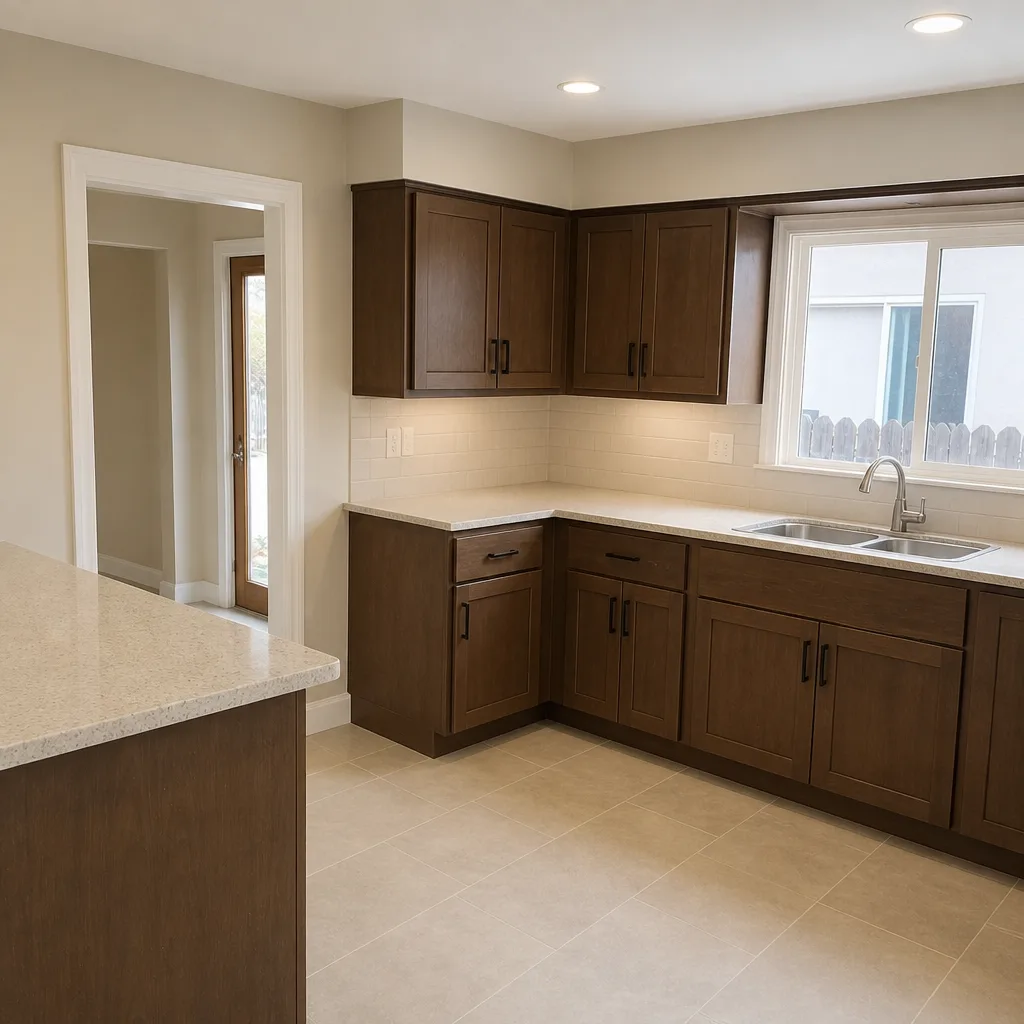 After
When to Call a Professional
Call a licensed contractor immediately if any of these are true: you need to move a drain, supply line, or toilet location; you’re adding or moving electrical circuits; the shower pan or waterproofing envelope needs to be built or repaired; the subfloor is soft, spongy, or visibly damaged; there’s a questionable permit history on the bathroom; or the bathroom is the last untouched room in a home you plan to sell within five years. In Long Beach, we’d also add: if you’re in a pre-1960 home in Rose Park, Cal Heights, or Alamitos Beach, get a professional walkthrough before committing to any scope. That pre-war housing stock hides surprises under the tile. Groundwork Construction Co. of Long Beach offers free estimates in Long Beach – call (888) 345-8164. Estimates are free, pricing is upfront, and you’ll leave the conversation knowing exactly which tasks are safe to do yourself and which aren’t.
Frequently Asked Questions
No, not for any work that involves plumbing, electrical, structural framing, or waterproofing. California requires permits for that work regardless of who performs it. Cosmetic work – painting, replacing fixtures on existing rough-in, hanging a mirror – does not require a permit. Permits protect you at resale and with your insurer, not just the contractor.
In Long Beach, homeowners typically save the labor portion of cosmetic tasks, which runs several hundred to about $2,000 depending on scope. Anything that touches systems work saves very little once you account for permits, inspections, and the higher cost of fixing a failed DIY job. The savings are real but smaller than the common “$10,000 by doing it yourself” framing suggests.
Twelve to twenty-four months is the typical window. The shower looks perfectly fine from the day it’s completed until the subfloor is already compromised. Discolored grout, a soft spot underfoot, or a musty smell in the adjacent room are the early signals. By the time the ceiling below shows water damage, the repair has grown to include subfloor, framing, and mold work.
The buyer’s inspector can flag unpermitted work, the buyer’s lender can require documentation before funding, and you may have to permit the work retroactively – which can mean opening walls to verify the install. Insurers can also deny a later claim if unpermitted work contributed to the failure. Skipping the permit is rarely the cheaper path; call (888) 345-8164 if you want to understand what a properly permitted scope looks like for your bathroom.
Usually yes, for shower valves, water heaters, and other major mechanical fixtures. Brands like Kohler specify licensed installation in their warranty terms, and manufacturers will deny claims if the install wasn’t done by a licensed trade. Cabinetry finishes and certain waterproofing membrane products have installation specs that void the warranty if the work deviates. Save the installation paperwork and confirm the warranty terms before deciding.
Painting, re-caulking sound joints, hanging mirrors and hardware, replacing a toilet on an existing flange, swapping a faucet or showerhead on existing rough-in, and installing a new vanity cabinet where the plumbing already sits. That’s it. Anything above that line – shower pans, plumbing moves, electrical, subfloor – belongs to a licensed professional. Call (888) 345-8164 for a free estimate to review your specific scope.
The Bottom Line
The DIY bathroom debate isn’t really about saving money. It’s about the difference between cosmetic tasks you can safely own and systems work that has to be permitted, licensed, and warrantied. Paint, swap fixtures, hang a mirror, re-caulk a sound joint. Hire a professional for the shower pan, the plumbing, the electrical, and the subfloor. The reason is simple: cosmetic mistakes cost you a weekend. Systems mistakes cost you five figures, a failed inspection, or a denied insurance claim. In a Long Beach housing stock full of pre-war bungalows and coastal moisture, that gap widens further. Estimate your real savings, then decide. Groundwork Construction Co. of Long Beach backs every full-scope bathroom project with the 730-Day Done Right Promise, upfront pricing with no surprises, and background-checked, uniformed technicians on every job. Most jobs come in as quoted, with 0% financing for 18 months and $1,000 off projects over $10,000 when they apply. Our technicians have up to 12 years of experience across the trades, and our brand partners – including Unilock, Tremron, and a curated list across every category – make the quality decision straightforward. Call (888) 345-8164 to schedule your free estimate and design consult. A live person answers 24/7, no voicemail, no waiting until Monday.
Written by the team at Groundwork Construction Co. of Long Beach.