Last updated November 17, 2026



Free written scope consultation - allowances, timeline, and change-order rules on paper before a single trade is scheduled
Fence Installation Troubleshooting: Common Problems and How to Fix Them
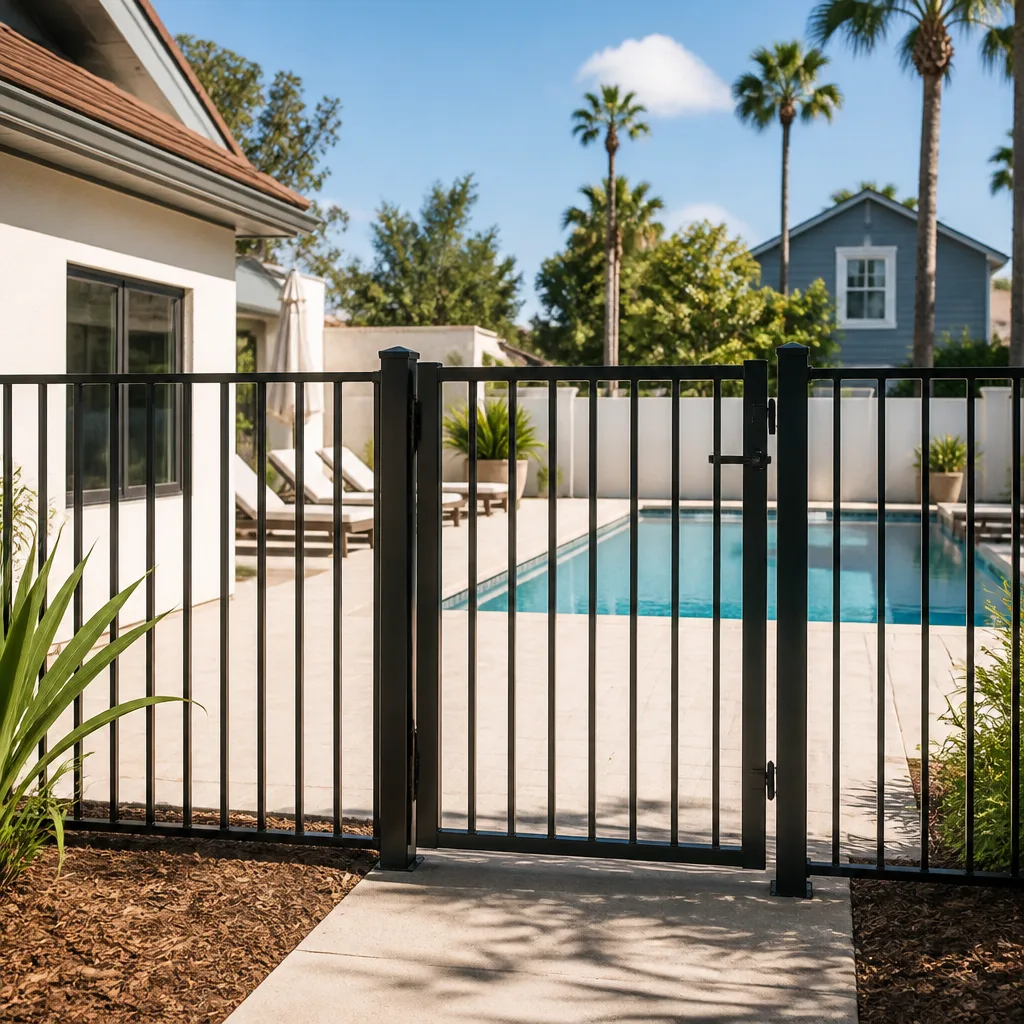
A leaning fence post isn’t a wind problem. It’s almost always a footing problem, and the contractor who offers to brace it rather than pull and re-set it is selling you time you’ll pay for twice. We’ve walked hundreds of fence lines across Long Beach, from the older bungalows in Rose Park to newer builds near Alamitos Bay, and the pattern holds: most failures homeowners blame on material quality or lazy workmanship come down to one of three installation errors – post depth, concrete mix, or drainage management. This guide walks you through diagnosing which one you’re facing, how to tell a footing failure from rot from warping, why gates fail faster than panels, and when a spot repair is genuinely sound versus when the post next to it is six months from the same fate.
Quick Answer
Fence installation problems usually trace back to one of three root causes: posts set too shallow (or in concrete that never cured right), water that can’t drain away from the post base, or wood that was installed too wet and warped as it dried. Diagnose first by checking the post at ground level for staining, rust, or concrete heaving, then push-test the post before you touch a single board. Fix a footing failure by pulling and re-setting the post; fix rot by cutting back to sound wood and treating it; fix warping by re-securing rails, not by replacing boards.
Styles & brands we work with
- Kitchen remodeling
- Bathroom remodeling
- Home additions & ADU
- Roofing
- Windows & doors
- Driveway & pavers
- Fence
Table of Contents
- How to Diagnose Fence Problems Before You Fix Anything
- Post Footing Failures: Why Your Fence Leans and What Actually Fixes It
- Wood Rot: Where It Starts, Why It Spreads, and How to Stop It
- Panel Warping: Why Boards Bow and How to Straighten Them
- Why Fence Gates Fail Faster Than Panels
- Drainage Problems: The Installation Error You Can’t See
- Section Repair vs. Full Replacement: How to Tell the Difference
- The Troubleshooting Order Homeowners Get Wrong
How to Diagnose Fence Problems Before You Fix Anything
From twenty feet away, a footing failure, wood rot, and panel warping can look identical. All three show up as a fence that seems to lean, bow, or sag. But the fix for each is completely different, and starting with the wrong one is how homeowners end up spending $400 to solve nothing.
Here’s the diagnostic sequence we use on every fence call in Long Beach. It takes about five minutes per section and narrows the problem to a single cause.
- Look at the base of the post at grade level. Green-black staining, soft wood you can push a screwdriver into with one hand, or a visible gap between the concrete and the soil all point to a footing or drainage issue. Rust streaking on the base of a metal post is the same signal.
- Push-test the post. Stand at the top of the post and push it away from you with both hands, hard. A post that moves more than half an inch at the top has a footing problem, not a board problem. If the post is solid but the rails move, the problem is at the rail-to-post connection.
- Walk the length of the panel and look at the board faces. Warped boards bow from the middle. Rotted boards show dark streaks, soft spots, or frass. If the boards look fine but the fence looks wavy, the issue is the rails or the posts.
- Check the gate separately. Gates have their own failure mode (hinges, latch alignment, post torque) and should never be lumped in with panel diagnosis.
In Long Beach, our marine layer pushes humidity into wood fences from the inside out, particularly on north-facing fence runs. A board can look solid on the street side and be spongy on the neighbor side after two winters. If your fence borders a property line, walk both sides before you call anyone.
Symptoms at a Glance
- Post moves when pushed, top of the fence leans: Footing failure
- Wood dark, soft, or crumbly at base: Rot (usually starting at the post)
- Boards bow or cup, rails intact: Warping
- Gate drags, sags, or won’t latch: Hinge/post torque issue
- Concrete chunk lifting at the base of the post: Improper drainage
Post Footing Failures: Why Your Fence Leans and What Actually Fixes It
A leaning fence post is almost never a wind problem. Wind is the trigger that reveals a footing that was wrong from day one. The post was set too shallow, the concrete was mixed too dry, or the hole was never deep enough to reach soil that stays put through the wet season.
The most common installation error we find in Long Beach is posts set 18 to 24 inches deep when they should be closer to 30 to 36 inches for the local soil and fence height. Code here runs to frost depth (which for us is effectively zero), so installers who learned the trade in colder markets sometimes skim on depth. Our sandy, sometimes expansive soils near the coastline need the deep footing anyway – not because of frost, but because of side-pressure during winter rains.
The second most common error is concrete mix. Dry-mixed concrete poured into a hole without enough water never fully cures. It looks set, passes a cosmetic inspection, and then a hard Santa Ana wind event or a good soaking rain pushes the post loose. When we pull a failing post, the concrete often comes out in chunks rather than a solid plug. That’s the tell.
How a Footing Failure Actually Gets Fixed
- Dig out the post on all four sides, down past the original concrete plug. Expect 24 to 36 inches of excavation.
- Remove the old post entirely. Do not re-use it – the bottom is usually rotted or cracked from the movement.
- Re-dig the hole to full depth, at least a third of the fence height, and widen the base so the concrete plug bears on undisturbed soil.
- Set a pressure-treated post (or a galvanized steel post for Long Beach’s coastal humidity) with proper gravel at the base for drainage.
- Pour a properly mixed concrete to at least 4 inches above grade, sloped away from the post on all sides.
- Brace the post for 48 to 72 hours, longer in cool weather.
Bracing a leaning post with a kicker or a new rail is a delaying tactic. It looks like a fix from the curb, but the post will move again next season, and the section of fence you saved will then need to be re-hung anyway. Pull and re-set is the only durable answer. If you’re comparing options or need professional fence installation in Long Beach, we can look at the footing before anything else.
Wood Rot: Where It Starts, Why It Spreads, and How to Stop It
Rot in a fence almost always starts at the bottom of the post and works upward. The visible boards are usually the last thing to fail. That’s why homeowners call us about “a rotten panel” and we find the actual problem is a post that’s been wicking water for two years.
Three specific rot patterns we see repeatedly in Long Beach:
- Grade-level staining on the post. A dark, water-stained band at the soil line is the first sign of wicking. Pressure-treated wood is rot-resistant, not rot-proof, and the cut end at the bottom of the post loses its treatment barrier.
- Soft rails at the bottom rung. The bottom rail sits closest to lawn irrigation and splash-up. If it’s spongy under your thumb, the post probably is too.
- Frass inside boards near the top. White powder or small holes in upper boards points to powder-post beetles or termites, not rot. In Long Beach’s older neighborhoods (Rose Park, California Heights, Willmore) we find drywood termites in fence stock more than most homeowners expect.
Rot fixes are surgical. Cut back to sound wood at the first sign of give, then treat the cut end with a copper-based preservative before reassembling. For posts, there’s a shortcut worth knowing: a post-base repair bracket lets you cut off the rotted bottom 12 to 18 inches and set the post on a galvanized standoff above the concrete, so the wood never sits in a puddle again. It buys years, not decades, but on a post that’s already more than half sound, it’s often the right call.
Where the rot has reached the bottom third of the post or has spread to the rails on both sides, cut your losses and replace the whole section. Patching rot is a cosmetic exercise; on a fence carrying weight, cosmetics don’t last a season.
Panel Warping: Why Boards Bow and How to Straighten Them
Warped fence boards look dramatic – long, graceful bows down the line of a privacy fence – but they’re the easiest of the three problems to solve. Warping is almost always moisture-related, and it’s almost always reversible at the rail.
New wood installed too wet is the classic cause. Pressure-treated pine, the most common fence material in Long Beach, can leave the mill with a moisture content above 25%. When it dries in place, the boards cup, bow, or twist depending on how the grain was cut. Cedar is more stable; composite and vinyl move for a different reason (thermal expansion, not moisture).
What Actually Fixes a Warped Panel
- Identify whether the warp is in the board or in the rail. Hold a straight edge against the board face. If the board is flat and the rail is curved, the rail is the problem.
- If it’s the board, check the fasteners. A back-out nail or short screw is common – the board was never cinched against the rail.
- Re-secure with stainless steel screws (not nails) on the rail. Two screws per rail per board, offset slightly from the original holes.
- For a bowed board with no re-securing option, apply a wood clamp across two adjacent boards for a day to pull it back flat, then re-fasten.
- If more than a third of the panels are warping, the original install dried too fast. Replacing boards is the practical fix; you’ll never get the whole fence flat again by tightening fasteners.
One Long Beach-specific note: fences facing south and west dry far faster than those on the north or east. If your south-facing panels warp and your north-facing panels don’t, the wood wasn’t bad – the exposure was uneven. That’s a good indicator the original installer should have used a sealer on the sun side.
Why Fence Gates Fail Faster Than Panels
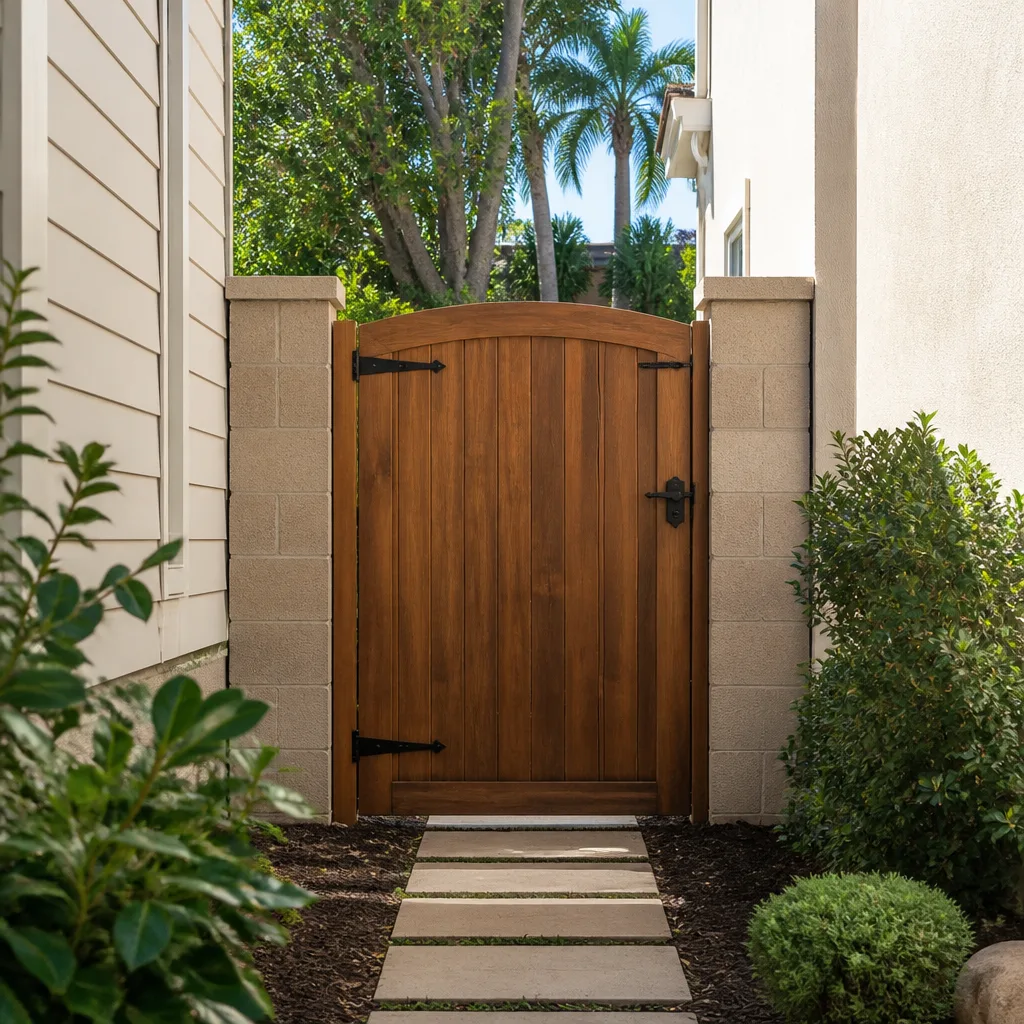
Gates fail before the fence does for one structural reason: every gate puts its full weight and cycle load onto two posts and a set of hinges. A 4-foot gate on a chain-link fence will typically outlast a wood panel gate of the same size on the same footing, because metal flexes and wood doesn’t recover. In our experience across Long Beach, a wood gate needs its first real adjustment within three to four years; a panel might run ten before it needs anything at all.
Three details decide whether a gate problem is a ten-minute fix or a structural rebuild:
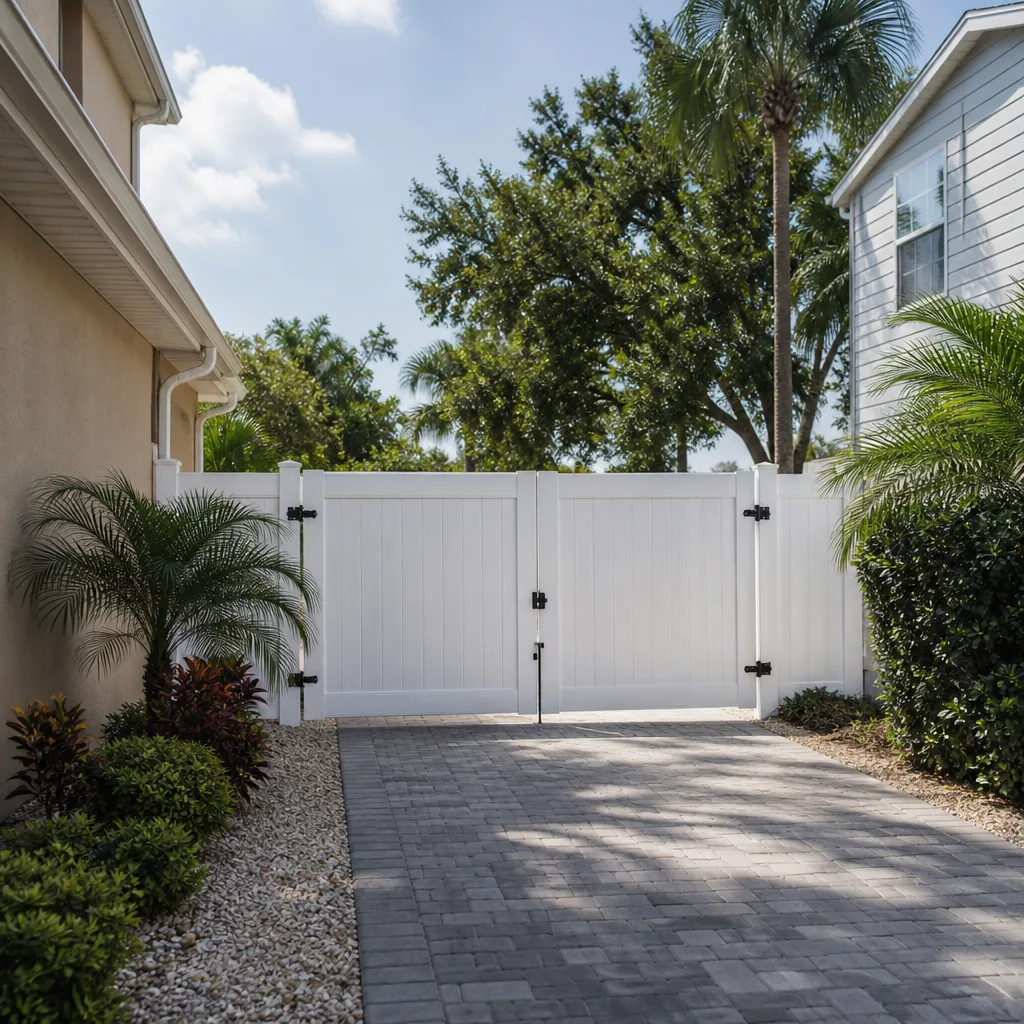
- The hinge post. If the hinge post is 4×4 wood at ground level, gate weight is cycling into a post that has already spent three or four years in Long Beach humidity. Push-test it. If it moves, you’re rebuilding the post, not adjusting the hinge.
- The hinge type. Standard strap hinges on a wooden gate are fine for a light gate, but they don’t hold adjustment. Self-closing spring hinges or heavy-duty T-hinges with through-bolts (not lag screws into wood) hold far better and cost a few dollars more at install.
- The latch alignment. A gate that won’t latch is usually a sagging hinge, not a latch problem. Fix the hinge side first. A floating latch that requires a lift to close is a warning sign the hinge post is moving.
Quick Gate Diagnosis
- Open the gate to 90 degrees and release. If it swings shut on its own, the hinge post is out of plumb.
- Lift the free end of the gate one inch. If the sag disappears, the hinges are worn – replace them.
- Push the hinge post hard. Any movement over a quarter inch means the post has failed and the gate needs to be re-set with a deeper footing.
- Check the diagonal brace. A missing or wrong-oriented brace lets the gate rack under its own weight.
Drainage Problems: The Installation Error You Can’t See
Water that can’t get away from a fence post will destroy it. It doesn’t matter what the post is made of – treated wood, steel, aluminum, even concrete will fail when water is trapped against the base for years. And in Long Beach, that failure usually shows up in three specific patterns that most homeowners never connect to drainage.
The Three Signs of Trapped Water
- Rust streaks on metal posts, starting at the base. If your metal fence post is rusting at the soil line and the rust is running downward, water is pooling inside or against the post base. Long Beach’s ocean air accelerates this; posts within a mile of the water show it first.
- Dark staining on wood at grade level. A water-mark band at the base of a post means the wood is wicking. It’s a sign the concrete plug was poured crown-up (water pools on top) or was never sloped away at all.
- Concrete heaving or cracking around the base. If your post’s concrete collar is lifting, chipping, or showing a gap on one side, water is freezing (rare in Long Beach) or saturating and expanding yearly. Expansive soil amplifies this – the hillside lots above Broadway have more expansive clay than the flats near the beach and heave noticeably more.
Correcting drainage is the one fence repair that almost always requires excavation. A post that’s already holding water needs to be pulled, the hole re-dug with a gravel base (3 to 4 inches of coarse crushed rock under the concrete plug), and the concrete re-poured with a slight crown and a taper away from the post. Retrofit solutions – a gravel ring around the post, a rain diverter above it, or re-grading the soil in front – help but rarely solve the problem on their own.
If you’ve got drainage problems across a patio, walkway, or driveway near the fence, that’s a related but separate scope. We cover driveway & pavers work in Long Beach because the same soil conditions that trap water at a fence post will also undercut a paver base.
Section Repair vs. Full Replacement: How to Tell the Difference
The hardest call on a fence is whether a repair will actually hold or just kick the problem down the road six months. Here’s the honest answer we give every Long Beach homeowner: a single section repair is structurally sound only if the two posts on either side of the repaired section are on solid footings and free of rot. Otherwise you’ve repaired one panel that’s now bolted to two failing posts.
Here’s how to evaluate the section around a bad post.
- Push-test both neighbor posts, not just one. Use both hands, at the top, and look for movement at the concrete. Any post moving more than a quarter inch at the top is on the way out.
- Check the base of both neighbor posts for rot. Probe at grade level with a screwdriver. If it goes in with light pressure, that post is already failing from the inside.
- Look at the rails on the two adjacent sections. If the same rails show staining or softness, the water source is likely the same for both sections.
- Check the panel line. Sight down the fence. If the fence is curving at the neighbor post, replacing one bad post alone will leave a kink in the line that gets worse as neighbors move.
When we install a fence in Long Beach, we set all the posts at once to the same depth and mix for a reason: a fence is a chain of posts, not a series of independent sections. The moment one post fails, the two on either side start taking extra load. That’s why a “one bad post” repair usually becomes a two-post repair within the year, and a three-post repair the year after.
Approximate Repair Cost Ranges in the Long Beach Market
These are ballpark ranges for the Long Beach area based on typical wood and composite fence installations. Actual pricing depends on material, post depth, access, and whether permits are needed.
- Re-set one post (pull, re-dig, re-pour): $250 to $600
- Replace one post with new footing: $300 to $700
- Replace one section of wood privacy fence (6 ft, 8 ft length): $350 to $850
- Replace one section of composite fence: $600 to $1,400
- Gate re-hang with new hinges and hardware: $150 to $400
- Gate hinge post replacement: $400 to $900
- Full fence replacement (100 linear feet, wood): $3,500 to $8,000
If a repair estimate gets close to half the cost of a full replacement and the fence is more than ten years old, replacement is usually the better long-term spend. Upfront pricing beats a slow drip of $400 repairs every year. And if your fence line intersects with a planned addition or ADU, it may be worth designing the fence as part of the larger scope – see our home additions & ADU work in Long Beach for how that’s typically sequenced.
The Troubleshooting Order Homeowners Get Wrong
The single most common mistake we see in fence troubleshooting is homeowners checking the board first. It’s natural – the board is what you see – but it’s backward. The proper diagnostic order is post, then rail, then board. Starting at the board means you’ll replace cosmetic pieces when the actual failure is structural, and you’ll do the whole job twice.
Here’s why the order matters. A post is the load-bearing element; it’s anchored in the ground and takes every lateral load the fence sees. A rail transfers load from the boards to the post. A board is just cladding over that structure. If a board looks warped but the post is moving, the board will re-warp within a season of replacement because the whole panel is being flexed. If a rail is soft, the board replacement accomplishes nothing because the new board is being screwed into a sponge.
This order also saves money. Post inspection and push-tests are free. You can check every post on a typical residential fence in about twenty minutes with one person. Board replacement is the expensive part of a repair – it’s the part that should happen last, only once you’ve confirmed the structure is sound.
In our experience on Long Beach fences, roughly seven out of ten calls that come in as “some boards need replacing” end up being a footing or rail issue once we walk the line. That’s not a sales tactic; it’s just how fences age. Boards are the last thing to fail because they’re the most exposed to air and the least exposed to ground water.
Common Mistakes to Avoid
- Bracing a leaning post instead of re-setting it. A kicker or extra rail makes a leaning post look straight for a season, then it moves again – and takes the adjacent section with it. Fix the footing, not the symptom.
- Setting posts in dry-mixed concrete. Concrete poured into a post hole without adequate water never fully cures. If you can break the plug out with a shovel in five minutes, that’s what happened – and it’s the top cause of post failure we see in Long Beach.
- Using short posts on tall fences. A 6-foot fence needs 30 to 36 inches of post below grade in Long Beach soil; a 4-foot fence needs at least 24. Undersizing the footing is how fences lean after the first wet winter, especially in the expansive-clay areas near Signal Hill and Bixby Knolls.
- Nailing instead of screwing panels to rails. Nails back out under wood movement. Stainless steel screws hold their bite and cost a few cents more per fastener – worth it on any Long Beach fence facing the marine air.
- Ignoring drainage at the concrete collar. A flat or dished concrete collar around the post traps water against the wood. Crown the concrete and slope it away on all four sides, every time.
- Replacing boards without inspecting the post. Warped boards on a moving post will re-warp within one season. Diagnose at the post first, then the rail, then the board.
- Not checking the gate post separately. Gates put concentrated load on two posts, and one is usually already failing by the time the gate sags. A gate repair on a failing post is temporary – the post is the actual job.
See the difference
 Before
 After
 Before
 After
 Before
 After
When to Call a Professional
Some fence repairs are genuinely DIY-friendly: re-securing a loose rail, replacing a warped board, adjusting a latch. But others belong with a pro. Call a contractor if a post moves when you push it, if you find rot more than a few inches up from grade on the post, if the gate hinge post is failing, or if concrete is heaving around a post base. Pulling a post is more physical than most homeowners expect – the concrete plug often weighs more than the homeowner does, and it needs proper disposal – and re-setting it requires getting depth, mix, and drainage right the first time. Groundwork Construction Co. of Long Beach offers free estimates in Long Beach, and our technicians have up to 12 years of experience with the specific soil and moisture conditions here. Call (888) 345-8164 and we’ll tell you honestly whether your fence is a repair or a replacement.
Frequently Asked Questions
Post re-setting in the Long Beach market typically runs $250 to $600 per post depending on depth and access, and a full post replacement with new footing runs $300 to $700. The variance is mostly about what the installer finds when the post comes out – a dry-mix footing is easier to remove than a solid plug in expansive clay. Call (888) 345-8164 for an exact quote – estimates are free.
A leaning post is almost always a footing problem, not wind. The post was set too shallow, the concrete never fully cured, or water has been pooling against the base for years. In Long Beach, sandy coastal soil and expansive clay on the hillside lots both make shallow footings fail faster than the homeowner expects. If the post moves more than a quarter inch at the top when you push it, the footing needs to be re-set.
Section repair is structurally sound only when the posts on both sides of the section are solid and free of rot. Push-test both neighbor posts and probe their bases before committing. If either neighbor is moving or soft, replacing the section alone will likely need to be redone within a year. Call (888) 345-8164 and we’ll walk the line with you at no charge.
Gates carry their weight and cycle load on two posts and two hinges, so they always fail first. In our experience, a wood gate needs its first real adjustment within three to four years, while a panel might last ten. If the hinge post moves when pushed, the fix is a post replacement, not a hinge adjustment – and the hinge post is the answer to about 80% of gate calls we see in Long Beach.
A properly set pressure-treated wood post in Long Beach soil typically lasts 12 to 18 years before needing replacement. That drops to 8 to 12 years if the original install trapped water at the base. Galvanized steel posts last longer but rust faster within a mile of the water. The single biggest factor is whether the footing drains away from the post – a well-drained post at the coast outlasts a poorly drained one inland.
Fence repairs generally don’t require a permit, but new fence installation and any fence over a certain height (typically six feet in residential zones) does. There are also sight-distance rules at corner lots and setback rules for front-yard fences that catch homeowners out. Before you install or substantially rebuild a line, check with the city directly – we pull and coordinate permits on every installation we run, and we’d rather you know the height and setback limits up front.
The Bottom Line
Most fence failures in Long Beach trace back to three installation errors: post depth, concrete mix, and drainage. Diagnose in the right order (post, rail, board) and you’ll know within twenty minutes whether you’re facing a footing repair, a rot repair, or a cosmetic fix. A post that moves needs to be pulled and re-set – bracing delays the inevitable. A gate that sags usually needs a hinge post, not a hinge. And a section repair is only durable when both neighbor posts are sound. Get the diagnosis right, and the repair actually holds.
Whether your fence needs a spot repair or a full replacement, we’re happy to walk the line with you and give you a straight answer. Groundwork Construction Co. of Long Beach backs every fence installation with our 730-Day Done Right Promise – if it’s not done right, we make it right – and we answer calls live, 24/7, with background-checked, uniformed technicians on every job. We use a curated portfolio of top-tier material partners across every trade, from Andersen and Marvin on windows to GAF and CertainTeed on roofs. New fence installs come with upfront pricing, no surprises, plus 0% financing for 18 months and $1,000 off projects over $10,000. Start with our fence installation service, or explore the broader Groundwork Construction Co. of Long Beach home page if you’re planning a larger project. Call (888) 345-8164 today for a free estimate and design consult – we’ll tell you what your fence actually needs.
Written by the team at Groundwork Construction Co. of Long Beach.