Last updated November 17, 2026

Free written scope consultation - allowances, timeline, and change-order rules on paper before a single trade is scheduled
The Complete Driveway & Pavers Guide for Long Beach Homeowners
Most driveway failures in Long Beach don’t start at the surface. They start six inches underground, where expansive clay soil and seasonal moisture shifts wreck bases that would hold up fine in drier California climates. A homeowner in Bixby Knolls can pour the same concrete mix, over the same thickness, as a homeowner in Fresno, and watch it crack into puzzle pieces within three winters while the Fresno slab sits flat for twenty years. It’s not bad luck. It’s soil, drainage, and the marine layer doing exactly what they always do here.
This guide is written from the job site, not from a national template. You’ll learn how Long Beach soil behaves, how coastal salt and humidity change sealer and material choices, what the city actually requires for impervious surface coverage, and how to read a contractor bid so you can spot the missing line items before they cost you thousands. Everything here applies to real Long Beach lots: the older undersized drives near the traffic circle, the newer Eastside developments, and everything between.
Quick Answer
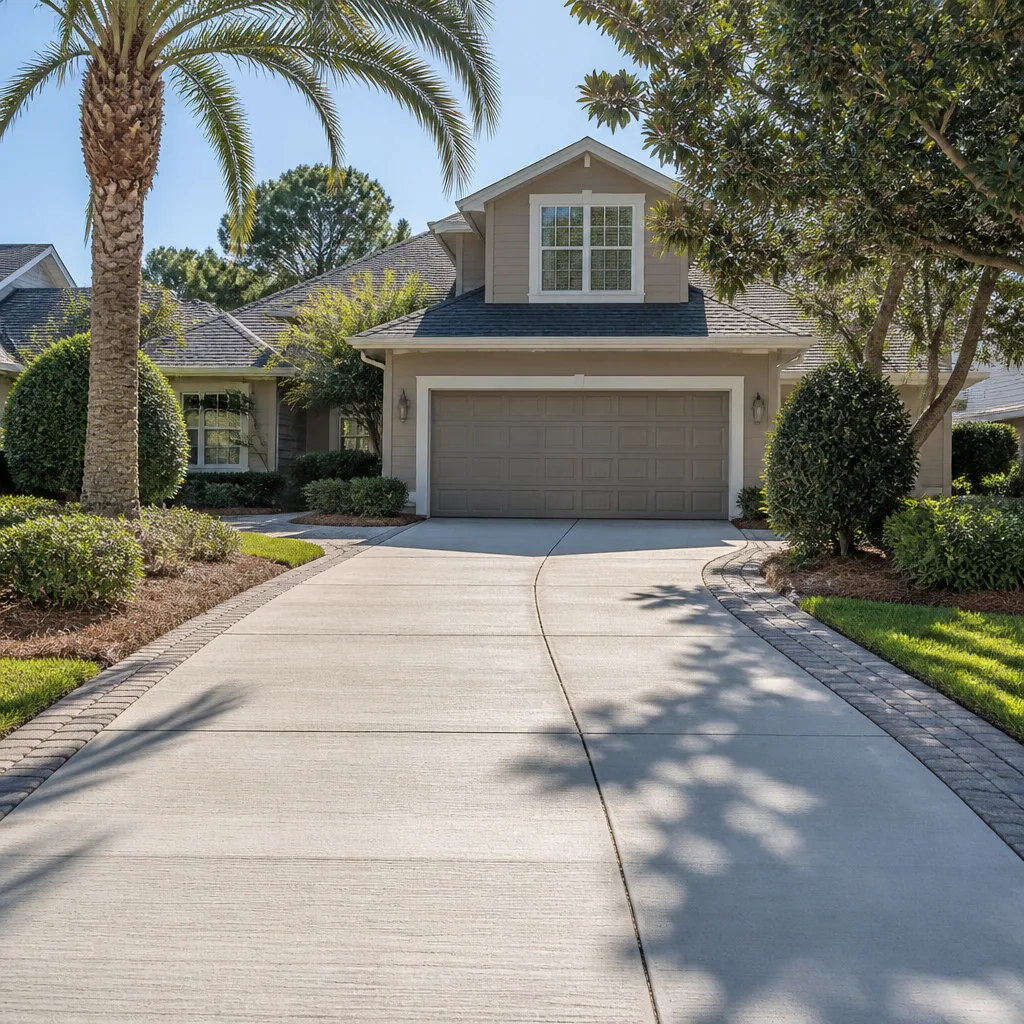
Driveway pavers in Long Beach typically cost $12 to $22 per square foot installed, with most residential drives landing between $9,000 and $24,000 depending on base depth, drainage requirements, and paver selection. The single biggest factor in how long that investment lasts isn’t the paver brand, it’s whether the contractor excavated deep enough and compacted a proper aggregate base to handle Long Beach’s expansive clay. Get the base right and the surface can last decades. Skip it and you’ll be redoing the job in five years.
Styles & brands we work with
- Kitchen remodeling
- Bathroom remodeling
- Home additions & ADU
- Roofing
- Windows & doors
- Driveway & pavers
- Fence
Table of Contents
- Why Long Beach Soil Changes Everything About Driveway Design
- How Deep Should the Base Be? The Long Beach Answer
- Permits, Impervious Surface Coverage, and Stormwater Rules
- Salt Air, Marine Humidity, and Paver Performance
- Neighborhood-by-Neighborhood Installation Notes
- Choosing Materials: Pavers, Concrete, and What Holds Up Here
- How to Read a Long Beach Driveway Bid
- Maintenance, Sealing, and Getting Decades Out of Your Drive
Why Long Beach Soil Changes Everything About Driveway Design
Long Beach sits on a mix of geology, and if you dig into the wrong pocket of it, the ground moves. Large sections of the city, especially the older neighborhoods near the coast and along the Los Angeles River corridor, contain expansive clay soils that swell when wet and shrink when dry. The clay doesn’t just sit there. It expands by several percent with seasonal moisture, which translates to measurable heave under any rigid surface poured directly on top.
We’ve seen this firsthand across Long Beach driveways: a slab that looks perfect in October develops a crack by February because the clay underneath swelled through the winter rains and lifted one corner. Concrete has almost no tolerance for differential movement. Pavers handle it better because each unit flexes independently, but only if the base underneath is engineered to bridge and drain rather than trap water against the clay.
The fix isn’t exotic. It’s excavation deep enough to remove the top layer of active clay, replacement with a well-graded crushed aggregate, and compaction in lifts with a plate or roller. The base becomes a structural layer that spreads the load and lets water move away from the expansive material below.
- Expansive clay is common in older Long Beach neighborhoods and along the river corridor.
- Clay swells with winter rain and shrinks in summer, so rigid surfaces crack from below.
- Paver systems flex better than poured concrete but still need a properly compacted base.
- Sandy or sandy-loam pockets near the coastline behave differently and may need a different base depth.
- Nobody can guess the soil without looking; a contractor who doesn’t probe or excavate before quoting is guessing.
This is why a driveway bid from a contractor who works only inland cities should make you pause. Long Beach soil punishes assumptions. If a proposal doesn’t mention site soil, excavation depth, or aggregate spec, consider it a first draft. For broader context on how this work fits into the rest of the property, see our Groundwork Construction Co. of Long Beach home page.
How Deep Should the Base Be? The Long Beach Answer
Most online guides tell you 4 inches of compacted base for a paver driveway. In Long Beach, over expansive clay, that number is a setup for failure. The practical range we work to on residential drives is 6 to 10 inches of compacted crushed aggregate, placed in 2 to 3 inch lifts and compacted each time. The exact depth depends on soil conditions, expected vehicle load, and drainage.
Here’s a step-by-step look at what a proper Long Beach base installation actually involves:
- Excavate to full depth. Remove existing surface, old base, and the top layer of active clay. The finished grade needs to sit below the surrounding soil line so water runs off, not in.
- Evaluate the exposed subgrade. Look at color, texture, and how the soil behaves when wet. If it’s fat, sticky clay, plan for more aggregate. If it’s sandy, plan for more compaction.
- Place aggregate in lifts. Use a well-graded crushed base, not fill dirt or recycled concrete with debris in it. Each 2 to 3 inch lift gets compacted before the next goes in.
- Compact with the right equipment. A plate compactor for edges, a roller for the field. Hand tamping doesn’t reach proper density at this scale.
- Check grade and slope. Minimum 1 to 2 percent slope away from the garage and toward drainage. Long Beach lots can be tight, so plan the outlet before you start.
- Install edge restraint. Pavers need a rigid edge, or they’ll creep outward season after season.
- Set bedding sand and pavers. A thin, screeded sand layer, then the pavers, then plate compaction and joint sand.
The base is invisible when the job is done, which is exactly why it’s where shortcuts show up. A bid that quotes 4 inches of base and a “we’ll see how it looks” attitude is telling you the contractor plans to skip the part you can’t inspect. Our team installs to Long Beach conditions because we’ve watched what happens when someone doesn’t. Learn more about our approach on the Driveway & Pavers in Long Beach service page.
Permits, Impervious Surface Coverage, and Stormwater Rules
Long Beach takes stormwater seriously. The city sits at the mouth of the Los Angeles River and drains to a shoreline that residents actually use, so new hardscape projects that increase runoff can trigger plan review requirements. The specific threshold depends on the scope of work and the zoning of your property, but the practical takeaway is simple: any new driveway or hardscape project should be checked against the current Long Beach Municipal Code and the city’s stormwater ordinances before construction starts.
Two things trip up homeowners who try to handle the permit process themselves:
- Impervious surface coverage limits. Residential lots have a maximum percentage of hardscape allowed. A large driveway expansion can push a lot over the limit, especially on smaller parcels in older neighborhoods.
- Stormwater management requirements. Projects that add runoff may need to incorporate on-site infiltration, detention, or permeable surface area. Permeable paver systems are one way to satisfy this and keep more of the lot usable.
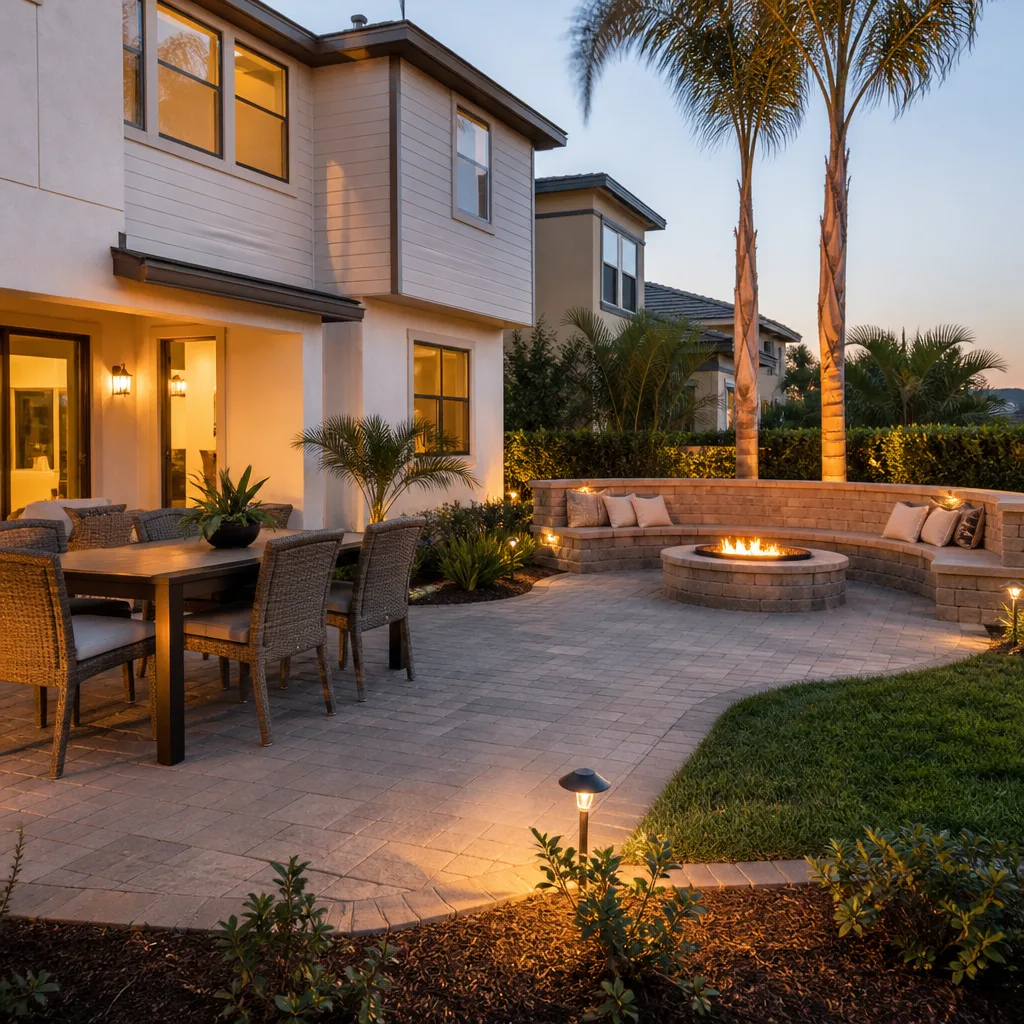
Permeable pavers are worth understanding even if they aren’t required for your project. They look almost identical to standard pavers, work with the same installation methods, but allow water to pass through surface joints into a designed aggregate reservoir below. That reservoir can reduce runoff volume and, in some cases, reduce the effective impervious area of the project. On a Long Beach lot with tight drainage, or on a project where hardscape coverage is close to the limit, permeable systems can open up design options a solid surface couldn’t.
Permits aren’t something to sort out after the concrete truck shows up. Ask any contractor you’re considering: which permits will you pull, what inspections apply, and who handles the paperwork? If the answer is vague, that’s a problem. We pull permits and coordinate inspections as part of the scope on Long Beach projects, and the price you see on the written estimate includes that work.
Salt Air, Marine Humidity, and Paver Performance
Long Beach doesn’t get hot the way inland Southern California does, and that changes the maintenance picture. In Riverside, a sealer might hold up for three to five years before the sun bakes it to a chalky film. Here, the sun is softer, but the air carries salt and the humidity stays elevated, which introduces a different stress: moisture that lingers in the paver and joint sand longer than it does inland.
What that means for homeowners:
- Sealer lifespan runs shorter than you might expect. In our experience, coastal Long Beach drives typically need a fresh coat every 18 to 36 months depending on the sealer type, exposure, and whether the surface gets direct afternoon sun. Inland drives go longer.
- Efflorescence shows up more. That white, powdery film on pavers is a salt deposit. The marine environment makes it more likely, and moisture management in the base helps reduce it.
- Material choice matters. Dense, low-absorption pavers from a manufacturer like Techo-Bloc or Cambridge Pavers handle coastal humidity better than porous or highly textured options that hold moisture in. Concrete pavers outperform most natural stone in freeze-thaw or moisture-driven conditions, which is why we lean on them here.
- Salt spray accelerates wear on finishes. Any sealer or coating should be selected for marine exposure, not a general-purpose label picked off a shelf.
We’ve seen Long Beach driveways where the paver surface itself was fine after 15 years but the joint sand had been washed out repeatedly and never topped off, which allowed the pavers to shift and mirror the rutted base underneath. That’s a maintenance problem, not a material failure, and topping off joints every couple of years costs a fraction of a replacement.
One more coastal note: if your driveway slope sends water toward the garage rather than the street, marine-driven rain will find that flaw in the first wet season. Slope and drainage outlet planning has to happen before any pavers go down.
Neighborhood-by-Neighborhood Installation Notes
Long Beach isn’t one construction market. It’s a patchwork of neighborhoods built in different decades with different lot dimensions, soil behavior, and access constraints. What works smoothly in one part of the city can add days and cost in another.
Bixby Knolls and Older Central Long Beach Lots
Many Bixby Knolls lots were built in the 1920s through 1940s with narrow, long driveways that head toward single-car garages set far back from the street. Some of these properties have mature trees with root systems that cross the driveway footprint, and the drive often sits close to the property line, which complicates edge restraint and drainage. Older homes may have had additions, garage conversions, or utility runs that cross the intended work area, and it’s not unusual to find buried improvements from earlier projects. Excavation in these lots is slow, deliberate work.
Grade is often an issue. These older Long Beach lots sometimes sit level from street to garage, which means water has nowhere to go unless a plan is built for it. Often the answer is a low-profile channel drain or a scupper that directs water toward the street or a landscape area.
Eastside and Newer Developments
Newer Eastside developments tend to have wider, shallower driveways with engineered lot grades and better-drained landscape. Subgrade conditions can be easier, and access for equipment is generally roomier. But newer developments sometimes have tighter impervious surface calculations or HOA design requirements that limit paver color, pattern, and finish. Check those before you fall in love with a specific paver.
Belmont Shore, Naples, and the Peninsula
Coastal proximity changes the job. Salt exposure is higher, humidity is denser, and drainage patterns are influenced by tides and groundwater. Lots are often narrow with tight side-yard access, and paver delivery or excavation equipment has to be staged carefully. Alley access, in some cases, is easier than street access.
North and West Long Beach
Colder nights and more inland winds, still with the same basic soil reality. Lots are generally more generous in size, and driveway expansions, RV pads, and side-yard pavers get more common. If you’re thinking about an RV pad, an ADU addition, or a detached garage, plan the driveway and the structure at the same time. A driveway poured before the structure goes in often has to be torn out because the access pattern was wrong.
If your property plans include more than just a driveway, we handle full-scope work from foundation to finish line, including Home Additions & ADU in Long Beach. Coordinating hardscape with structural work is far cheaper than redoing it afterward.
Choosing Materials: Pavers, Concrete, and What Holds Up Here
Three driveway surfaces dominate Long Beach residential lots. Each does a job, and each has trade-offs that the coastal environment makes more pronounced.
Interlocking Concrete Pavers
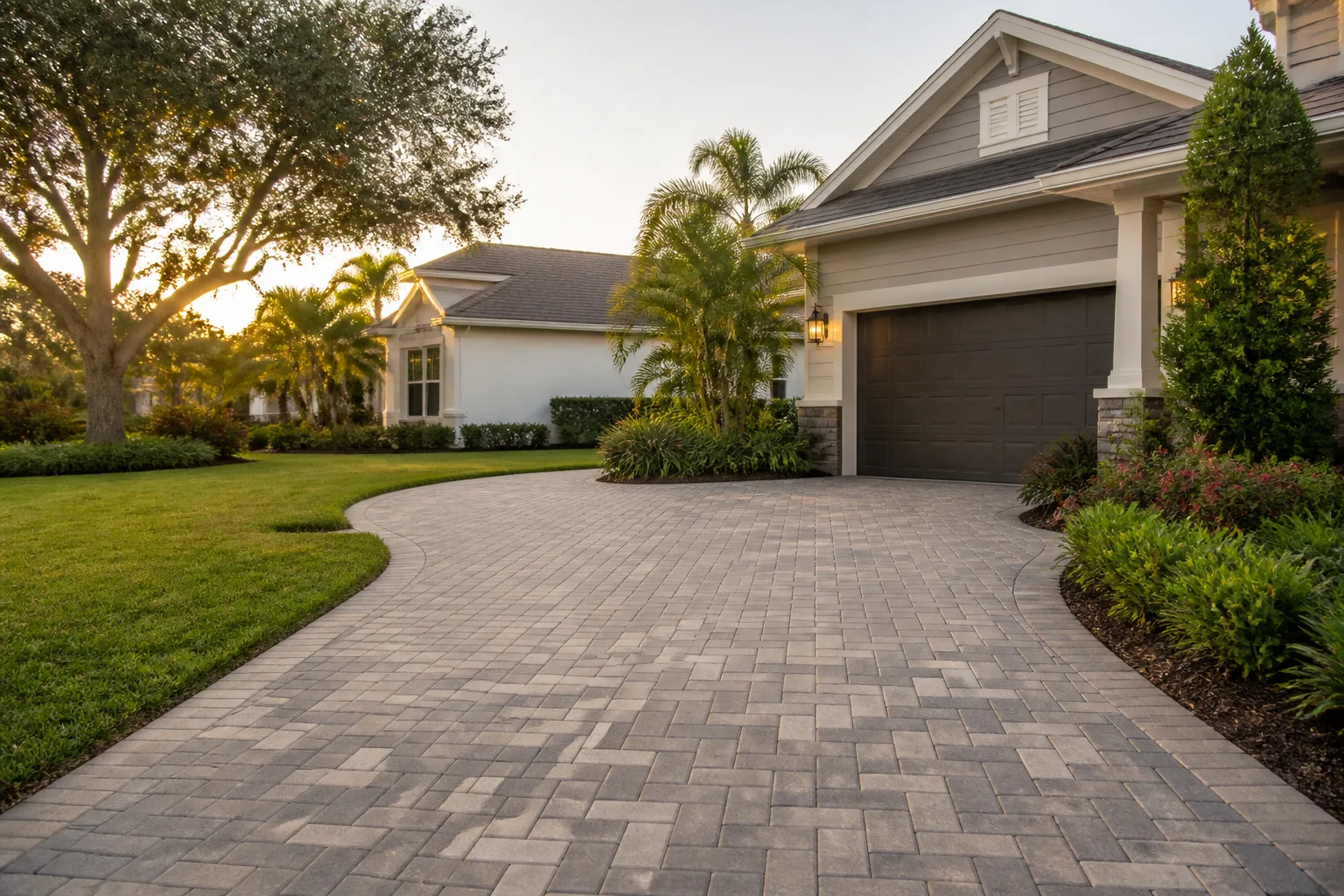
Concrete pavers are the default choice for Long Beach drives that need to look good, last, and handle soil movement. Individual units flex with minor settling, repairs are localized (a cracked paver gets replaced, not the whole slab), and the available finishes range from a simple running-bond standard to complex ashlar patterns. Brands like Techo-Bloc and Cambridge Pavers manufacture units with low absorption rates engineered for coastal climates. With a proper base and edge restraint, a paver driveway can easily deliver 25 to 40 years of service.
Poured Concrete
Poured concrete is cheaper up front, at roughly $8 to $14 per square foot in Long Beach, and it performs well when it’s poured over a properly prepared base with adequate control joints. The problem is that poured concrete over expansive clay is rigid and unforgiving. When the clay moves, the concrete cracks, and a drive that looked fine at year five can develop significant heave and crack patterns by year ten. If you go with concrete, the base work is even more critical, and you should plan to accept some visible cracking as normal aging.
Permeable Pavers
Permeable pavers cost 10 to 20 percent more than standard pavers because of the deeper aggregate reservoir underneath and the more open joint design. On a Long Beach lot with tight drainage or impervious coverage concerns, they can save money elsewhere in the project by reducing the need for detention features or allowing a larger drive within code. If you’re considering permeable options, ask the contractor how they calculate the reservoir volume and how they handle the transition to existing stormwater routing.
Materials to Avoid Here
- Stamped concrete in exposed coastal locations; it looks fine for a while but embrittles and cracks faster over clay.
- Pavers set on sand without a compacted base; they’ll move, spread, and rut within the first year.
- Anything promising “no base prep needed” or “install over your old surface”; this doesn’t work in Long Beach soil conditions.
How to Read a Long Beach Driveway Bid
Most bad driveway experiences start with a bid, not a construction problem. Long Beach projects have specific requirements, and a bid that was written for a generic California driveway will be missing pieces that matter here. Read any proposal with these checks in mind.
What a proper Long Beach driveway bid should include:
- Site conditions noted. A real bid mentions the existing surface, observed subgrade (clay, sandy, mixed), and any site access constraints. A bid with no site observations is a guess, not an estimate.
- Excavation depth and aggregate spec. The bid should state how deep they’ll excavate and what aggregate type and compacted depth they’ll place. “Standard base” is not a spec.
- Compaction method. Plate compactor, roller, or both; the bid should say.
- Edge restraint and drainage details. What type of edge, channel drain, or scupper will be installed, and how the water exits the property.
- Permit and inspection line items. Who pulls the permit, who pays for the permit, and what inspections are expected.
- Paver brand and model. Not just “pavers” – the specific manufacturer and product, so you know what you’re getting and can compare bids apples to apples.
- Sealer details. Some installers include an initial sealer coat, some don’t. Make sure it’s stated, and ask which product.
- Warranty terms. In writing, with duration, what’s covered, and how a claim is handled.
Red flags in a Long Beach driveway bid:
- No mention of subsurface conditions or base depth.
- Lump sum pricing with no line-item detail and no change-order procedure.
- “Permits included” without saying who pulls them, or “permits not required” for a driveway expansion that adds hardscape.
- Requests for large cash deposits before work starts.
- No written warranty, or a warranty that only covers materials (which the manufacturer already covers) but not workmanship.
Our quotes arrive as written, line-item estimates with the price fixed before work begins. The number you see is the number you pay, and any scope change gets agreed to in writing before we proceed. That’s what upfront pricing means in practice, and it’s the only way to compare two driveway bids fairly in a market this specific. When you’re ready to price a project, our team can walk you through what a Long Beach driveway install looks like for your specific lot.
Maintenance, Sealing, and Getting Decades Out of Your Drive
A well-built Long Beach driveway isn’t maintenance-free, but it’s close to low-maintenance. The list is short and the cost is modest compared to replacement.
Annual care checklist:
- Top off joint sand each fall. Joint sand washes out over a rainy season, and missing sand lets pavers shift and wiggle. A bag of polymeric sand and an afternoon restores the interlock.
- Pull weeds and treat joints. Weeds in joints are a cosmetic and, over time, a structural issue. Spot treatment is usually enough; heavy weed outbreaks suggest sand loss.
- Check drainage paths. After the first winter storm, walk the drive and look for standing water. Any puddling beyond a few hours is a slope or drainage issue to fix early.
- Re-seal every 2 to 3 years on the coast. Inland intervals run longer, but the marine air breaks down sealers faster. A quality penetrating sealer applied to a clean surface is the appropriate choice for Long Beach.
- Watch the edges. If the paver edge starts to creep outward, the edge restraint is failing and it’s a simple fix early, a bigger one later.
- Keep tree roots in check. Established trees near the driveway can lift pavers or damage base if roots are significant. If root intrusion is visible, address it before it becomes an access problem.
Sealing in coastal Long Beach deserves a note. Choose a breathable, penetrating sealer over a film-forming one. Film-forming sealers can trap moisture, which shows up as a cloudy or white-hazed surface after a wet season. Your contractor should be able to explain which sealer they’re using and why it suits coastal conditions.
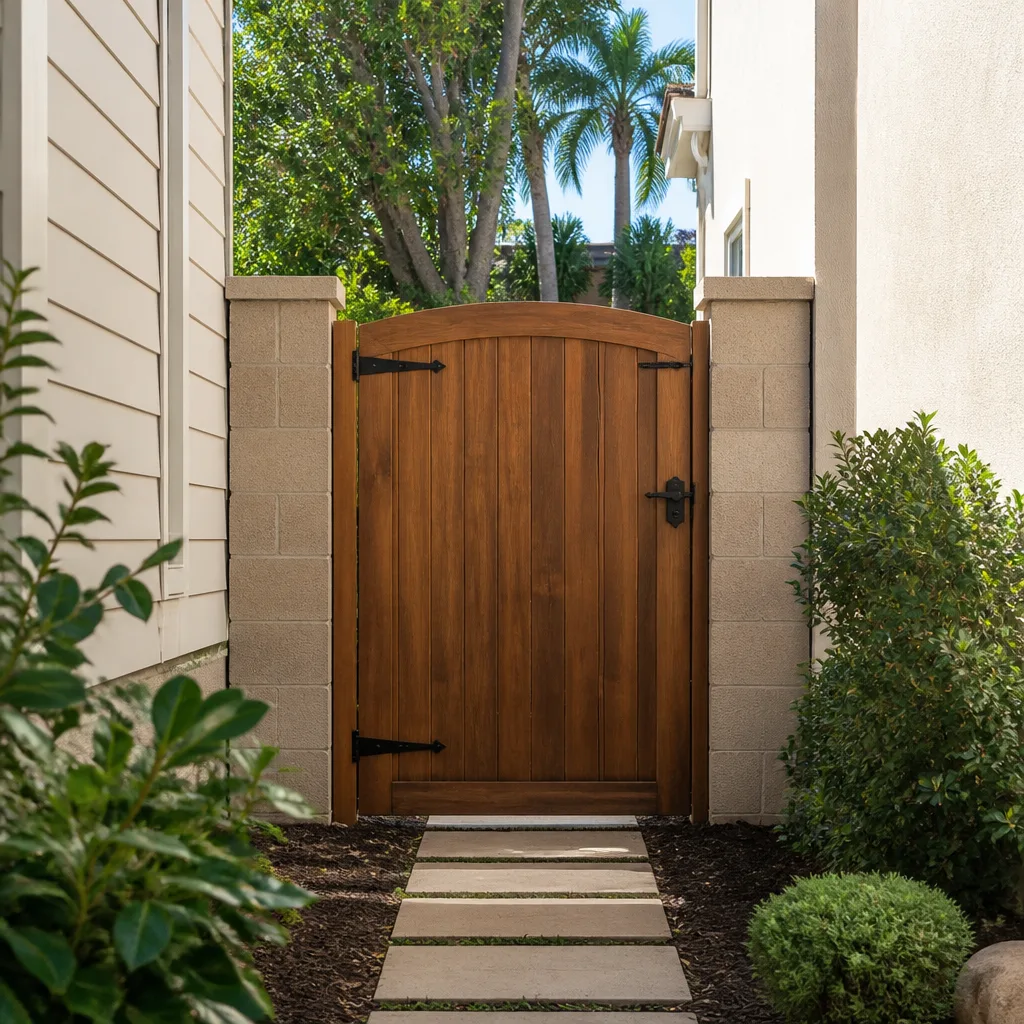
If your property’s perimeter needs attention at the same time, we also handle Fence Installation in Long Beach, which often pairs with a driveway project because both involve shared site access and drainage planning.
Common Mistakes to Avoid
- Approving a 4-inch base over expansive clay. Most online guides recommend 4 inches, and on Long Beach clay, that’s a recipe for a heave-and-crack pattern in five years. Ask specifically: how deep is the aggregate base, and what soil conditions are we working over?
- Skipping the permit because “it’s just a driveway.” Adding impervious surface can put a Long Beach lot into stormwater review, and a driveway expansion that exceeds coverage limits can trigger enforcement later. Let the permit process happen before construction, not after.
- Choosing a sealer because it looks shiny in the bucket. Film-forming sealers trap moisture in coastal air and haze over. Pick a breathable penetrating sealer rated for marine exposure, and ask how often it needs refreshing in Long Beach specifically.
- Buying pavers by price alone. A $2-per-square-foot paver from a big-box pallet often has a higher absorption rate and will show efflorescence and wear earlier on the coast. Brands like Techo-Bloc and Cambridge Pavers cost slightly more and look better for longer.
- Not planning for drainage outlet before excavation. On a level Long Beach lot, a channel drain is often the answer, but only if the outlet has somewhere to go. Plan the drainage before the demo crew arrives.
- Assuming trees near the driveway are a landscaping problem. Roots from mature ficus, eucalyptus, and other species common in Long Beach can damage pavers, base, and edge restraints over years. If a significant tree is close to the drive, have it evaluated before you build.
- Choosing a contractor who only works inland. Long Beach soil, drainage, and coastal environment create specific conditions. A contractor whose experience is in Riverside or Riverside County will apply inland solutions to a coastal problem.
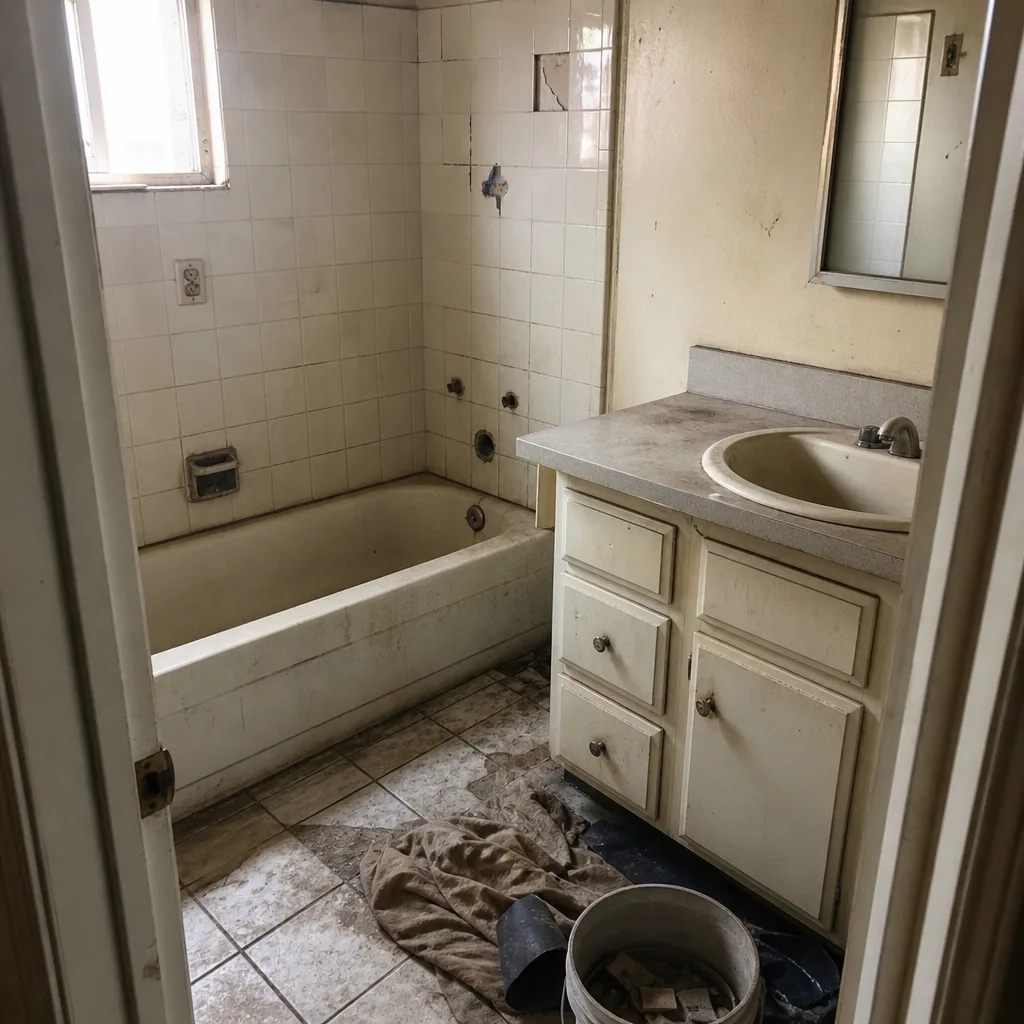
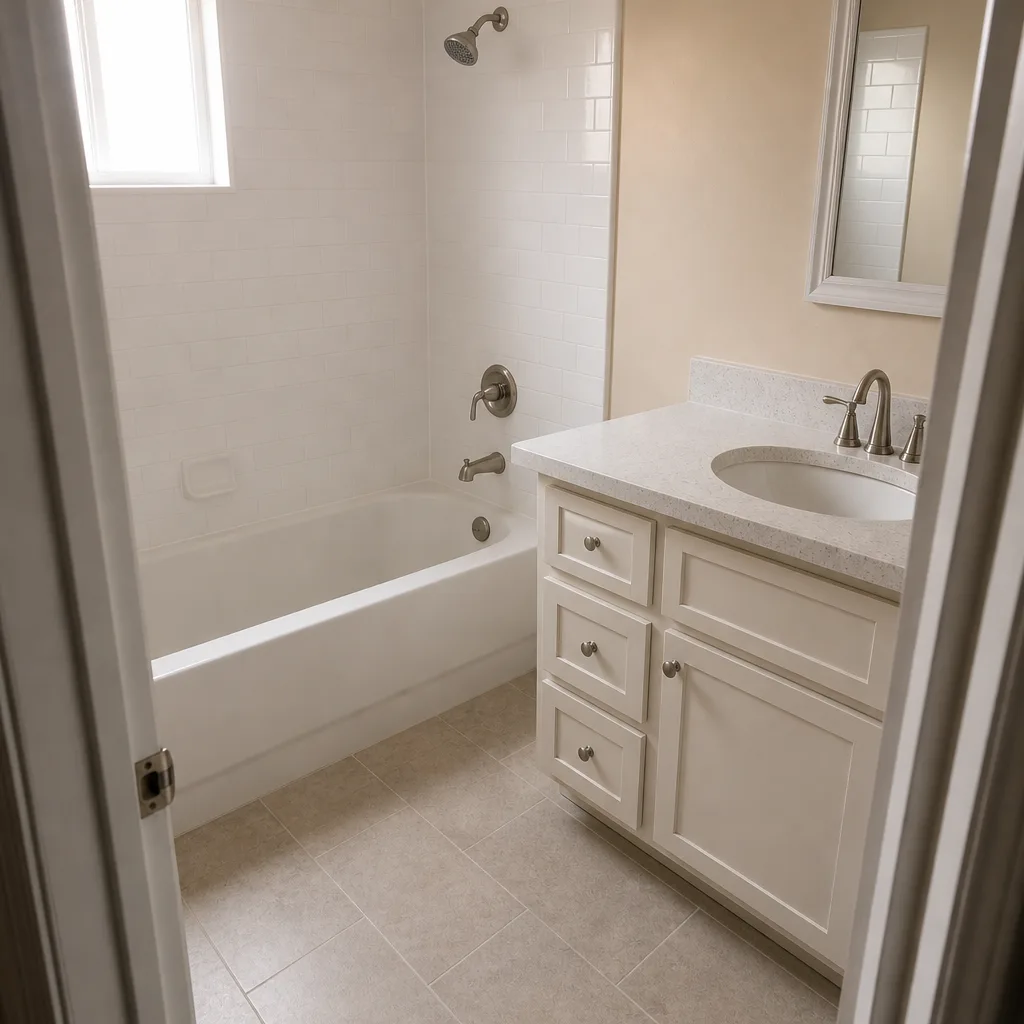
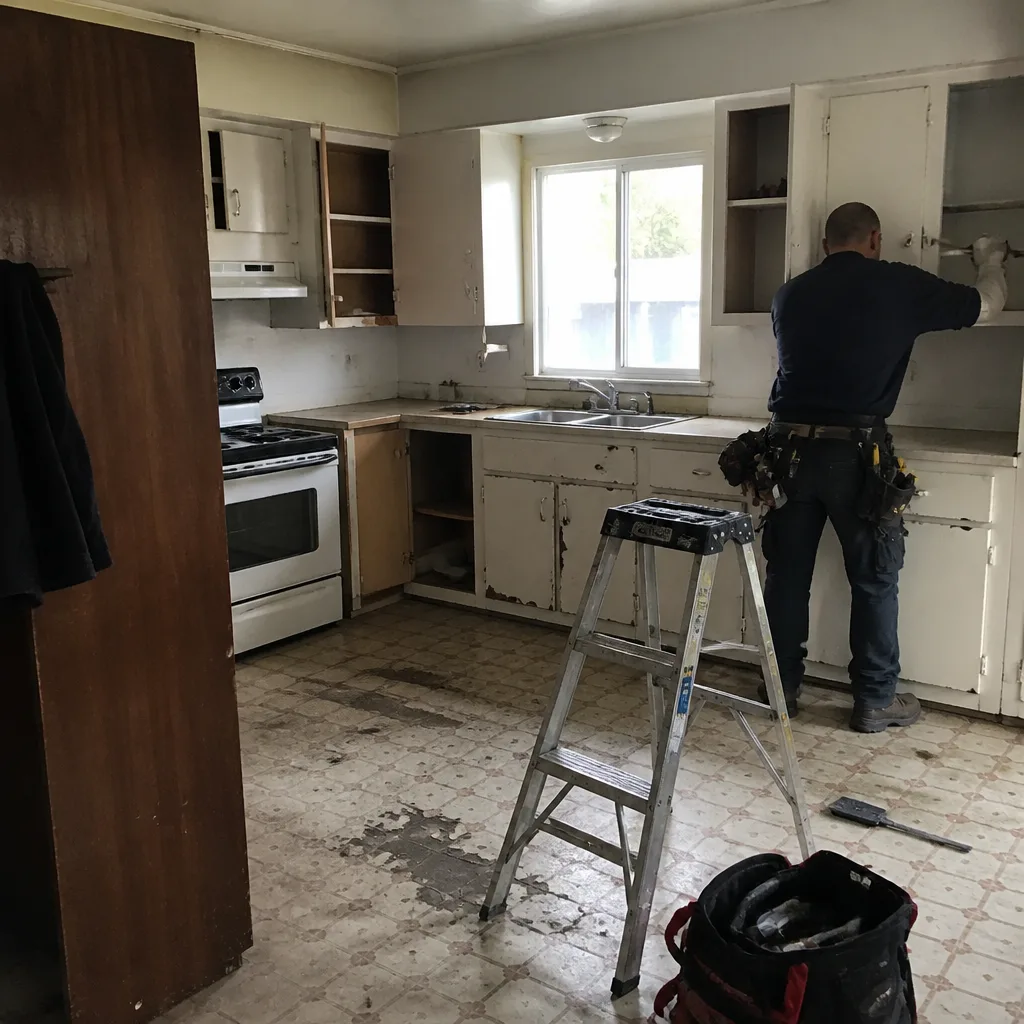
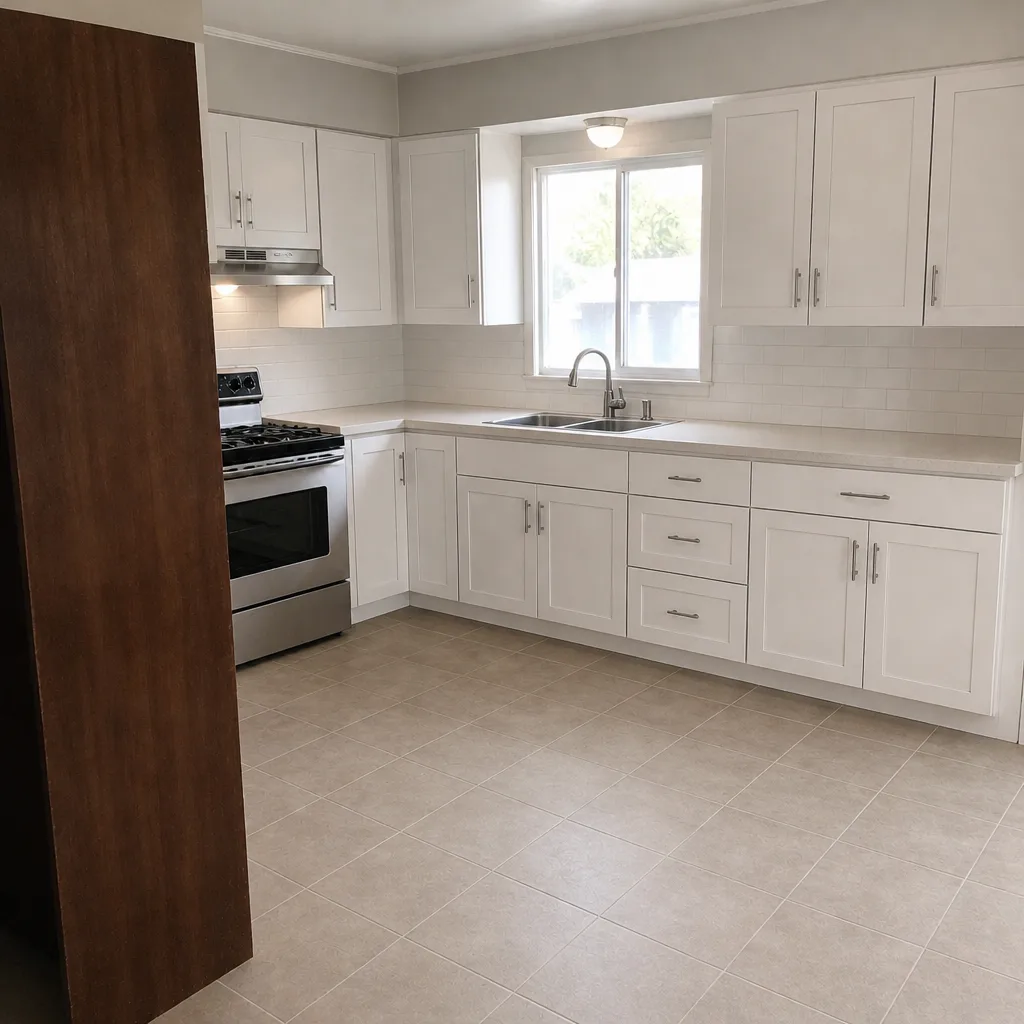
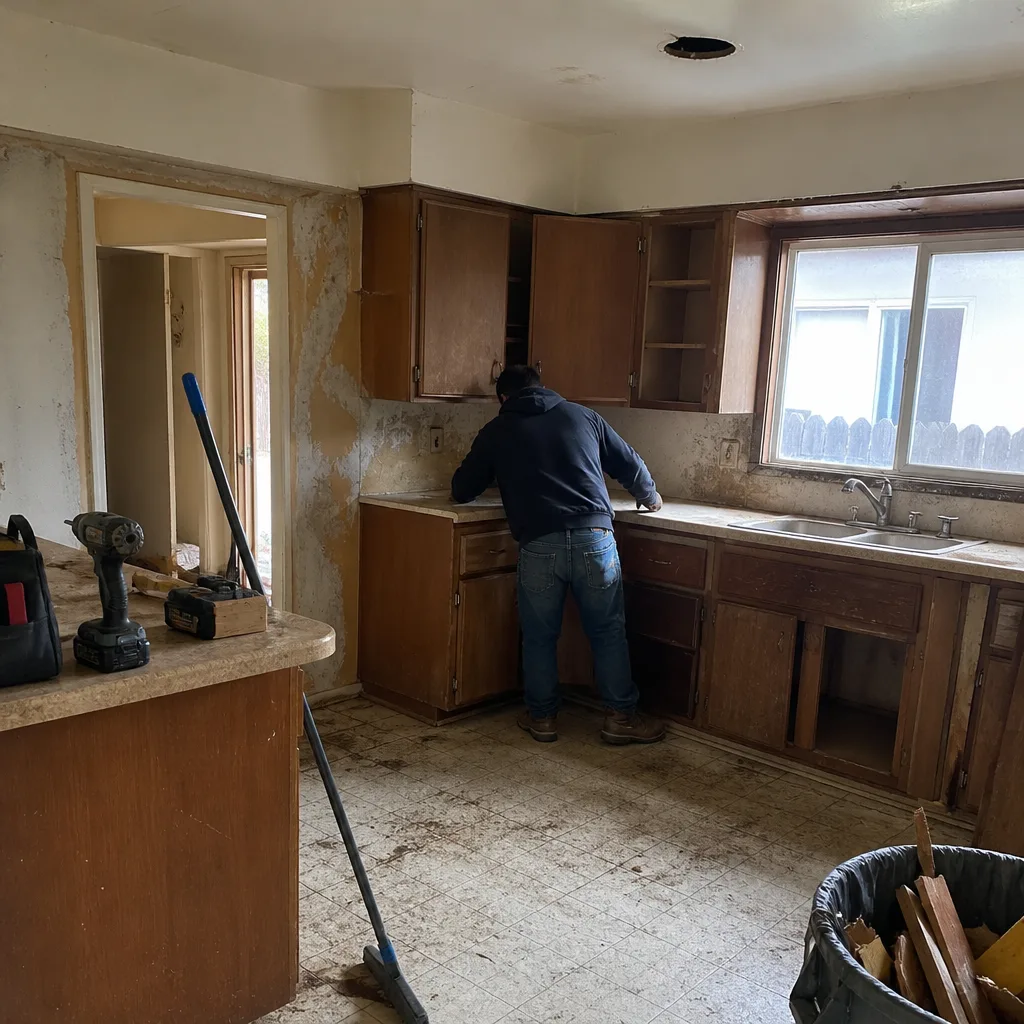
See the difference
 Before
 After
 Before
 After
 Before
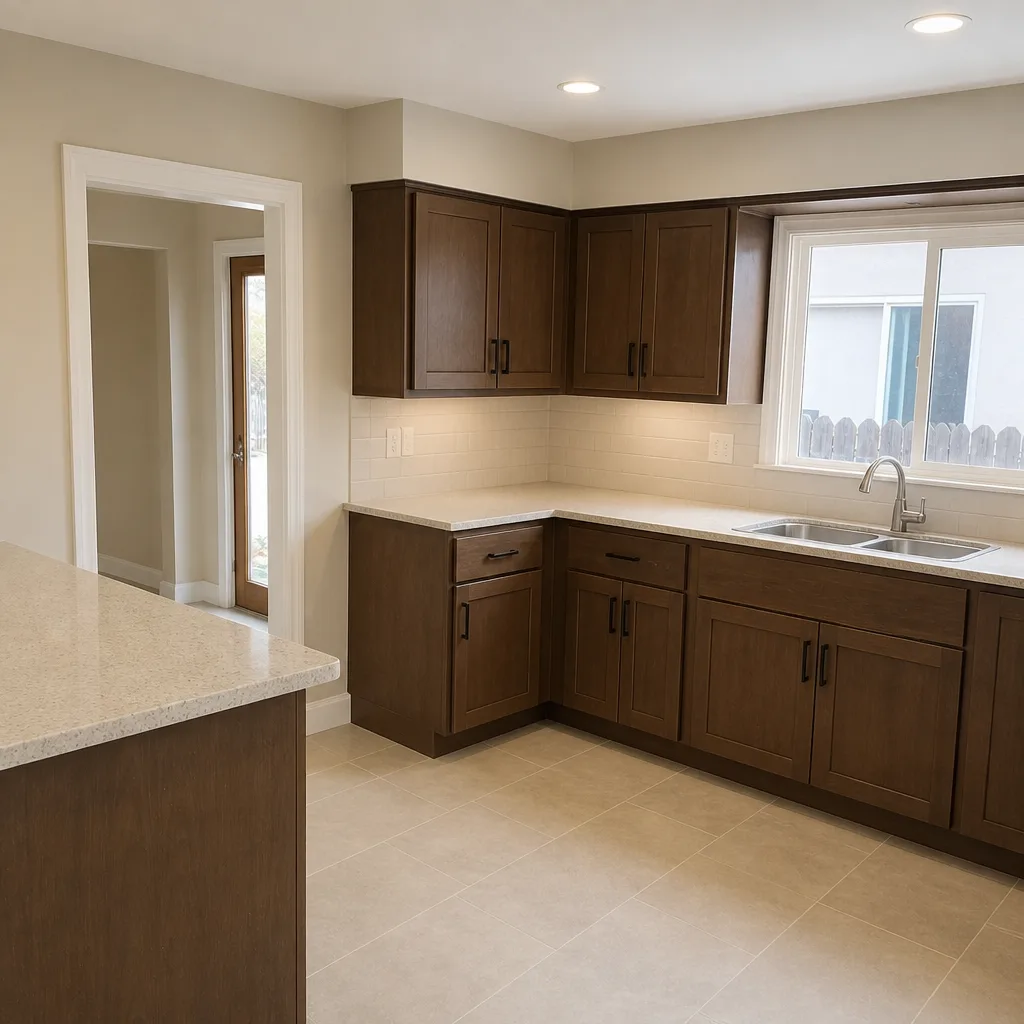 After
When to Call a Professional
Some driveway maintenance is a homeowner task. Top off joint sand, pull weeds, check the drainage outlet after a storm. Other situations need a professional before small problems become big ones.
Call a professional if you’re seeing any of these:
- Pavers shifting, gullying, or rocking underfoot, which usually means base failure or edge restraint failure below the surface.
- Standing water that doesn’t clear within a few hours after a rain.
- Significant cracks or heave in concrete, especially with winter-and-summer patterns of movement.
- White, powdery film that reappears after cleaning, an efflorescence issue that often points to moisture trapped in the base.
- A planned expansion, replacement, or new driveway that will add impervious surface area and require permit review.
- A driveway that’s 20 years or older and showing visible flaw lines, which usually means the underlying base is at end of life.
Groundwork Construction Co. of Long Beach offers free estimates in Long Beach. Call (888) 345-8164 to schedule a walkthrough and a written estimate with line-item pricing. Our phones are answered by a live person around the clock, every day, and our technicians are background-checked and arrive in uniform. Estimates are free, and our written quotes come with upfront pricing, no surprises. Every project is backed by our 730-Day Done Right Promise, one of the longest workmanship guarantees in residential construction. If it’s not done right, we make it right.
Frequently Asked Questions
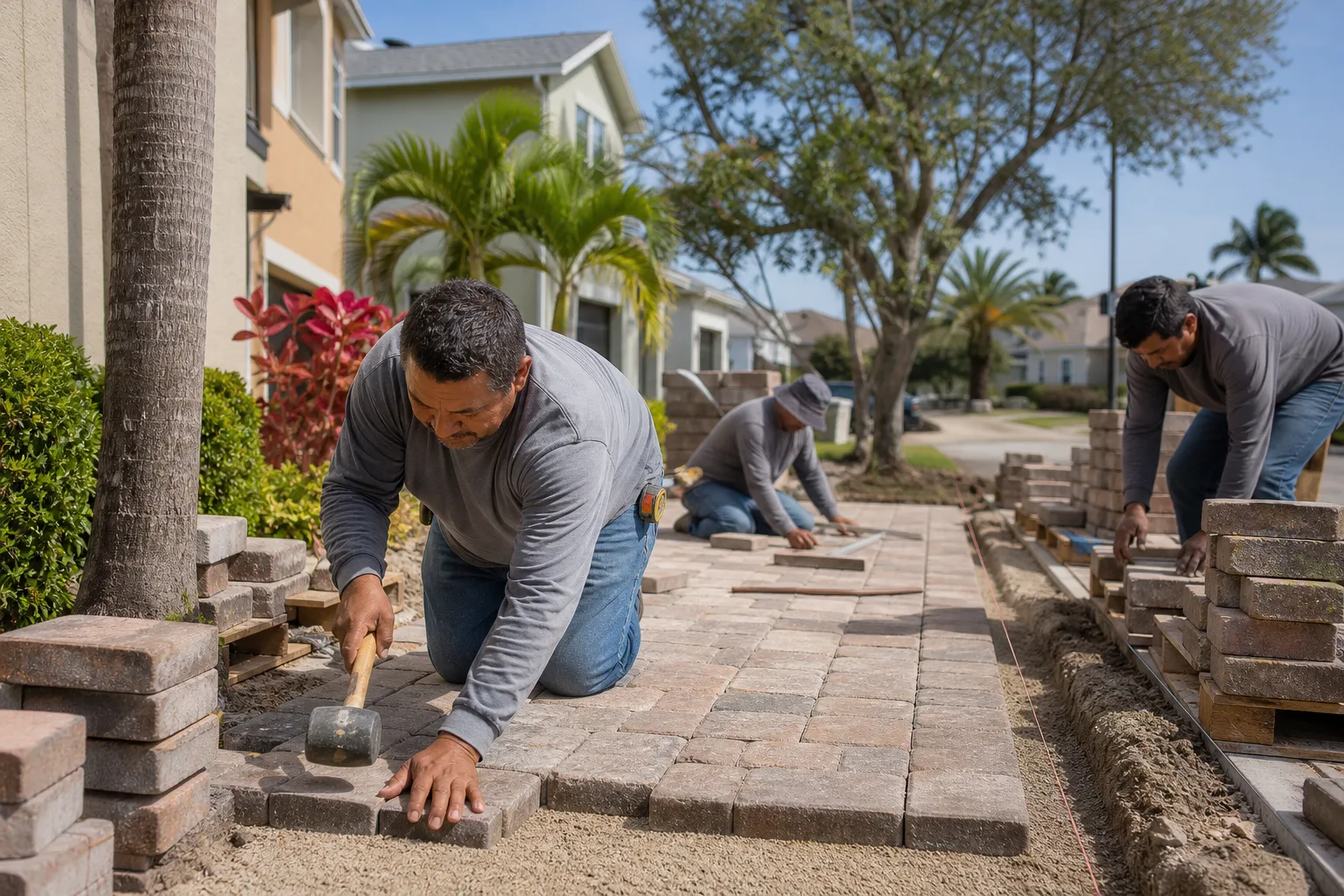
Paver driveway installation in Long Beach typically runs $12 to $22 per square foot installed, which puts most residential drives between $9,000 and $24,000 depending on size, base depth, and paver selection. Expansive clay requires a deeper base than you’d need in other cities, so a Long Beach bid often lands above an inland quote for the same square footage, and that’s the right outcome. Call (888) 345-8164 for an exact quote; estimates are free and we do them on site.
Plan on 6 to 10 inches of compacted crushed aggregate in residential Long Beach drives, placed in 2 to 3 inch lifts, because the expansive clay soil common in the city needs the deeper base to bridge seasonal moisture movement. The exact depth comes from soil conditions and loading. A contractor who quotes 4 inches for a Long Beach driveway is applying a national standard that doesn’t fit the local soil. Ask any contractor you consider to state the excavation depth and aggregate spec in writing before you sign.
Often yes, especially when the project adds impervious surface area or changes drainage. The Long Beach Municipal Code and the city’s stormwater ordinances set coverage limits and runoff requirements, and a project that exceeds the threshold needs plan review. Even on projects that don’t trigger a permit, stormwater and grading rules can apply. Let your contractor confirm permit applicability in writing as part of the bid; if they can’t or won’t, treat that as a warning. Our estimates state clearly which permits we pull and who pays for them.
With a properly compacted base and normal maintenance, a concrete paver driveway in Long Beach can last 25 to 40 years before the surface itself is ready for replacement. The variable is the base, not the pavers. We’ve seen drives fail in five years with the same paver brand that lasts decades elsewhere because the base was shallow and uncompacted. Ask specifically about base depth and compaction method in any bid. Our 730-Day Done Right Promise covers workmanship for two full years after completion, and if something we installed doesn’t perform, we come back and make it right.
Yes. The marine air and coastal humidity in Long Beach break down sealers faster than inland conditions, so plan on a fresh coat every 2 to 3 years rather than the 3 to 5 years inland drives often achieve. Choose a breathable penetrating sealer rated for coastal exposure, and avoid film-forming sealers that can trap moisture and haze over. Sealing is a maintenance cost, not a failure, and it’s a fraction of what replacement costs. Ask your contractor which sealer they recommend for your specific location and how often it needs refreshing.
We handle permit coordination and inspections on Long Beach driveway projects as part of the scope, and the written estimate shows the permit line items clearly so there’s no billing surprise later. Pulling the right permits is one of the ways you protect your investment, because unpermitted hardscape can create problems when you sell or when a neighbor complaint triggers enforcement. If a contractor tells you permits aren’t needed for your specific project, ask them to confirm that in writing. Call (888) 345-8164 to discuss your project and get a free estimate with line-item pricing.
The Bottom Line
Long Beach driveways succeed or fail on the details most guides ignore: the expansive clay under your lot, the impervious surface limits and stormwater rules that shape what you can build, the salt air that shortens sealer life, and the neighborhood-specific access and grading challenges that make every project unique. The three things to insist on in any bid are a deeper-than-standard aggregate base, clear permit handling, and a written workmanship warranty you can actually call in. If those are in place, a paver driveway can serve a Long Beach home for decades. If they’re missing, the same paver surface won’t last a fifth of that.
Groundwork Construction Co. of Long Beach builds driveways and pavers with upfront pricing, line-item estimates, and the 730-Day Done Right Promise backing every project. Call (888) 345-8164 for a free estimate and design consult. We answer the phone with a live person, 24 hours a day, and we’ll walk the site with you before putting a number on paper. Financing is available at 0% for 18 months, and projects over $10,000 qualify for $1,000 off, which makes a base-correct driveway easier to fit into a real budget. No-hassle upfront pricing, no surprises, from foundation to finish line.
Written by the team at Groundwork Construction Co. of Long Beach.