


Free written scope consultation - allowances, timeline, and change-order rules on paper before a single trade is scheduled
Styles & brands we work with
- Kitchen remodeling
- Bathroom remodeling
- Home additions & ADU
- Roofing
- Windows & doors
- Driveway & pavers
- Fence
See the difference
 Before
 After
 Before
 After
 Before
 After
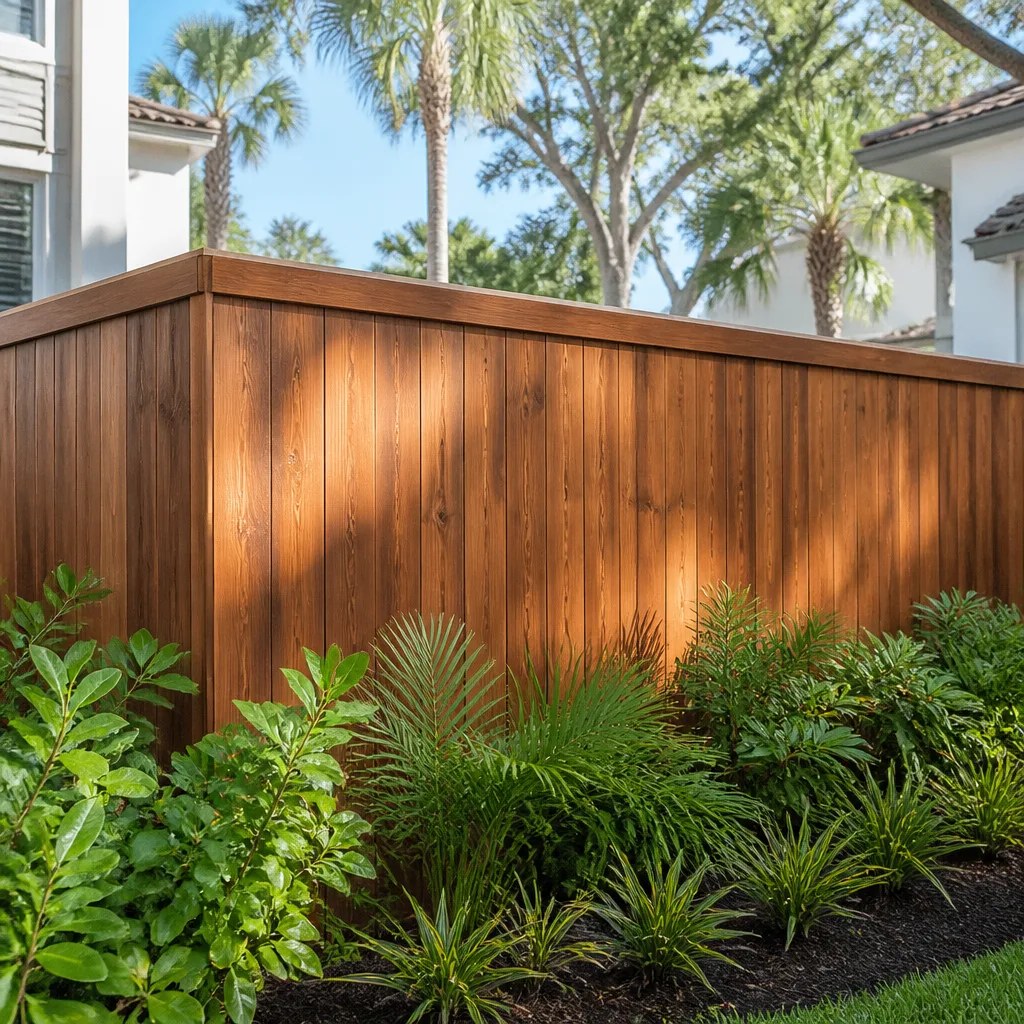
Repair or Replace Your Fence in Long Beach? Choose Replacement When Two or More Posts Fail the Grade Test
Replace the fence when more than two posts in a run fail at grade, and repair it when only an isolated panel or gate has failed but the posts still stand firm. In Long Beach, the board that fell is the last thing to fail. The post that rotted underground is the reason it fell, and that changes the whole math. Most fence decisions here come down to hidden damage below the soil line, not the cost-percentage formula you’ll find on national advice sites. If you’re weighing repair or replace fence options, call (888) 345-8164 and we’ll walk you through it.
Why Long Beach Fences Fail From the Ground Up
Salt air off the Port of Long Beach and the near-constant marine layer do something to exterior wood that inland cities like Lakewood or Compton simply don’t experience. They accelerate corrosion on fasteners and rot at the soil line. A cedar or redwood board can look weathered but sound above grade while the post behind it has turned soft at the base, swelling with moisture and drawing termites. The Santa Ana wind events then load a fence that’s already compromised underground, and one board pops loose. That’s the moment homeowners call us.
What we find when we get out there is rarely just a broken panel. On the older bungalows and stucco fourplexes around Rose Park and Belmont Heights, we regularly see spring-board failures on fences built decades ago, where the post system was never specked for coastal corrosion. The visible damage tells you almost nothing about the footing condition. That’s the first thing we check, and it’s the first thing a piecemeal repair hides.
A Long Beach Fence Diagnostic: What to Check Before You Decide
Before anyone quotes you a repair, someone should walk the entire run and test the posts, not just eyeball the broken panel. Here’s the framework we use on every assessment:
- Probe every post at grade. Push a screwdriver or awl into the wood just above the soil line. If it sinks in easily or feels spongy, that post is compromised. Check all of them, not just the one near the damage.
- Look for termite galleries. Subterranean termites in older wood-frame construction hollow out posts from the inside. Tap the post with a hammer handle – a hollow sound is a red flag. Long Beach’s moisture and older housing stock make this a routine finding.
- Inspect the footing-to-post connection. Metal brackets and post bases corrode faster here than inland. Rusted-through hardware means the post isn’t actually anchored, no matter how solid the wood looks.
- Test for lateral movement. Grab the post and push side to side. Any wobble means the footing or the post itself has lost structural integrity. More than two posts wobbling in a single run and you’re looking at a failed foundation, not a repair project.
The rule is simple: if more than two posts in a run fail the grade test, lateral test, or hardware inspection, replacement is cheaper and more durable than sequential repairs. You’ll spend more chasing one failed post after another than you would replacing the run once, and you’ll do it on borrowed time. Our technicians have up to 12 years of experience reading exactly this kind of damage, and we lay it out in a written assessment before any work begins.
The Hidden-Cost Trap of Piecemeal Repair on Older Long Beach Fences
A fence built in the 1960s or 1970s in Long Beach used fastener and post specs that didn’t account for coastal corrosion acceleration. The nails, brackets, and post bases of that era weren’t designed for salt air and constant moisture. So when you repair a panel and leave the original post system in place, you’re rebuilding on a failed foundation. The new board is sound. Everything holding it up is not. That’s the trap: the repair looks right for a season or two, then the next post goes.
Here’s the honest comparison for a typical 100-foot run in Long Beach:
| What you’re comparing | Target repair | Full replacement |
|---|---|---|
| Typical Long Beach cost | Several hundred per panel, stacking up | $3,500-$9,000 for vinyl, $4,000-$10,000 for aluminum |
| What gets fixed | Visible boards only | Posts, footings, hardware, and panels |
| Post system | Original, likely compromised | New, coastally specked |
| Workmanship coverage | None from the original build | 730-Day Done Right Promise |
| Life expectancy | Until the next post fails | Decades with proper materials |
That $3,500-$9,000 replacement range is for vinyl; aluminum runs $4,000-$10,000. Either way, the number is fixed upfront, and it’s backed by our 730-Day Done Right Promise – if it’s not done right, we make it right. A piecemeal repair has no such backstop, which is exactly why replacing is often the cheaper decision over a five-year horizon.
Does a Big Repair Trigger a Permit in Long Beach?
Yes, and this is the part most homeowners don’t see coming. In Long Beach, replacing more than 50% of a fence structure may trigger a building permit requirement. Once you’re in permit territory, the surviving portion of the fence is expected to meet current code – which means a “repair” that crosses that 50% line can inadvertently mandate a full-code upgrade anyway. You end up paying permit and compliance costs on top of the repair, and the portion you tried to save still has to be brought up to standard.
Add the Coastal Zone and historic-district review that governs a lot of Long Beach property – a permitting stack you don’t hit in Lakewood or Compton – and the calculation shifts harder toward doing the job once, correctly, on the full run. We’ll tell you straight whether your project crosses the permit line before you commit to either path.
The Multi-Family Angle: Fourplexes and Stucco Apartments
On Long Beach’s fourplexes and older stucco apartment buildings, a shared fence in disrepair can turn into a city code-enforcement matter faster than it would on a single-family lot. The blight ordinance applies, and a Notice of Violation plus a correction order adds cost and a deadline that changes the repair-versus-replace math significantly. A shared fence on a multi-family property isn’t just deferred maintenance – it’s a compliance date waiting to happen. When that letter arrives, replacement on a written timeline is the answer, not a patchwork of repairs that may not satisfy the inspector.
Repair or Replace: The Recommendation
Choose replacement if two or more posts in your run fail the grade, lateral, or hardware test – and choose it if your property is multi-family and a code notice has landed. Choose a targeted repair only if the posts are sound, the hardware is intact, and the damage is genuinely isolated to a board or a gate. That’s the honest decision framework, and it’s the same one we bring to every assessment.
If you want the full scope of what a new build involves, see our Fence Installation service and the dedicated Fence Installation in Long Beach page. For the broader context of how we handle full-scope home construction, start at our home page. We pair cost-first transparency with 0% financing for 18 months and $1,000 off projects over $10,000, so the decision isn’t blocked by budget timing. Pricing is laid out in writing upfront, no surprises.
FAQs
Fence replacement in Long Beach typically runs $3,500-$9,000 for vinyl and $4,000-$10,000 for aluminum, depending on run length, height, and site access. Call (888) 345-8164 for an exact quote – estimates are free, and you’ll get a written assessment before any work begins.
A single isolated panel repair is cheaper in the short term, but once two or more posts fail at grade, replacement wins on total cost. Sequential repairs on a compromised post system cost more over a few years than one replacement backed by a 730-Day Done Right Promise. Call us for a no-pressure comparison at (888) 345-8164.
Simple gate and panel repairs can often be handled in a single visit, but full replacement needs an assessment first to check post condition and permit requirements. Our technicians arrive background-checked and in uniform, and we answer the phone live 24/7. Call (888) 345-8164 to schedule a free estimate.
You may need one if you’re replacing more than 50% of the fence structure, and coastal or historic overlay zones can add review steps. We check the permit trigger on your specific lot before quoting, so there are no surprises. Call (888) 345-8164 and we’ll tell you where your property stands.
Get a Straight Answer on Your Fence
If you’d rather have it looked at than guessed at, Groundwork Construction Co. of Long Beach offers a no-pressure assessment in Long Beach. We check the posts, lay out repair versus replace in writing, and stand behind any replacement with the 730-Day Done Right Promise. Calls are answered by a live person 24/7. Call (888) 345-8164 for a free estimate.
Written by the team at Groundwork Construction Co. of Long Beach, serving Long Beach, CA.


