
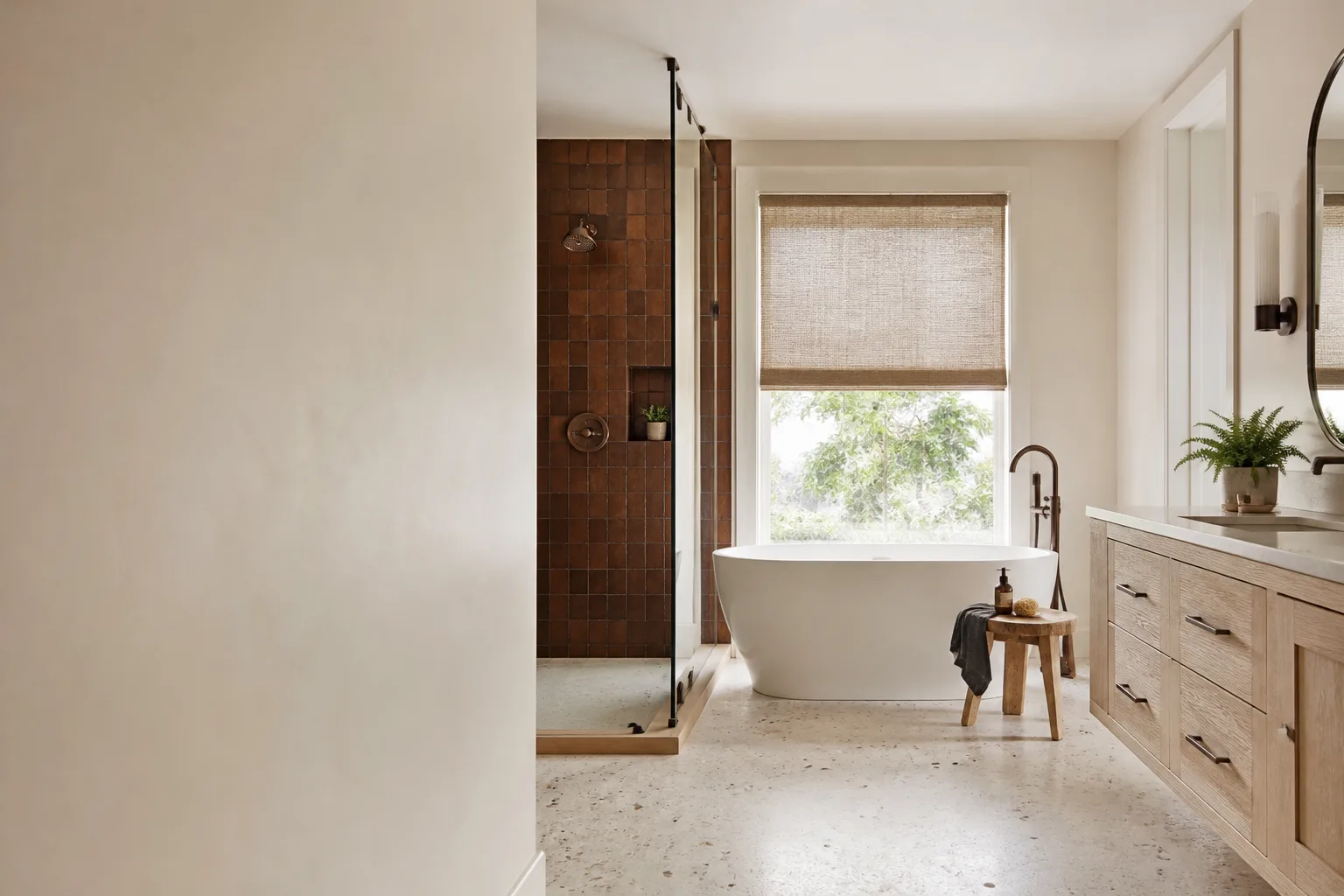
Last updated November 17, 2026





Free written scope consultation - allowances, timeline, and change-order rules on paper before a single trade is scheduled
How Long Does Bathroom Remodeling Take? Timelines and What to Expect
Ask five contractors how long a bathroom remodel takes and you’ll get five confident answers that range from three weeks to three months. The number on paper is usually 3 – 5 weeks. The number that actually happens, in our experience across Long Beach, is closer to 6 – 10 weeks. That gap isn’t bad luck, and it isn’t the universe conspiring against your renovation. It’s a planning and accountability problem, and it’s the single biggest reason homeowners feel blindsided halfway through a job. Below we break down realistic timelines by scope, name the five delays that actually slow projects down, and show you which ones your contractor controls and which ones you do. If you’re planning a bathroom in Long Beach, this is the schedule conversation you should have before anyone swings a hammer.
Quick Answer
A bathroom remodel typically takes 3 – 5 weeks for a cosmetic refresh, 5 – 8 weeks for a partial gut, and 8 – 14 weeks for a full gut-and-reconfigure that moves plumbing or walls. In Long Beach, add 1 – 3 weeks for permit review and material lead times, which is why most full remodels land at 6 – 10 weeks from demo to final walkthrough.
Styles & brands we work with
- Kitchen remodeling
- Bathroom remodeling
- Home additions & ADU
- Roofing
- Windows & doors
- Driveway & pavers
- Fence
Table of Contents
- Realistic Timelines by Scope: A Line-Item Breakdown
- What a Legitimate Project Schedule Actually Looks Like
- The Five Most Common Delay Causes (and Whose Fault They Are)
- How Long Beach Permit Timelines Affect Your Schedule
- Why Material Lead Times Must Be Confirmed Before Demo Day
- Questions to Ask If Your Contractor Won’t Produce a Schedule
- Common Mistakes to Avoid
- When to Call a Professional
- Frequently Asked Questions
Realistic Timelines by Scope: A Line-Item Breakdown
The single biggest variable in a bathroom timeline is scope, and scope is where vague bids do the most damage. “Bathroom remodel” can mean swapping a vanity and repainting, or it can mean moving a toilet drain and rebuilding a shower pan from the studs. Those are not the same project, and they don’t take the same time. Here’s how we break it down for homeowners in Long Beach, with realistic day counts that reflect actual job sites, not best-case brochures.
- Cosmetic refresh (no plumbing, no tile demolition): 7 – 12 working days. New vanity, fixtures, mirror, paint, and possibly a prefab surround. This is a vanity swap plus finishes, and it moves fast because there’s no wet work.
- Partial gut (tile and fixtures out, plumbing stays put): 25 – 40 working days. Demolition, new tile floor and shower walls, new fixtures, vanity, toilet re-set, waterproofing, and cure time. This is the most common scope we see in Long Beach bungalows.
- Full gut and reconfigure (walls or plumbing move): 45 – 70 working days. Everything above, plus framing changes, relocated drain lines, electrical re-routing, and inspection cycles that gate the next phase.
- Full gut with structural or layout change (load-bearing, added square footage, tub-to-shower conversion with relocated drain): 60 – 90 working days. Add engineering, plan review, and longer inspection windows.
Notice that the gap between a cosmetic refresh and a full gut isn’t proportional to the visible difference. A homeowner who says “we’re just doing a little bathroom remodel” but who also wants a new shower niche, a linear drain, and a relocated toilet is actually commissioning a full gut. That mismatch between the words and the work is where the schedule breaks. When we quote a Groundwork Construction Co. of Long Beach home project, the scope gets defined in writing before the timeline is set, so the number you see is the number you schedule against.
One Long Beach-specific wrinkle: our older housing stock near Bluff Park and Belmont Heights often has original cast iron drain lines and galvanized supply lines hidden behind tile. On a partial gut, discovery of compromised plumbing can push a 25-day job into the 40-day range once the replacement is quoted and approved. Build a 10 – 15% time buffer into your own expectations for any home built before 1970.
What a Legitimate Project Schedule Actually Looks Like
A real schedule is not a promise of a start date and a finish date. It’s a sequenced document that shows what happens in what order, who’s responsible for each phase, and where inspections and material deliveries fall. If a contractor hands you a single date and a handshake, you have a wish, not a schedule. Here’s what a defensible schedule shows, in order:
- Pre-construction and permitting window. Plan submission, review time, and any corrections cycle. This is the phase most homeowners underestimate, and it’s usually 1 – 3 weeks in Long Beach for a straightforward bathroom.
- Material confirmation and long-lead items. A named delivery date for tile, vanity, fixtures, and any specialty items. Nothing should arrive after demo starts unless the schedule accounts for it.
- Demolition and rough-in. Usually 2 – 4 days, followed immediately by framing and plumbing/electrical rough-in.
- Rough inspection. A hard gate. Tile cannot start until inspection passes. This is non-negotiable in Long Beach and skipping it is a code violation.
- Waterproofing and cure time. This is the phase that surprises people. Waterproofing membrane and any mortar bed need cure time before tile, and rushing it is how showers fail six months later. Products like Schluter systems are excellent, but they still require cure windows per the manufacturer’s spec, and a legitimate schedule shows them.
- Tile, finishes, and fixtures. The visible stretch, and often 2 – 3 weeks on its own.
- Final inspection and punch list. The walkthrough and the closeout. A schedule that ends at “finish tile” isn’t a schedule.
When we produce a schedule for a Long Beach client, it names each of these phases with a working-day count. It also names the dependencies, so you can see that the vanity can’t be installed until the floor is in, and the floor can’t go in until the rough inspection passes. A schedule that shows dependencies is a schedule you can hold someone to.
The Five Most Common Delay Causes (and Whose Fault They Are)
Delays aren’t random. In our experience, almost every late bathroom remodel traces to one of five causes, and each cause has an owner. Knowing who owns which delay is how you protect your own time.
- Permit review and inspection windows (contractor’s responsibility to manage). The city’s review time is outside anyone’s control, but submitting the package correctly the first time is entirely within the contractor’s control. A bounced permit because of an incomplete drawing is a contractor delay.
- Material lead times (contractor’s responsibility to confirm before demo). A vanity with a six-week lead time is fine if you know it on day one. It’s a disaster if you learn it on day ten. Confirming lead times before demo is the contractor’s job.
- Change orders from discovery (shared, but priced upfront). Hidden rot, a cracked drain line, or a surprise code issue. Nobody can see behind tile, but a contractor who prices a contingency and communicates it clearly turns this from a crisis into a decision.
- Homeowner selection delays (homeowner’s responsibility). Tile, vanity, and fixture selections that land after demo starts. This is the single most common homeowner-caused delay, and it’s entirely preventable by finalizing selections before the start date.
- Crew scheduling and handoff gaps (contractor’s responsibility). The job that goes quiet for four days between plumbing rough-in and tile. This is a project management failure, full stop. A schedule with named trades and days on it prevents it.
What’s striking is that four of these five delays are within the contractor’s ability to prevent or to mitigate. That’s the accountability angle, and it’s why vague timelines protect contractors rather than homeowners. When a contractor won’t specify which phase is which and what day each starts, the schedule can absorb almost any delay without anyone being answerable for it.
How Long Beach Permit Timelines Affect Your Schedule
Long Beach permits for bathroom remodels run through the city’s Building and Safety division, and the review window is a real, sequenced part of your schedule, not a formality. For a straightforward bathroom with plumbing and electrical rough-in, plan on roughly 1 – 3 weeks for plan review, and if corrections are required, the resubmittal adds days on top of that. Inspections are a separate scheduling step and there are typically two on a bathroom: rough-in and final, sometimes a third for waterproofing in some jurisdictions.
The practical upshot: permitting should start weeks before demo, not days. A homeowner who waits until the contractor is “ready to start” to file for a permit loses two to three weeks of buffer. Ask your contractor when the permit is being pulled, and ask for the permit number once it’s issued. In Long Beach, a bathroom remodel that moves plumbing or electrical requires a permit, and working without one is a code violation that can cause problems at resale and with insurance. We pull the permits on every job we schedule, and we show the permit number to the client.
If you’re remodeling in a historic district or a pre-war home near the shore, add a planning review step and a bit more buffer. The near-coastal climate in Long Beach also means moisture management gets scrutiny: proper ventilation, moisture-resistant substrate behind tile, and a correctly specified waterproofing system are part of the plumbing and mechanical scope and get reviewed. A contractor who treats the permit as a checklist item will be faster on paper and slower in reality.
Why Material Lead Times Must Be Confirmed Before Demo Day
Material lead times are the least glamorous part of the schedule and the most common cause of a stalled bath. A beautiful tile from a Long Beach showroom can still be on a six-week backorder, and if nobody checks until demo day, you’re staring at exposed studs for a month. The rule is simple: every long-lead item gets a named delivery date before demolition begins.
What counts as long-lead in a bathroom? Tile, especially specialty or imported material. The vanity and its countertop (a Cambria counter has its own fabrication schedule). Fixtures with any customization. Glass shower enclosures, which are almost always made to order. And any specialty valves or trim from a brand like Grohe. On the jobs we run in Long Beach, we confirm all of these before we post a start date, and the schedule reflects the actual lead time.
Waterproofing systems deserve their own note. A system like Schluter’s is a sound choice, but it comes with a specific installation sequence and cure window. A schedule that doesn’t show a cure day is a schedule that will either rush the waterproofing (bad) or discover the delay later (worse). “Built to last, backed in writing” only works if the schedule respects the cure time that makes it last. Our 730-Day Done Right Promise is only as good as the sequencing behind it, and cure windows are part of that sequence.
Questions to Ask If Your Contractor Won’t Produce a Schedule
If a contractor can’t or won’t show you a written, sequenced schedule, that’s information. It tells you the schedule is being managed informally, which means delays will land on you without warning. Here are the questions to ask, in the order that matters most:
- “When does the permit get pulled, and can I see the number when it’s issued?” A contractor who pulls permits on time will answer this without hesitation.
- “What are the long-lead items, and what’s the confirmed delivery date for each?” If the answer is “we’ll order it when we start,” you have a delay in waiting.
- “Which phases have inspection gates, and what’s the working-day count for each?” The rough inspection is a hard gate. A real schedule shows it.
- “What’s your change-order process, and how is pricing handled if we discover something behind the wall?” Upfront pricing and a written change order process are non-negotiable.
- “Who is my single point of contact, and how quickly do they respond?” A schedule is only as good as the person accountable for it. A live person, 24/7, changes the math on a stalled job.
- “What’s your contingency for hidden conditions, and how will I be told?” The answer should be specific and in writing.
If a contractor can’t answer these, the honest move is to get a second opinion before you sign. We offer free estimates and design consults in Long Beach precisely so homeowners can compare a real schedule against a wish.
Common Mistakes to Avoid
- Finalizing selections after demo starts. The fastest path to a stalled bathroom in Long Beach is a tile or vanity decision made on week two. Lock every finish and fixture before the start date.
- Accepting a start date with no intermediate milestones. A start date and a finish date with nothing in between is a wish. Ask for the phase-by-phase schedule in writing.
- Choosing the lowest bid without comparing scope. A bid that excludes permit fees, waterproofing, or inspection costs isn’t cheaper, it’s incomplete. Compare line items, not totals.
- Not accounting for coastal moisture and ventilation. Bathrooms near the water in Long Beach need proper exhaust and moisture-resistant substrate. Skipping it is a mistake you find out about a year later.
- Skipping the permit to save time. An unpermitted bathroom remodel in Long Beach can complicate resale, insurance, and future permits. The permit is the schedule’s backbone, not a shortcut target.
- Assuming material lead times are short. Glass enclosures and made-to-order vanities can run weeks. Confirm before demo, not after.
- Hiring a contractor who won’t put the timeline and warranty in writing. If the commitment isn’t on paper, it doesn’t exist. A written schedule and a written workmanship guarantee are the real trust signals.
When to Call a Professional
Some bathroom work is genuinely a homeowner project. Swapping a faucet, re-caulking a tub surround, replacing a vanity top, or painting are within reach for a handy homeowner. But anything that touches plumbing, electrical, or waterproofing behind tile belongs to a licensed professional, and the stakes are higher than they look. A shower pan that was waterproofed incorrectly fails silently and rots the framing behind it. A relocated drain line that wasn’t permitted and inspected can cause problems at resale. Moving a wall or altering the structure is beyond DIY in every case, and proper ventilation for a Long Beach bathroom is a building code matter. If your remodel includes any of those, get a professional on the phone before you pick up a pry bar.
If you’re weighing a bathroom remodel against a larger project, our team handles the full scope, from a Home Additions & ADU in Long Beach build down to the finish plumbing. Groundwork Construction Co. of Long Beach offers free estimates in Long Beach. Call (888) 345-8164 to schedule yours, and we’ll bring a real schedule, not a wish.
Frequently Asked Questions
A bathroom remodel in Long Beach takes about 3 – 5 weeks for a cosmetic refresh, 5 – 8 weeks for a partial gut, and 8 – 14 weeks for a full gut-and-reconfigure. Add 1 – 3 weeks for permit review and material lead times, so most full remodels land at 6 – 10 weeks from demo to final walkthrough. Call (888) 345-8164 for an exact timeline on your specific bathroom, and estimates are free.
Most delays come from four preventable causes: permit packages submitted late, material lead times confirmed after demo, homeowner finish decisions made mid-project, and crew handoff gaps between trades. Each of those is either the contractor’s to manage or the homeowner’s to decide early. A written, phase-by-phase schedule exposes them before they cost you weeks.
Yes, if your bathroom remodel moves or adds plumbing or electrical, you need a permit in Long Beach. Cosmetic work like paint and a vanity swap may not, but tile showers, relocated drains, and new circuits require plan review and inspections. Ask your contractor for the permit number, and confirm it’s issued before demo starts.
Bathroom remodel costs in Long Beach vary widely by scope, from a modest cosmetic refresh to a full gut with relocated plumbing. Rather than guess, we give you a written line-item quote with no change-order surprises during construction. Upfront pricing means the number you see is the number you pay, and our standing offers include 0% financing for 18 months plus $1,000 off projects over $10,000. Call (888) 345-8164 to schedule a free estimate.
Our pricing is upfront, and the number you see is the number you pay. The one exception is genuinely hidden conditions behind tile or drywall, which nobody can see until demo. When that happens, you get a written change order describing the issue and the price, and nothing moves forward without your approval. For an exact quote on your Long Beach bathroom, call (888) 345-8164.
The biggest cause is a material that wasn’t confirmed before demo. A tile or a made-to-order glass enclosure on a long lead time can leave a bathroom stripped to the studs for weeks. Confirming every long-lead item before the start date, with a named delivery date in the schedule, eliminates most stalls. Call (888) 345-8164 to talk through lead times on your materials before you commit to a start date.
The Bottom Line
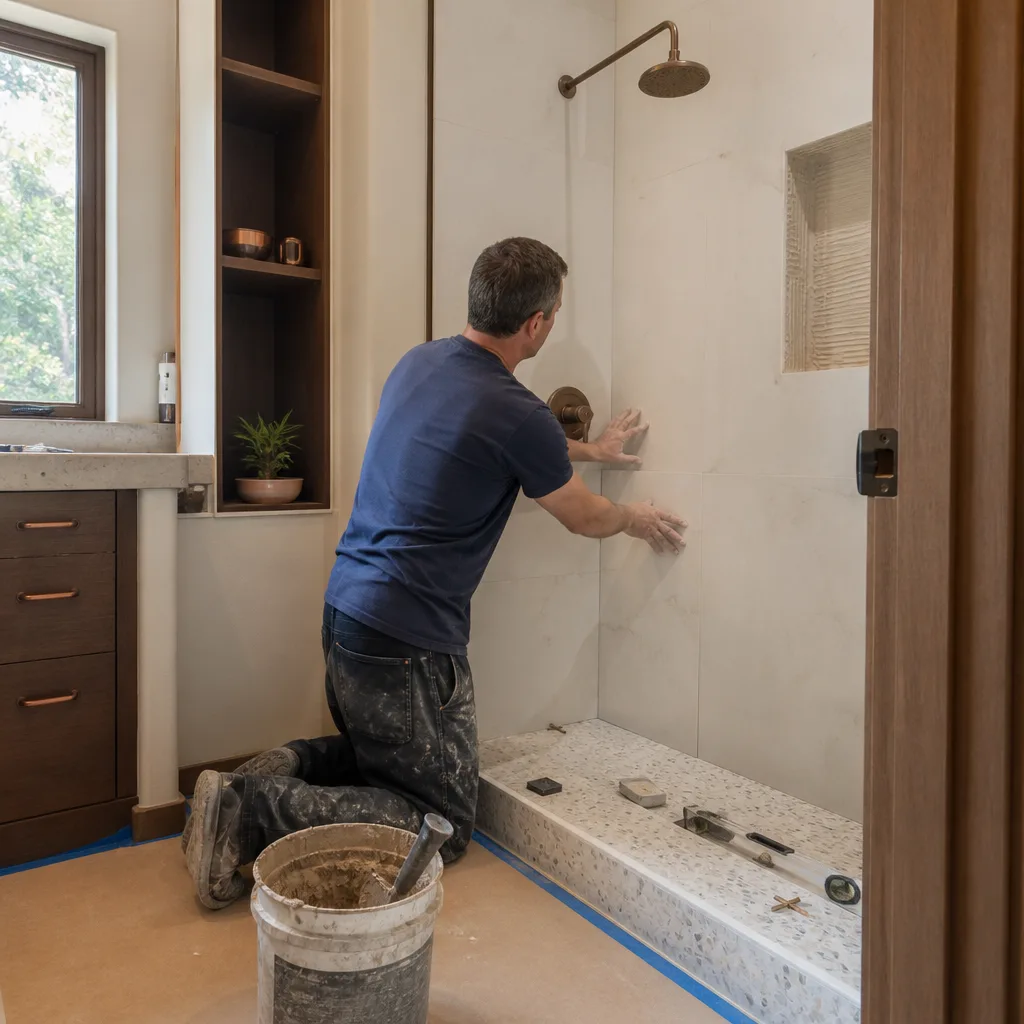
The gap between the 3 – 5 week quote and the 6 – 10 week reality isn’t bad luck. It’s the difference between a wish and a schedule. Realistic timelines depend on scope, permit timing, and material lead times, and four of the five common delays sit in the contractor’s control. Protect your project by demanding a written, phase-by-phase schedule, finalizing your finishes before demo, and confirming lead times before anyone swings a hammer. When a contractor can produce a real schedule and back the work in writing, you’ve found someone worth trusting with your bathroom.
When you’re ready to talk timelines with a contractor who treats the schedule as a commitment, our team is here. Our technicians have up to 12 years of experience, every job is backed by our 730-Day Done Right Promise, and every technician arrives background-checked and in uniform. We handle the full scope, from a bathroom out to a Driveway & Pavers in Long Beach install or a new Fence Installation in Long Beach, so you can keep one accountable partner from foundation to finish line. Calls are answered by a live person, 24/7, so you’re never waiting on a voicemail to answer a question about your project. Groundwork Construction Co. of Long Beach offers free estimates and a free design consult. Call (888) 345-8164 to schedule your free estimate.
Written by the team at Groundwork Construction Co. of Long Beach.
See the difference
 Before
 After
 Before
 After
 Before
 After


