Free written scope consultation - allowances, timeline, and change-order rules on paper before a single trade is scheduled
Styles & brands we work with
- Kitchen remodeling
- Bathroom remodeling
- Home additions & ADU
- Roofing
- Windows & doors
- Driveway & pavers
- Fence
See the difference
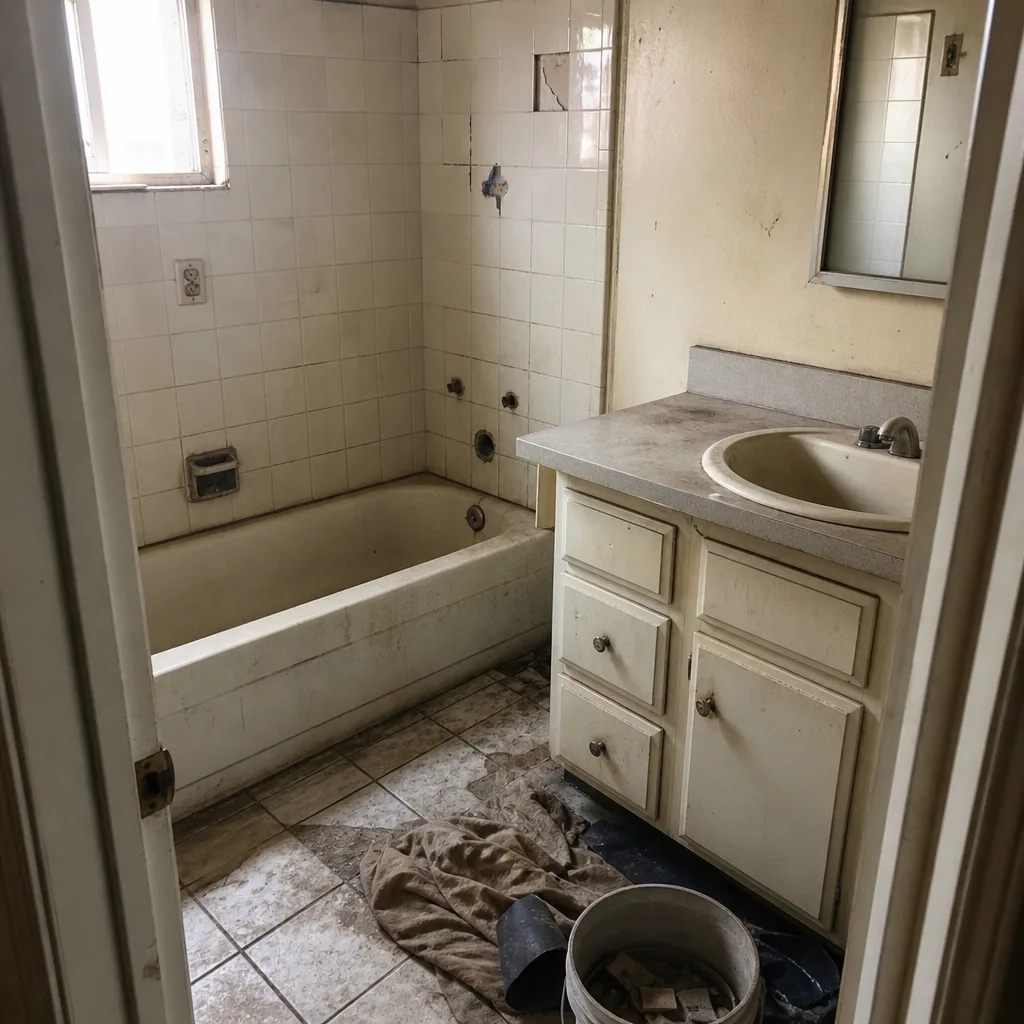 Before
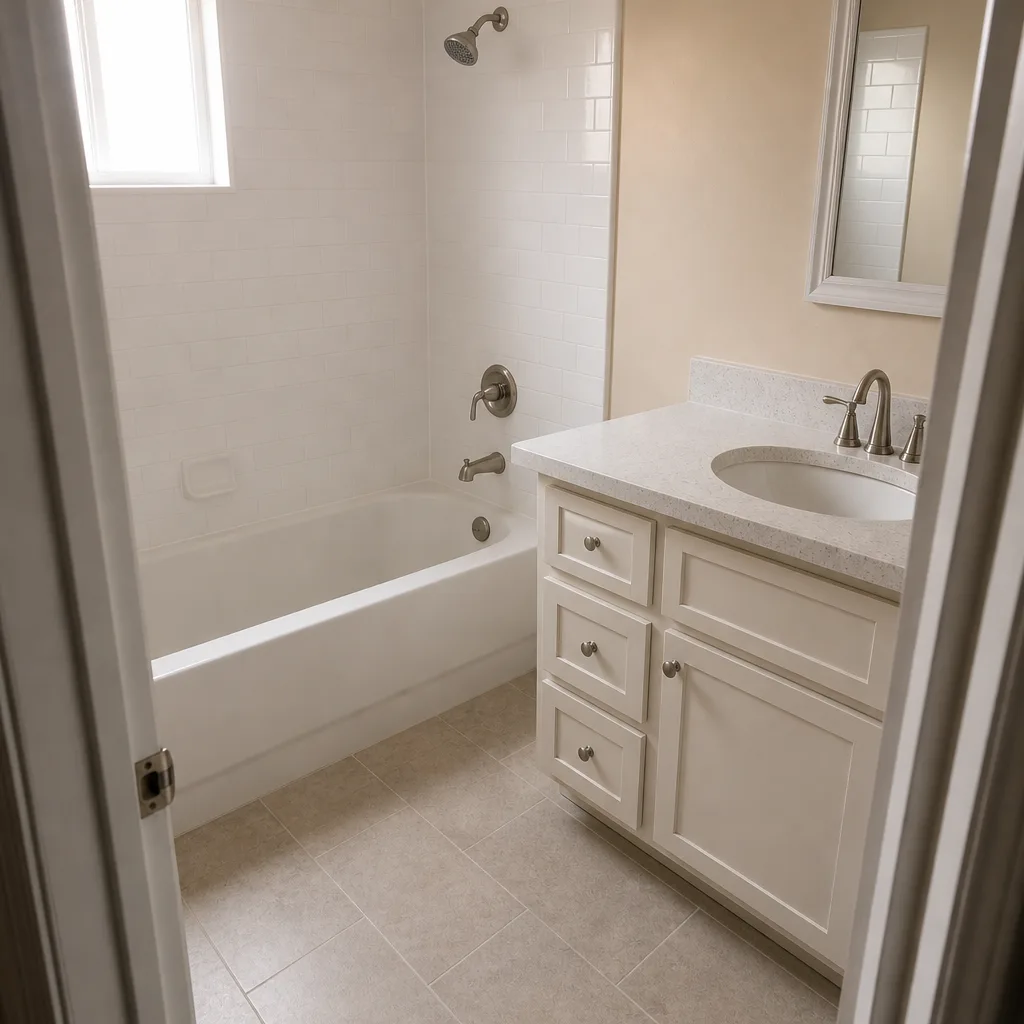 After
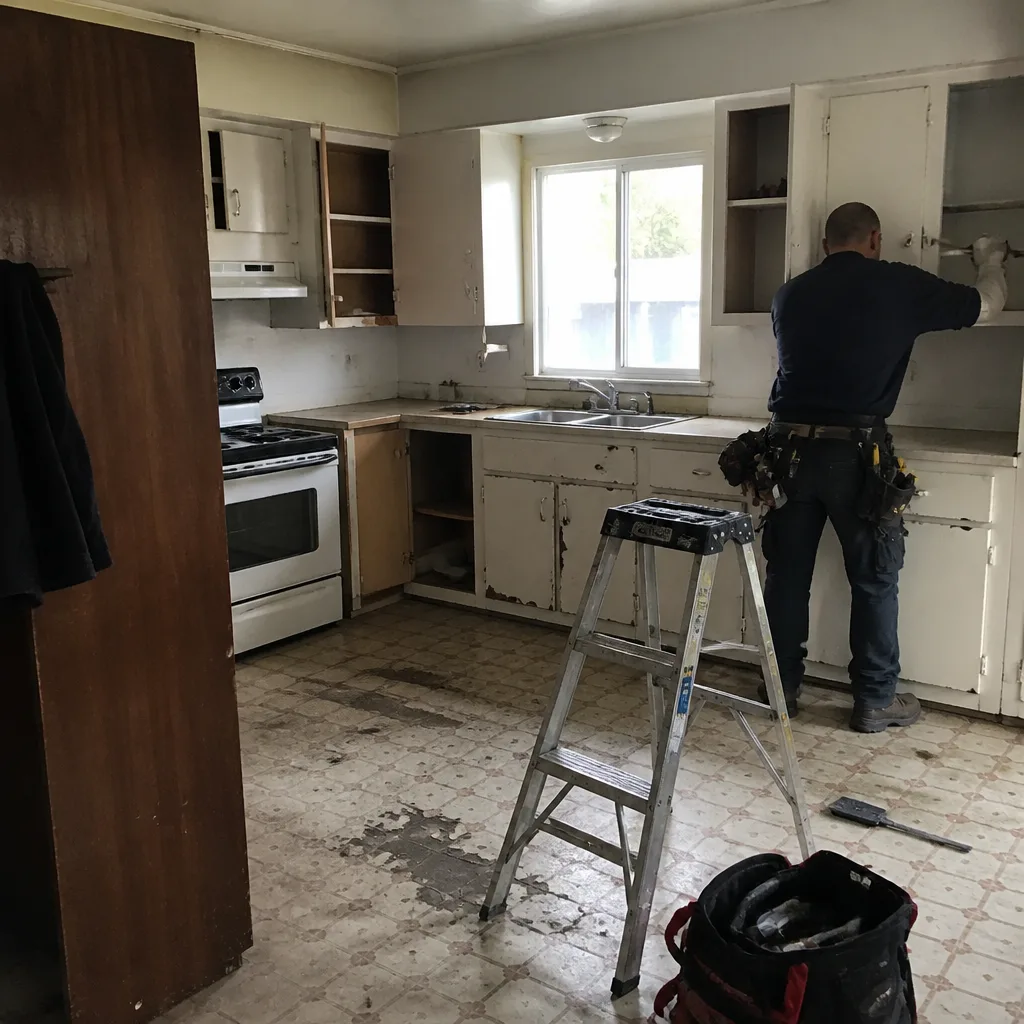 Before
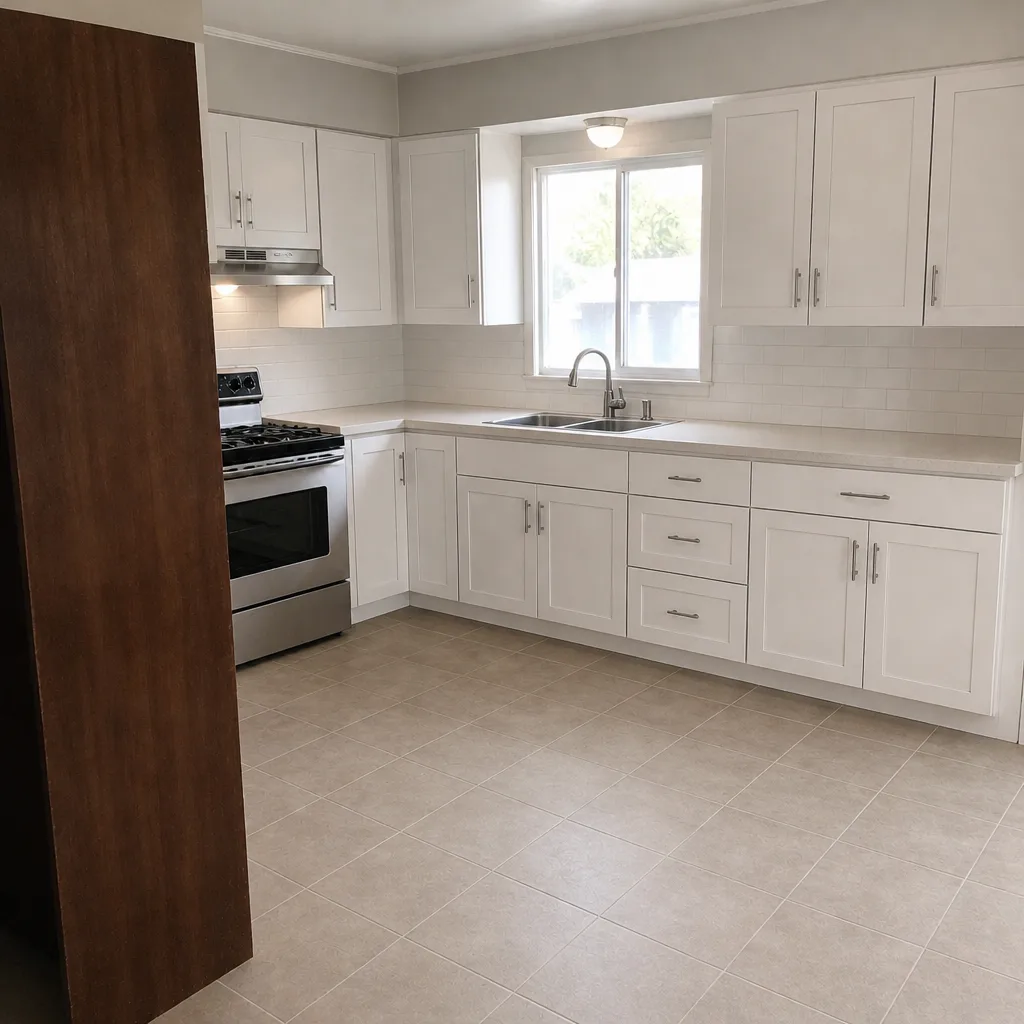 After
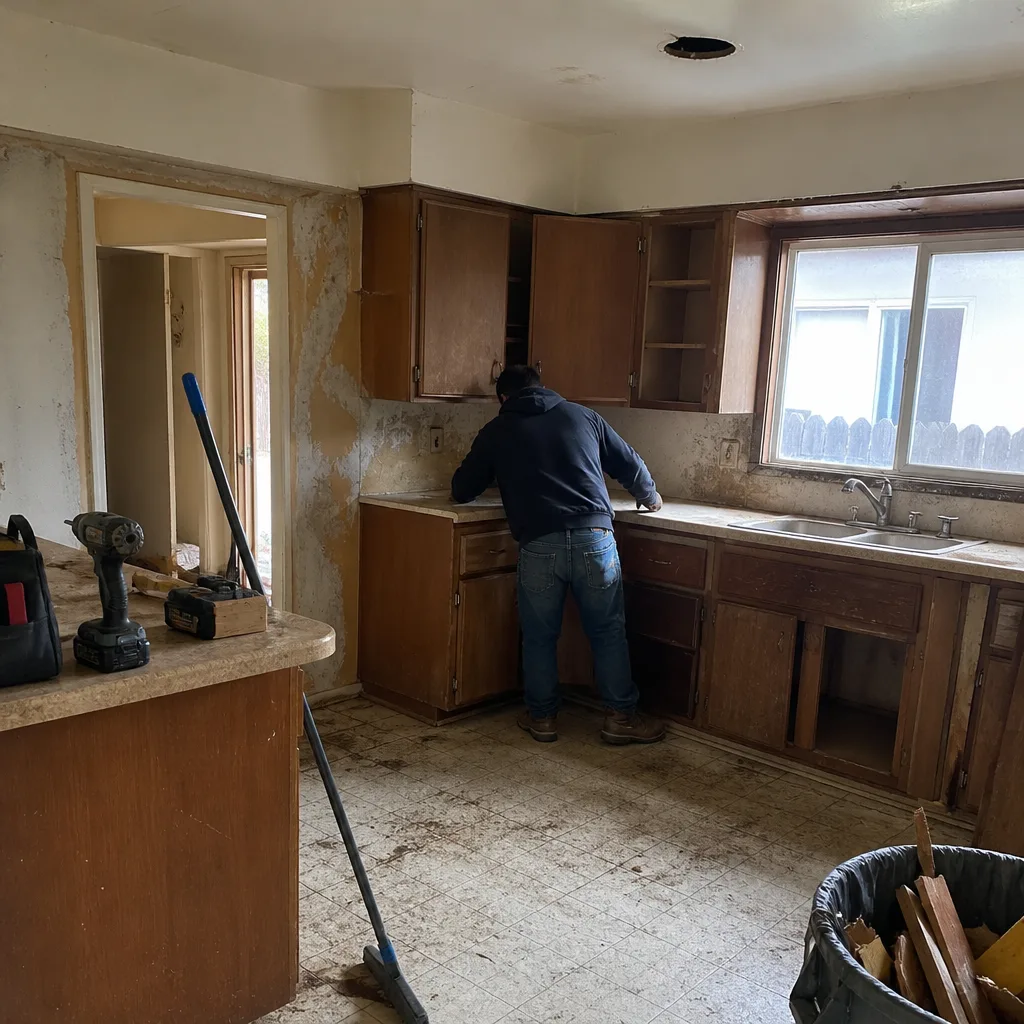 Before
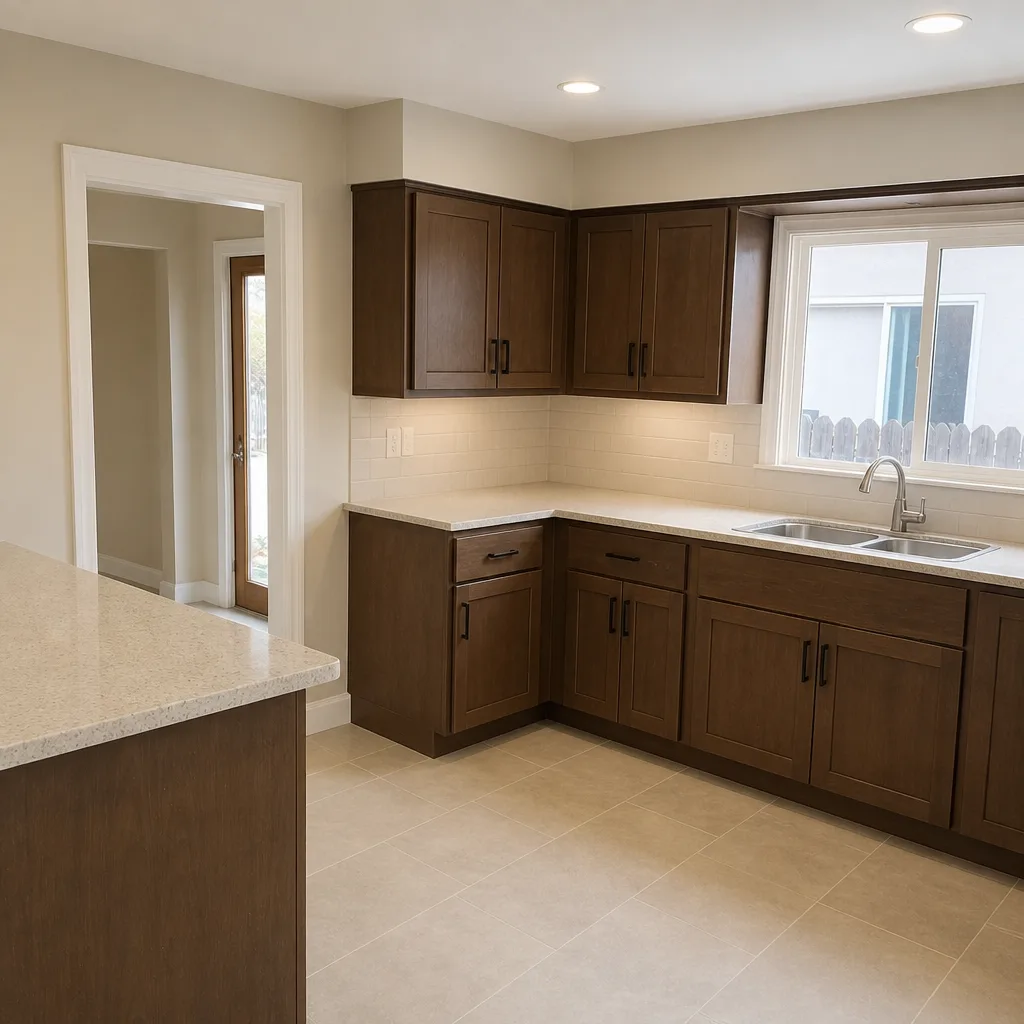 After
Tile vs Vinyl Plank Kitchen Flooring in Long Beach, CA: What the Floor Under Your Floor Decides
For most Long Beach kitchens, choose large-format porcelain tile unless your home sits on a sound, level, crack-free concrete slab built after 1970 - in which case quality click-lock vinyl plank is a legitimate, faster, lower-cost choice. The finish material gets all the attention, but the subfloor or slab underneath it is what actually determines whether your new floor lasts two years or twenty. Vinyl plank can be a great kitchen floor. In a 1940s Rose Park bungalow with a bouncy wood subfloor over a crawl space, it’s a 12-month floor if the deflection isn’t fixed first. We walk the substrate before we quote a single tile. Call (888) 345-8164 and we’ll tell you what your floor will actually support.
Key takeaways
- Tile costs more upfront but tolerates problem substrates and coastal humidity without fail.
- Click-lock vinyl plank needs less than 3/16-inch deflection over 10 feet. Pre-war Long Beach wood subfloors routinely exceed that.
- Slab cracks and expansive soils on the east side will telegraph through vinyl plank within a year if left unrepaired.
- The recommendation should follow the substrate, not the sales margin.
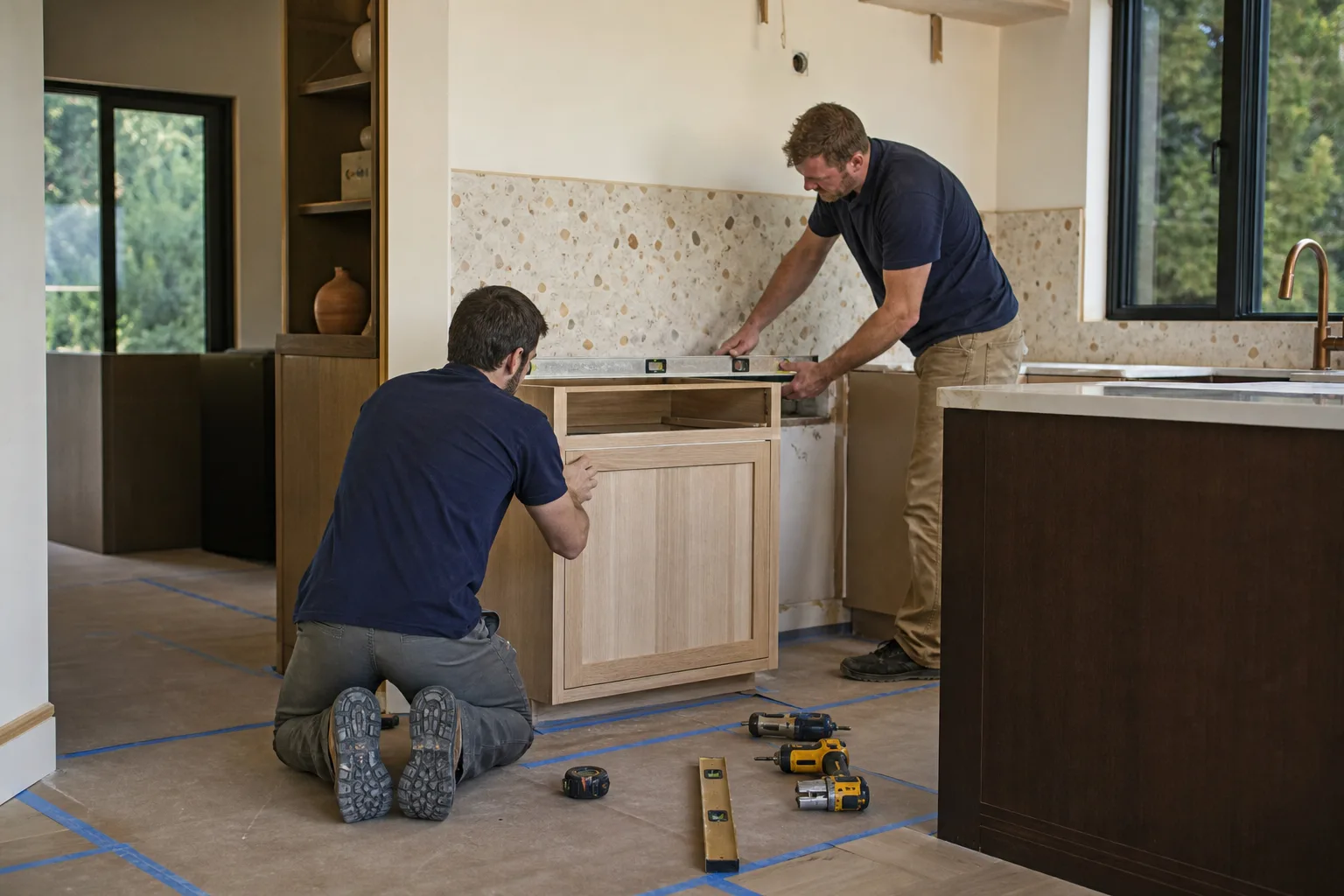
Why the subfloor and slab matter more than the finish in Long Beach
Long Beach has two very different floor stories under its kitchens, and they split roughly along the line between the older neighborhoods and the post-war east side. In Rose Park and Belmont Heights, you’re often standing over original fir or pine subfloor spanning a pier-and-beam crawl space. Those boards have been carrying load, absorbing moisture, and flexing for the better part of a century. Deflection - how much the floor moves underfoot - is the number that matters, and those old spans routinely give more than the 3/16-inch over 10 feet that click-lock vinyl plank requires. When the floor flexes past that threshold, the click joints separate and the edges lift, and it usually starts right where the refrigerator and range sit because that’s the heaviest, most concentrated traffic.
On the east side, the story is concrete. Post-war tract homes sit on slabs, and a level, crack-free slab is genuinely good ground for vinyl plank. The problem is that Long Beach’s near-zero annual rainfall and the expansive soils under much of the east side make slab cracks common. An unrepaired crack under vinyl plank will show through the finished floor within a year - the plank doesn’t bond to the slab, so it just follows the movement. Grinding and filling a crack properly, or laying a backer board over it, is the fix. Skipping that step is how a floor fails on schedule.
Tile vs vinyl plank, side by side for a Long Beach kitchen
Here’s the honest comparison. Neither column wins outright. They win for different houses, and the house is the deciding vote.
| Factor | Porcelain tile | Click-lock vinyl plank |
|---|---|---|
| Subfloor demand | Forgiving once a backer board layer is in place | Strict: under 3/16-inch deflection over 10 ft |
| Moisture behavior | Zero sensitivity; unaffected by marine-layer humidity | Mostly waterproof, but flex and trapped moisture fail the joints |
| Slab cracks | Isolated by backer board and thinset | Telegraphs through within about a year |
| Salt air and off-gassing | No plastic content, no off-gassing | Generally fine, but worth checking the plank’s material spec near a coastal climate |
| Installation time | Longer: thinset, backer board, cure time | Faster: a float-over install on a sound substrate |
| Repair | Spot-replace a single tile | Replace a whole run if a click edge fails |
| Best fit | Pre-1960 Long Beach homes and any questionable substrate | Post-1970 east-side tract homes on sound, level slabs |
A defensible recommendation, not a sales pitch
For Long Beach homes built before 1960, tile is the lower-risk, longer-lasting choice. It doesn’t depend on the subfloor staying rigid, it shrugs off the marine layer and salt air that work on everything else in a coastal house, and the fix is permanent rather than dependent on a click joint holding its tolerance. For post-1970 tract homes on a sound, level slab, quality vinyl plank is a real option that cuts installation time and cost without a meaningful sacrifice in durability.
And tile isn’t only a floor decision. On a bigger kitchen project, flooring is one line in a set of choices that have to work together - cabinets, counters, plumbing, and the floor that ties them off. If the job is more than the floor, see our Kitchen Remodeling work and the broader Kitchen Remodeling in Long Beach we take on across these neighborhoods.
What the assessment looks like - and what it costs
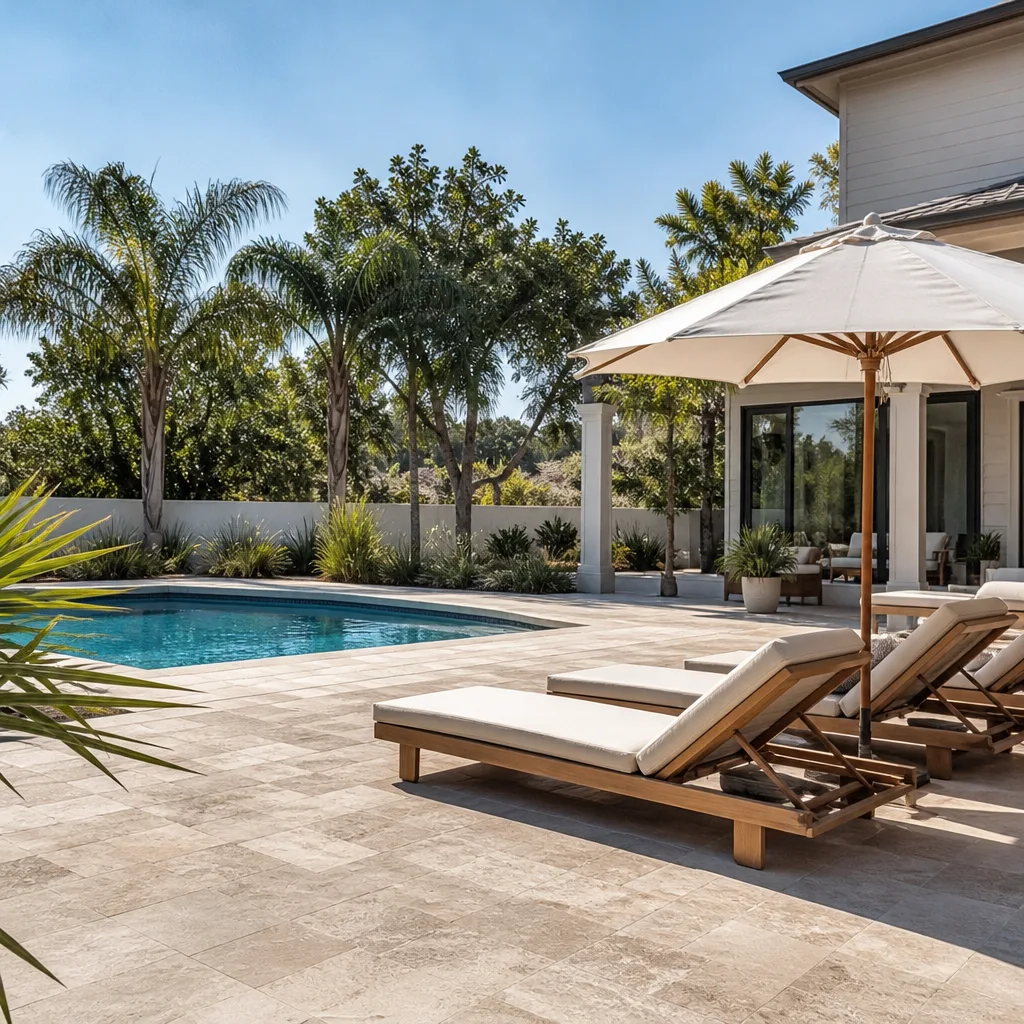
Before we recommend a material, we walk the subfloor or slab. On a crawl-space home, that means checking the joist span and feeling for deflection underfoot. On a slab, it means looking for cracks, checking level, and grinding and filling anything that will move under a plank floor. That walk happens during the free project estimate and design consult, not after the contract. The recommendation follows what the floor will support.
For cost context, a kitchen remodel in Long Beach runs $14,000-$45,000 depending on scope, and a small kitchen remodel lands at $9,000-$20,000. Flooring sits inside that number, and the substrate work - crack repair, backer board, deflection correction - is what keeps the floor from failing after the remodel check clears. Upfront pricing means the number you see is the number you pay, and the 730-Day Done Right Promise means if it’s not done right, we make it right. Projects over $10,000 get $1,000 off, and 0% financing for 18 months is available.
A few practical notes from the field. We use Quikrete and Sakrete products for slab prep and patching, which matters when a crack fix has to hold under a floating floor. Our technicians have up to 12 years of experience, and they’re background-checked and arrive in uniform on every job. Calls are answered by a live person 24/7, so a question about a failing floor doesn’t wait until Monday. And if you’re weighing cabinets at the same time, our kitchen cabinet installation page covers what fits an older Long Beach layout.
The short version of the decision
- Home built before 1960? Lean tile.
- On a crawl space with a bouncy floor? Fix deflection first, then tile.
- Post-1970 east-side tract home on a level, crack-free slab? Vinyl plank is a fair call.
- Any slab with cracks? Repair and prep before either material goes down.
FAQs
Tile is the better choice for most Long Beach kitchens, especially pre-1960 homes over crawl spaces. It doesn’t depend on subfloor rigidity and has zero moisture sensitivity, which matters in the marine-layer climate. Vinyl plank is a fair call only on a sound, level, crack-free post-war slab. Call (888) 345-8164 for an exact quote - estimates are free.
Flooring is priced within the full kitchen remodel range of $14,000-$45,000, with small kitchen remodels at $9,000-$20,000. Tile usually carries a higher material and labor cost than vinyl plank, but vinyl plank on a problem subfloor costs more later when the click joints fail and the floor has to come up. Call (888) 345-8164 for a line-item quote - estimates are free.
Not directly. An unrepaired crack under vinyl plank will telegraph through the flooring within about a year, because the plank floats rather than bonding. The slab has to be ground, filled, and prepped first. Call (888) 345-8164 and we’ll assess your slab before recommending a material.
Deflection is the usual cause. Click-lock vinyl plank requires a subfloor with less than 3/16-inch movement over 10 feet, and older Long Beach wood subfloors over crawl spaces often exceed that. The flex separates the click joints, and it shows up first under the heaviest traffic. Call (888) 345-8164 to have it looked at.
Let’s look at your floor before we sell you one
If you’d rather have it looked at, Groundwork Construction Co. of Long Beach offers a no-pressure assessment in Long Beach - call (888) 345-8164. We’ll check the subfloor or slab, tell you what it will support, and give you upfront pricing on the material that fits your house. No surprises, from foundation to finish line.
Written by the team at Groundwork Construction Co. of Long Beach, serving Long Beach, CA.