
5 Mistakes to Avoid With Fence Installation
The cheapest fence quote in Long Beach is usually cheap because the post holes are too shallow, and you won’t know that until year three when the whole run starts to lean. Fence installation mistakes in Long Beach cluster around five decisions contractors routinely underbid and homeowners don’t know to question: post depth, utility marking, material choice, property lines, and the warranty. Get those five right before you sign, and you’ve protected the money you’re about to spend. If you’d rather hand the whole thing to someone accountable, call (888) 345-8164 for a free estimate.
Key Takeaways
- Long Beach’s wind corridor means deeper posts than code minimum, not the same depth as a sheltered inland lot.
- An 811 dig-safe call is free; hitting a private irrigation or gas line is not.
- Wood, vinyl, and aluminum have very different maintenance cycles in coastal Long Beach air.
- A property line dispute can cost more than the fence itself.
- A workmanship warranty belongs in writing, with a length and a remedy spelled out.
Mistake #1: Post Holes That Are Too Shallow for Long Beach Wind
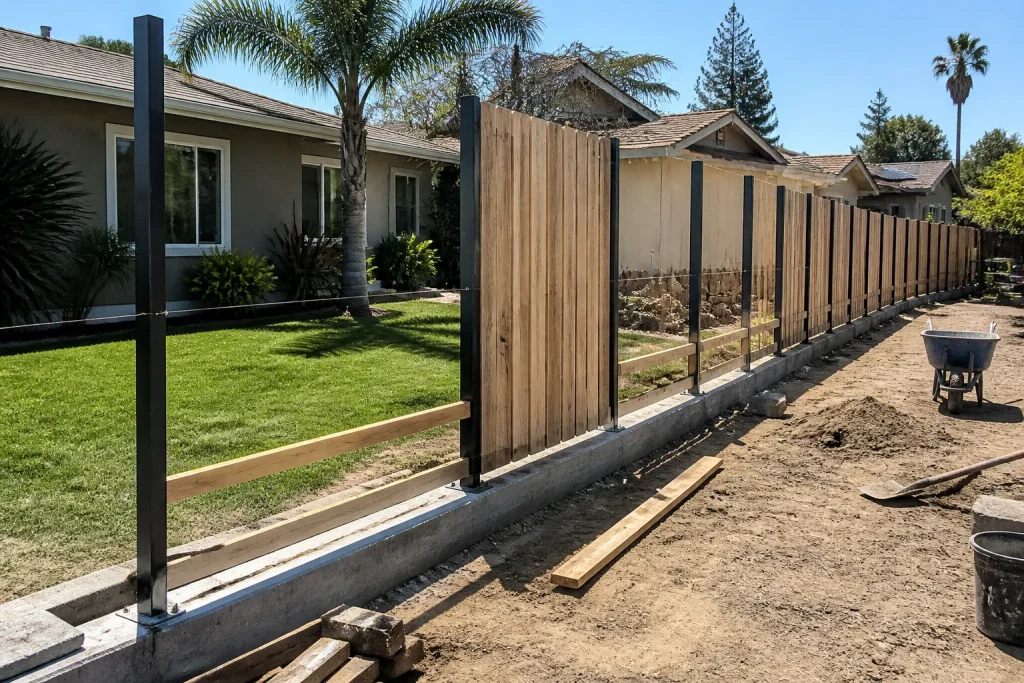
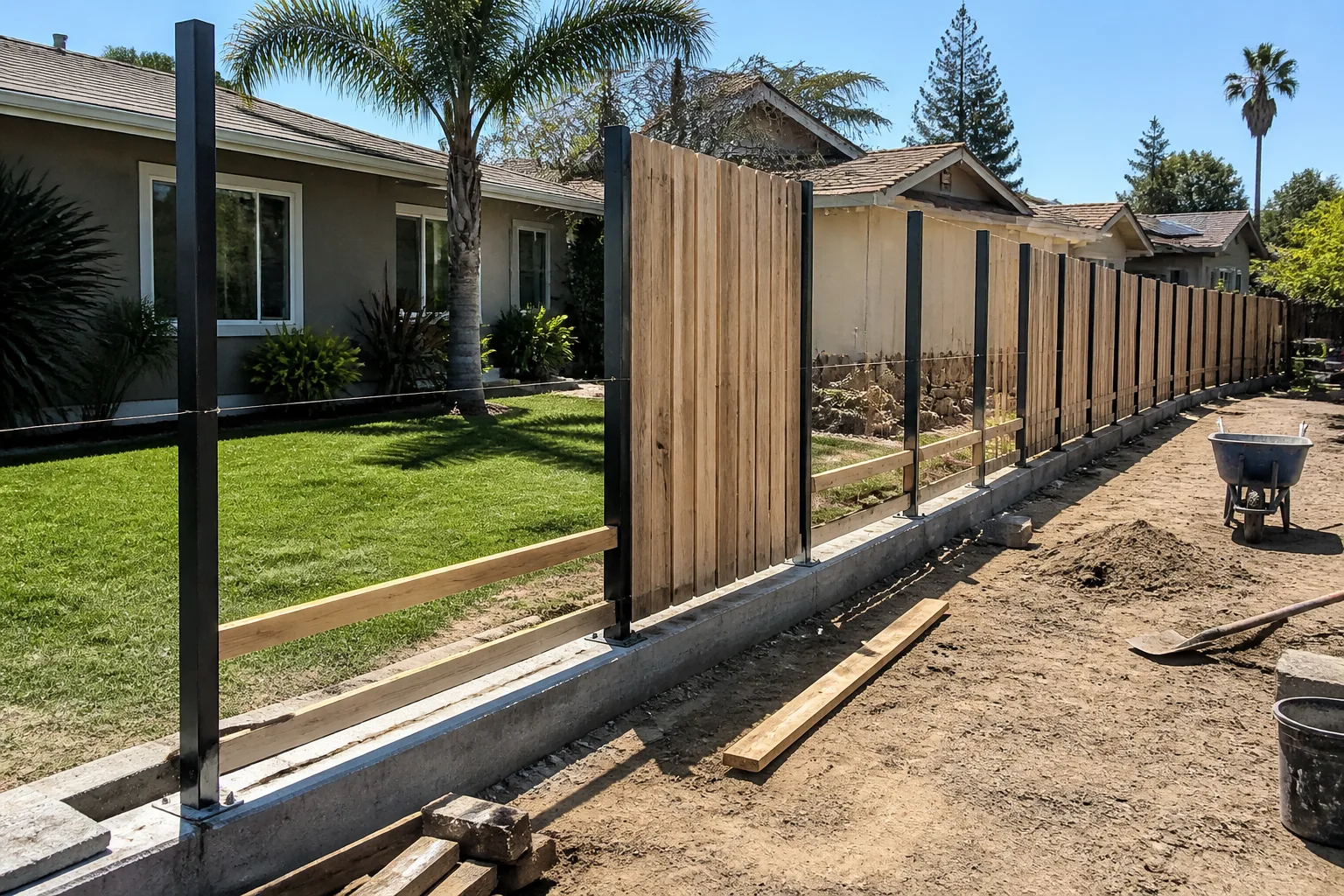
The general rule for fence posts is that roughly one-third of the post’s total length should sit below grade. An 8-foot post goes about 2.5 to 3 feet into the ground; a 6-foot post goes about 2 feet. That’s the baseline. In Long Beach it’s often not enough.
Long Beach sits in a coastal wind corridor, and certain neighborhoods take a beating that sheltered inland lots never see. If your property runs along an open stretch near the water, or sits on a corner where wind funnels between blocks, that wind load pushes on every post and rail all year. We’ve seen runs in Belmont Shore and along the bluffside streets that were set at code minimum and started leaning within a few seasons because the posts were undersized and the concrete footings were too narrow for the soil.
What to check before you sign:
- Ask the contractor what depth they’re setting posts to, and why. “Code minimum” is an answer that tells you they haven’t looked at your specific lot.
- Ask about footing diameter, not just depth. A deep hole filled with too little concrete still moves.
- Ask whether they’re setting posts in concrete or gravel. In sandy or loose Long Beach soil, the wrong choice shows up as wobble within a couple of years.
- Confirm they’ll set posts below the frost-relevant depth and tamp properly. Shortcut crews skip tamping because it’s slow.
A fence that leans isn’t just an eyesore. It’s the first sign the install was underbid, and re-setting posts means tearing out the run you already paid for.
Mistake #2: Skipping the 811 Dig-Safe Call
Every legitimate fence install starts with a call to 811, the free utility locate service, before a single shovel goes in. It’s free, it’s required, and it marks the public utility lines buried in your yard. Skipping it saves a few days and risks far more.
The part most homeowners don’t realize: 811 only marks public utilities. Private lines on your side of the meter, like irrigation, landscape lighting, pool feeds, or a gas line running to an outdoor kitchen, are your responsibility to locate, and a good contractor asks about them. That’s where the expensive surprises happen.
When a post hits a utility line, the cost isn’t just the repair. You’re looking at emergency utility crew time, possible gas shutoff and inspection, water damage to the surrounding landscape, and a job that stalls for weeks. We pulled one run out over in Bixby Knolls where a homeowner’s backyard lighting feed got clipped by a post that never should have gone in that spot. The locate call would have been free. The repair and rework weren’t.
What to confirm:
- The contractor will file the 811 request and wait for the marks before digging.
- They’ll ask you where private lines run, and you’ll walk the yard with them.
- They keep the marks visible and don’t dig within the tolerance zone around a marked line.
If a crew shows up ready to dig without a locate ticket, that’s your signal to stop.
Mistake #3: Picking Material on Upfront Cost Alone
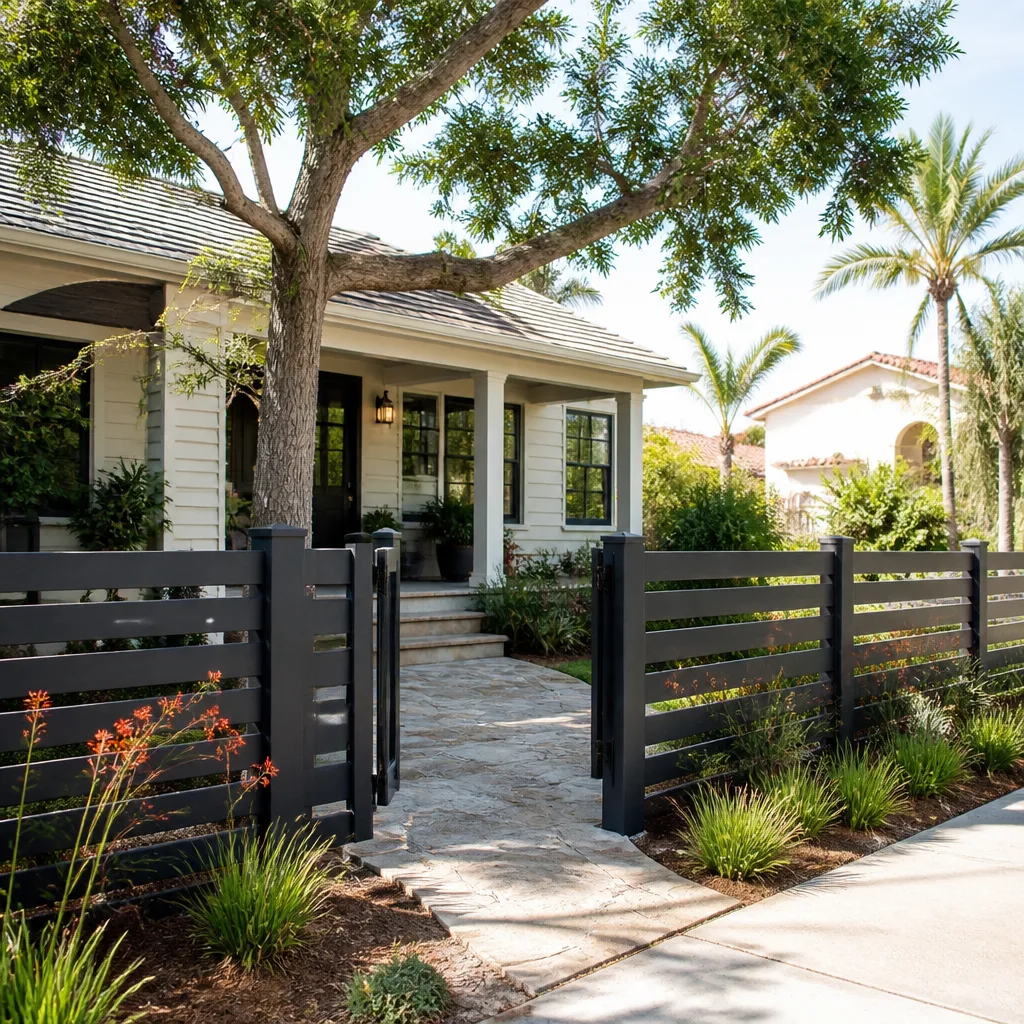
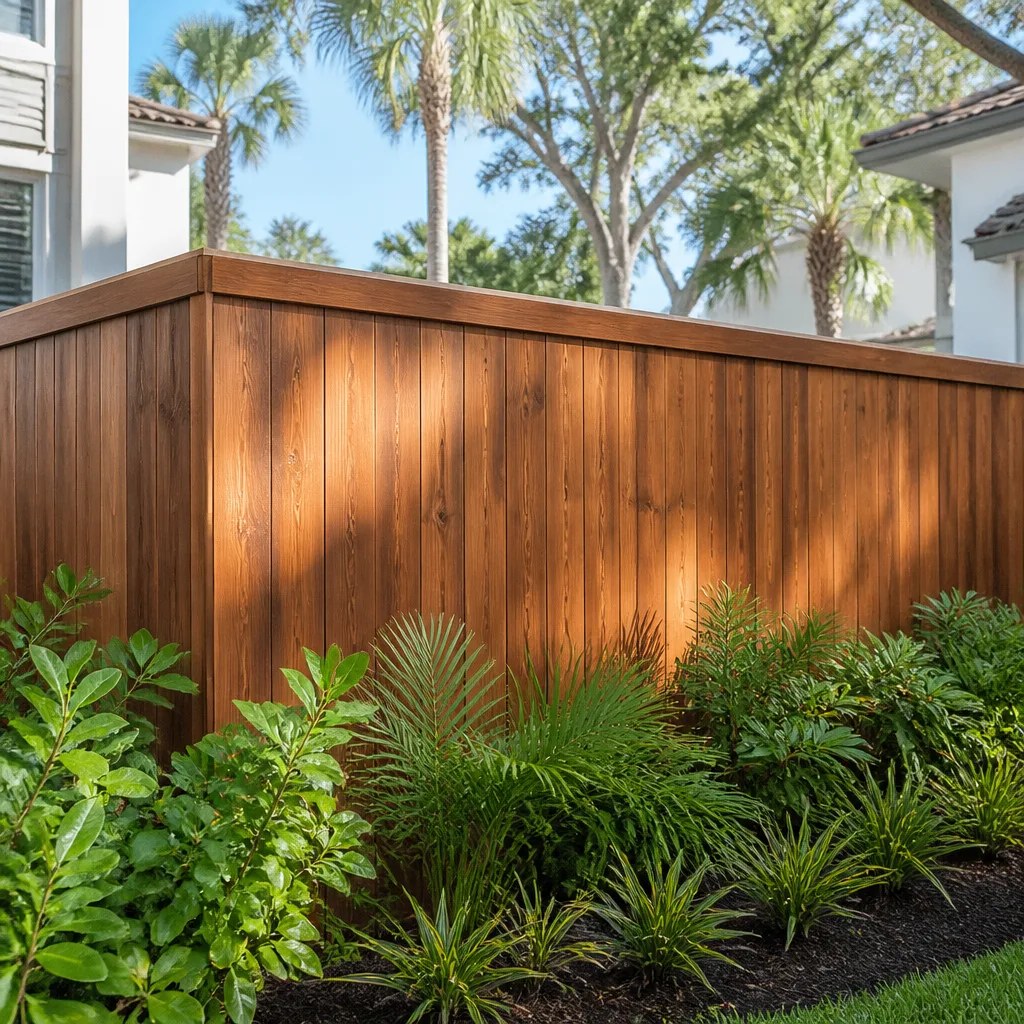
Wood, vinyl, and aluminum all look reasonable on a quote. They don’t cost the same to own. In Long Beach, coastal salt air and moisture push each material on a different maintenance cycle, and the cheapest install is often the most expensive over ten years.
- Wood has the lowest sticker price and the highest upkeep. In coastal Long Beach, expect to stain or seal every couple of years to keep it from graying and warping, plus periodic board replacement. Skip the maintenance and the fence ages fast.
- Vinyl costs more up front and needs little more than a wash, but quality matters. Cheap vinyl gets brittle in sun and cracks at the posts. Good vinyl holds up well against coastal moisture.
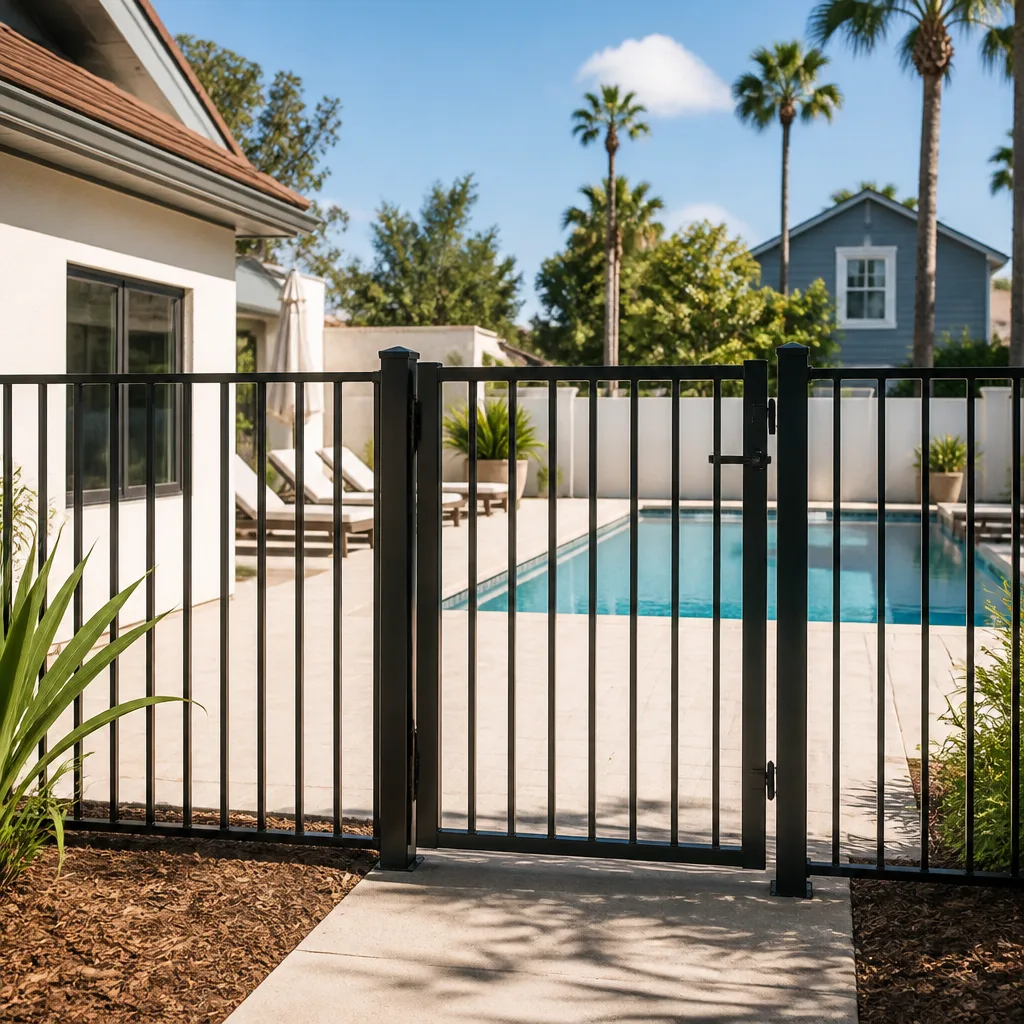
- Aluminum sits at the top of the upfront range and holds up longest against salt air and sun, with essentially no finish upkeep. For a decorative or pool-safety fence, that lifespan often pays back the premium.
The right question isn’t “which is cheapest?” It’s “which material, over the years I plan to stay, asks the least of me and my wallet?” A contractor who only quotes you one material hasn’t done that math with you.
Mistake #4: Ignoring the Property Line Survey
Fence placement disputes are the quiet budget-killer. If a fence goes even a few inches onto a neighbor’s side, you can be forced to move it, and the legal and rework costs can dwarf what you paid for the original job.
Before any fence install in Long Beach, confirm where the property line actually runs. Your deed may show it, but a current survey is what settles it. Don’t rely on “where the old fence was” or “where the neighbor says it goes.” Old fences are frequently off the line, and neighbor memory is not a legal record.
What to do:
- Pull out your plat or survey if you have one, and get a fresh survey if the line is unclear.
- Talk to your neighbor before work starts. A brief conversation about placement prevents most disputes.
- Know that California rules around boundary fences and shared costs have specifics, so confirm placement in writing before the crew digs.
We’ve watched a homeowner spend more resolving a six-inch encroachment than the fence cost to build. The survey would have been a fraction of that.
Mistake #5: No Written Workmanship Warranty
Materials come with manufacturer warranties. The install is the part that fails, and that’s what a workmanship warranty covers. If a contractor won’t put one in writing, with a length and a remedy, you have nothing to hold them to.
A vague “we stand behind our work” is not a warranty. It’s a sentence. A legitimate fence contractor puts the following in writing:
- How long the workmanship coverage lasts.
- What’s covered: post setting, alignment, gate function, fasteners, and settling.
- What’s excluded: storm damage, neglect, and normal material wear.
- The remedy: repair, redo, or refund, spelled out.
- Who to call and how fast they respond.
Our work is covered by the 730-Day Done Right Promise: if it isn’t done right, we make it right. That’s the standard we’d want you to hold any fence contractor to, including us.
When to Call a Pro
Some of this you can inspect yourself. Walking the yard, checking post depth, and reading a warranty are homeowner moves. Digging post holes near buried utilities, setting footings that hold against coastal wind, and pulling a survey when the line is unclear are not. Those are the decisions that separate a fence that lasts from one that leans by year three. Our technicians have up to 12 years of experience, and every project comes with upfront pricing, no surprises.
Related services in Long Beach
Fencing often pairs with other exterior work. If you’re redoing the front of your property, see our Fence Installation in Long Beach service and our Driveway & Pavers in Long Beach work. Planning something bigger on the lot? Explore Home Additions & ADU in Long Beach. And for everything we do across the property, start at the Groundwork Construction Co. of Long Beach home page.
What happens when you call
- 1
A real person answersNo phone trees – you reach a local pro.
- 2
You get an upfront price rangeHonest numbers before anyone is dispatched.
- 3
A background-checked tech heads outLicensed & insured, dispatched right away.
- 4
You approve before work beginsNothing starts until you say go.
The Bottom Line
Fence installation mistakes in Long Beach come down to five decisions: post depth for our wind, the 811 dig-safe call, material chosen on total cost instead of sticker price, a surveyed property line, and a written workmanship warranty. Get those right and you’ve done more than most homeowners ever do. Get them wrong and the cheap quote costs the most. We name brands we trust across every trade, from GAF roofing to Sterling and Grohe fixtures, because material quality is part of building it right. If you’re in Long Beach and need help, Groundwork Construction Co. of Long Beach offers free estimates. Call (888) 345-8164 to schedule yours.
Frequently Asked Questions
The general rule is about one-third of the post length below grade, so roughly 2 to 3 feet for a standard 6- to 8-foot fence. In Long Beach’s wind corridor, deeper and wider footings are often warranted. Ask your contractor what depth they’re setting and why. Call (888) 345-8164 for a free estimate on your specific lot.
Yes, and it’s free. The 811 service marks public utilities before digging. Private lines like irrigation and gas feeds are your responsibility to locate, so walk the yard with your contractor. Call (888) 345-8164 to schedule a free estimate and we’ll walk it with you.
Aluminum holds up longest against salt air and sun with almost no upkeep, vinyl needs little more than a wash, and wood requires staining or sealing every couple of years. The right pick depends on your budget and how long you plan to stay. Call (888) 345-8164 for an exact quote. Estimates are free.
Not with a written contract. Upfront pricing means the number you see is the number you pay, and the workmanship is backed by the 730-Day Done Right Promise. Call (888) 345-8164 to schedule your free estimate.
Written by the team at Groundwork Construction Co. of Long Beach.
Need Construction Help?
Call Groundwork Construction Co. of Long Beach - licensed & insured, here with fast after-hours help in Long Beach.
(888) 345-8164